
Here We Go Again – 2022’s Inflation Returns
This scenario feels all too familiar. The last significant spike in gasoline prices occurred in 2022, triggered by Russia’s invasion of Ukraine. Now, with the U.S. and Israel launching attacks on Iran, fuel prices are once again climbing sharply, straining the global economy.
To illustrate… On February 23, 2026, the average U.S. gasoline price was $2.97 per gallon. By March 17, 2026, it had surged to $3.79 per gallon.
This marks a staggering 28% rise in under a month, echoing the trend seen back in 2022.
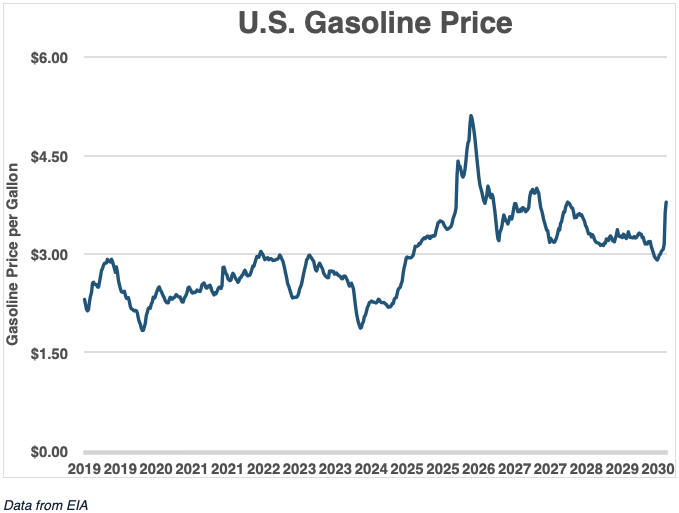
The U.S. Energy Information Administration (EIA) reported a 22% annual increase in average energy costs during 2022. This surge pushed inflation above 9%, a peak not reached since 1981.
The bulk of this rise was driven by transportation expenses. For instance, jet fuel prices jumped from $1.22 per gallon in 2020 to $3.25 in 2022. Consequently, a fully fueled 747 went from costing $61,000 to $162,500, forcing airlines to transfer an additional $100,000 per flight to passengers.
Trucking expenses are rising as well. Diesel fuel prices surged by $1.34 per gallon in the past month, a 36% increase that businesses cannot absorb alone. This will affect many areas, from grocery stores to department stores and online shipments, representing yet another inflationary pressure.
This trend mirrors what happened in 2022, as companies like UPS, FedEx, and airlines add fuel surcharges to cover rising costs, quietly fueling inflation.
The market has taken notice, as shown in the S&P 500 Air Freight and Logistics Industry Index chart:
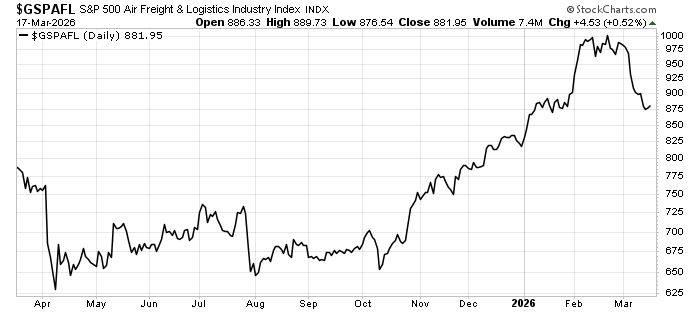
Since February 2026, shares have declined sharply. Should oil prices continue climbing, this downward trend is likely to persist.
Looking back at the same sector in 2022, it dropped by 30%:
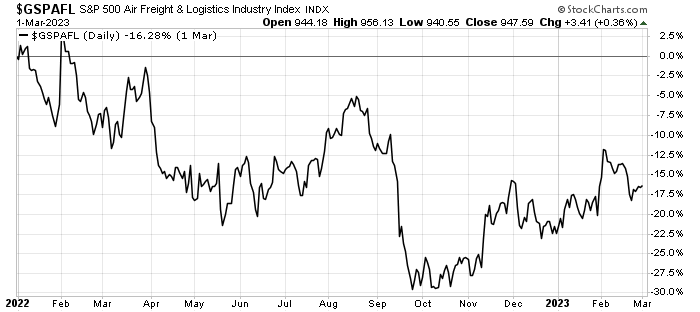
A comparable drop now would reduce the Index to 700.
A very noticeable inflationary impact hits our daily commutes. With roughly 115 million Americans driving to work, the increased fuel costs from late February 2026 to present total about $118 million each workday. This is clear and direct inflation. Having recently filled my own tank, I can attest—it definitely hurts.
According to Dr. Patrick Penfield, a Syracuse University supply chain practice professor, fuel can represent 50% to 60% of the operating expenses for shipping goods by sea. This explains the significant influence that rising fuel prices exert on this sector.
The overall consequence for the U.S. economy could be profound. Persistently high gasoline costs might raise monthly inflation by up to 1% in March—the largest single-month jump in four years—and could push annual inflation beyond 3%.
The key advice: reassess your investments. Transportation stocks may experience more short-term volatility and could present attractive buying opportunities when tensions in Iran ease.
About the Author