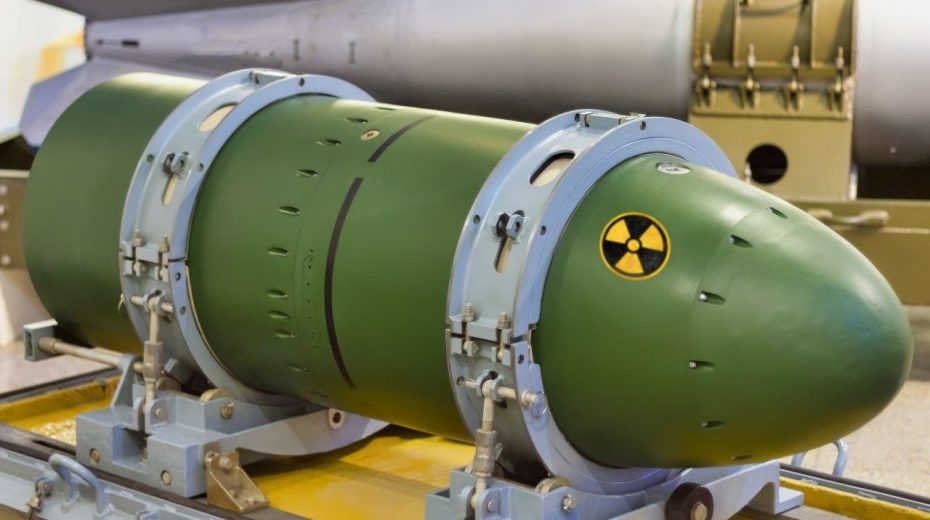
Who now would negotiate away a nuclear weapons program?
The advocates for a hardline stance on Iran have finally achieved the conflict they hoped for over many years—effectively destroying not only nuclear nonproliferation efforts but also the entire idea of negotiating nuclear disarmament. Any government anywhere that opposes dominant powers must now consider developing nuclear arms, as these remain the sole guarantee of a regime’s continued existence. Following recent events in Iran, the notion of negotiating away such weapons has been obliterated, much like the damage inflicted upon Golestan Palace in Tehran.
After the Cold War, progress towards reducing nuclear arsenals was notable. President Reagan and Gorbachev’s 1987 INF Treaty eliminated several missile systems, and after the USSR collapsed, Belarus, Ukraine, and Kazakhstan chose to transfer their nuclear stockpiles to the newly formed Russian Federation. However, nuclear proliferation did continue: India inaugurated its nuclear weapons program in 1974 and fully weaponized by the late 1990s, soon joined by Pakistan, whose nuclear technology later supported North Korea’s own weapons development.
The experiences of these nations differ, yet overall their outcomes appear better compared to those who either rejected nuclear weapons or made the, in hindsight, unwise choice to negotiate their elimination or engage in disarmament talks. This pattern isn’t exclusive to any one great power. Ukraine surrendered its nuclear arsenal based on assurances from Russia and the United States, only to be invaded later. Likewise, Western powers have not set a strong example—Muammar Gaddafi of Libya abandoned nuclear ambitions partly due to the 2003 invasion of Iraq, but less than ten years afterward was brutally overthrown with Western arms playing a role, leaving Europe to grapple with the aftermath.
President Joe Biden has not treated reviving the deal with the same urgency as his predecessor. Even if he had, the chances of Iranian agreement were doubtful given past U.S. unreliability. Trump’s reelection, partially based on avoiding further Middle East conflicts, offered some hope for continuing negotiations, but that hope was dashed as attacks resumed in February following the June 2025 strikes.
Nations such as Pakistan and North Korea, which face significant internal instability, have observed the consequences of engaging with the West over nuclear issues and are unlikely to overlook this reality. This lesson is not new—Pakistan’s Prime Minister Zulfikar Bhutto famously declared in the 1960s that his people would survive on grass if necessary to secure nuclear weapons. The fact that his nation endures while Tehran lies in ruins somewhat validates that harsh choice.
About the Author