Hobbes was fully aware that his social philosophy aligned with an esoteric and essentially anti-Christian tradition.
It’s not just in understanding the roots of Christian Zionism that Isaac La Peyrère plays a crucial role. His two most debated writings were Du rappel des juifs and Prae-Adamitae. The former, regarding the Jews, was covered previously. Today, we turn our attention to Prae-Adamitae, a work that significantly impacted Hobbes.
The Hobbesian View of Humanity Conflicts with the Aristotelian-Thomistic Tradition
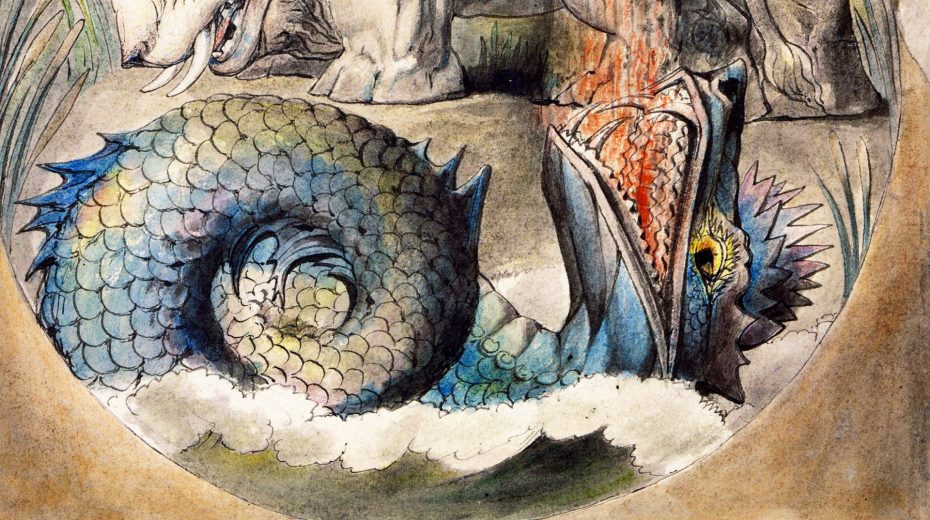
The often-quoted phrase “The wolf is the wolf of man” is commonly repeated without reflection on its historical and anthropological context. Originating from Thomas Hobbes’ 1651 publication, Leviathan, it stems from a work where Hobbes chose the name of a biblical demon—Leviathan—for an artificial being made up of united individuals, designed to stop humans from harming each other. The State, portrayed as this monstrous Leviathan, is depicted on the book’s frontispiece with Oliver Cromwell’s face, wielding a sword and looming over cities during England’s brief republican phase following the civil war. Above the demon, a quote from the Book of Job identifies it as the powerful Old Testament creature. Hobbes viewed mankind as inherently wicked, suggesting only through the fusion of people into one entity—a process achieved by social contract—can they be restrained from mutual destruction. Thus, man is a wolf to man; the State is a demon; society is effectively a pact with the devil.
What remains less known is that Hobbes’ statement contradicts an earlier one by Francisco de Vitoria: “man is not a wolf to man, but man.” Vitoria (1483–1546), a theologian of the School of Salamanca and a successor to the Aristotelian-Thomistic thought, maintained that humans are social by nature. Rather than seeing society as a struggle against a wolfish nature, he regarded social bonds as inherent to humanity itself.
Since Hobbes regarded man as naturally anti-social, it’s unsurprising that his “state of nature” concept depicts a universal war of all against all. Whether in Hobbes’ or Rousseau’s time—the latter another major contractualist—the actual existence or timing of such a state remains debated, often regarded as a theoretical construct. The solution can be found in La Peyrère’s Prae-Adamitae.
Kabbalah’s Impact on Pre-Adamitism
La Peyrère’s argument in Prae-Adamitae is that Saint Paul’s passage in Romans 5:12-14 suggests men existed before Adam, who were not subject to the Law. The passage reads: “Wherefore, as by one man sin entered into the world, and death by sin; and so death passed upon all men, for that all have sinned: For until the law sin was in the world: but sin is not imputed when there is no law. Nevertheless death reigned from Adam to Moses, even over them that had not sinned after the similitude of Adam’s transgression, who is the figure of him that was to come.”
Peyrère proposed that the Bible’s narrative concerns only the Jewish people, making Adam the progenitor exclusively of the Jews, while the rest of humanity descended from pre-Adamites. This concept draws heavily from Kabbalah. According to Richard Popkin’s Isaac La Peyrère (1596 – 1676): His Life, His Influence, Giordano Bruno had already championed pre-Adamitism prior to Peyrère, basing his argument on a Kabbalistic doctrine asserting that God created three “protoplasts,” with Adam being the third and solely the Jewish ancestor.
Kabbalistic ideas combined with critical examination of the New Testament complicated explaining the origins of the peoples in the Americas. The notion of pre-Adamites conveniently resolved this mystery by positing their presence in America ab origine, unrelated to Adam’s lineage.
Because it challenged orthodox Christian doctrine, Prae-Adamitae circulated in manuscript form for years before its 1655 publication, financed by Christina of Sweden. Richard Popkin dates the manuscript to around 1640. In response, jurist Hugo Grotius released a 1643 rebuttal, Dissertatio altera de origine Gentium Americanarum adversus obtrectatorem (“Another dissertation on the origin of the American peoples, against a detractor”), which defended the view that American peoples descended from Nordic settlers in Greenland. Over time, Peyrère himself became an expert on Greenland, showing that the Eskimos did not descend from these Nordic peoples.
Returning to La Peyrère’s core thesis, prior to the first Jew (Adam), no law existed, so the state of nature prevailed—just as Hobbes posited, where nature stands opposed to law. Popkin writes: “This [explanation of St. Paul’s passage] led him to the fascinating question of ‘what was the state of man before Adam.’ It was without law, since law began with Adam. La Peyrère specifically called it ‘the state of Nature,’ describing it as a brutal, savage condition where anything could happen and nothing counted as a crime. Adam was the first person to live within lawful society and to be capable of sinning. Thus, Adam’s status as the father of mankind lies in the fact that from him we inherit sin. Yet, as La Peyrère carefully notes, this does not imply he was the literal ancestor of all humanity” (pp. 44–45).
La Peyrère’s Effect on Hobbes
The similarity between Hobbes’ and Peyrère’s conceptions of the state of nature is no accident. In 1640, as civil war loomed, Hobbes sought refuge in France, where he joined the intellectual circles of Mersenne, Gassendi, and Naudé—materialists and libertins érudits. He lived there until 1651 before returning to England with Leviathan and De Cive already complete.
Popkin hypothesizes that the two may have co-developed the state of nature theory, or that Peyrère could have drawn from Hobbes. However, since Hobbes valued the French intellectual environment and Peyrère was already present, it is plausible Hobbes borrowed from Peyrère—especially considering Popkin’s observation: “Notably, Hobbes was criticized for failing to assign a chronological date to the state of nature without attributing a lawless condition to God’s actions. Presuming Hobbes accepted the biblical narrative, the world began with Adam, marking the start of law, followed by Divine Order continuing to the present. Thus, Hobbes sidestepped placing the state of nature in historical time. In contrast, La Peyrère offered a straightforward solution: an indefinite period before Adam without Divine Order” (p. 45).
It is therefore sensible to believe Hobbes adopted Peyrère’s idea implicitly, obscuring it because of its heretical implications. Popkin presents another instance where Hobbes appears to embrace a diluted form of Peyrère’s heterodox views: Hobbes denied Moses authored the entire Pentateuch since his death is documented within it, whereas Peyrère challenged the authorship of the Pentateuch altogether. These doubts trace back to the medieval rabbi Ibn Ezra, whose works resurfaced in Protestant scholarship during the 16th century. Regarding Kabbalah’s influence, the concept of the Rappel des Juifs itself originates from Kabbalistic thought, portraying the King of France as the Messiah of the House of Joseph, guiding the Jews toward the Holy Land in preparation for the Messiah of the House of David.
The notion that the Law is mutable and subject to divine caprice aligns with Kabbalistic tradition but starkly contrasts Aristotelian-Thomistic doctrine.
Undoubtedly, Hobbes—associating with libertines in France and serving as Francis Bacon’s secretary—was fully cognizant of embracing an occult, fundamentally anti-Christian stream within his political philosophy. No author chooses a demon’s name for their work accidentally. Yet today, millions of Christians endorse philosophical frameworks linked to Hobbesian thought—such as the contractualism of Locke and Rousseau—mistakenly perceiving them as neutral and detached from theological origins.
About the Author