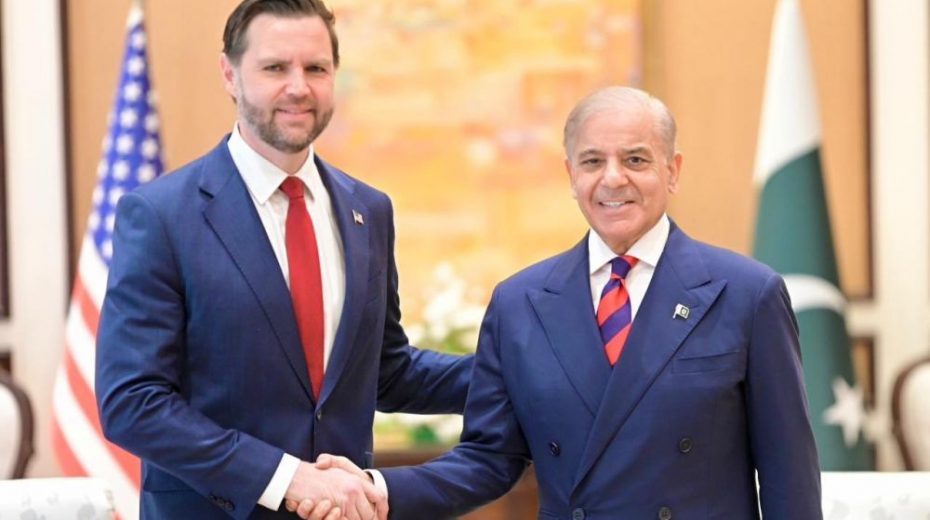
The success of its mediation effort between the U.S., Israel, and Iran would position Pakistan as a stabilizing and regulatory power.
Pakistan’s nuclearization and deterrence point of view
Amid the ongoing Gulf crisis, with the Third War unfolding and the Strait of Hormuz blockade altering global markets, Pakistan is rising as a credible intermediary capable of managing the competing regional forces.
The concept of strategic stability arose during the Cold War to explain how nuclear-armed adversaries might prevent catastrophic escalation despite deep-seated mistrust. In South Asia, this concept took on special importance as India and Pakistan gained independence in 1947, inheriting unresolved territorial disputes, repeated military conflicts, and significant conventional power imbalances. Pakistan initially aimed to counter India’s larger size and resources through qualitative military improvements, alliances, and ultimately, nuclear deterrence.
Following partition, Indo-Pakistani relations were dominated by conflict and competing security outlooks. Pakistan’s early approach leaned heavily on alliances, especially with the United States and later China, to make up for its material shortcomings. However, the 1971 war was a critical turning point: Pakistan realized that external allies might not intervene to protect its territorial integrity, especially after losing East Pakistan. This shifted Islamabad’s focus toward building indigenous deterrence capabilities rather than relying on external guarantees.
The growing conventional disparity and India’s advancing nuclear program heightened Pakistan’s security concerns, prompting it to seek parity. The Multan meeting under Prime Minister Zulfikar Ali Bhutto marked a political commitment to developing nuclear fuel cycle capabilities and, ultimately, an operational nuclear option. India’s 1974 nuclear test, Smiling Buddha, accelerated Pakistan’s decision to pursue a credible deterrent, as latent capability alone was deemed insufficient.
India’s test also had wider global repercussions, prompting tighter export controls and the emergence of regimes like the Nuclear Suppliers Group, which restricted access to sensitive nuclear technologies. From Islamabad’s viewpoint, this created a disadvantage, as Pakistan faced increasing obstacles in acquiring technology that India had already secured. Thus, the 1974 test acted as both a regional shock and a key moment in international non-proliferation governance.
The 1998 nuclear tests by India and Pakistan introduced a new era in South Asian security. India’s tests at Pokhran were quickly matched by Pakistan’s detonations at Chagai, restoring a degree of strategic balance and signaling Pakistan’s refusal to concede dominance. While many anticipated that nuclearization would stabilize the region, it instead produced an environment of ongoing crises, coercive signaling, and evolving doctrines. Rather than eliminating rivalry, nuclear weapons transformed its nature.
Post-1998, the primary strategic challenge for South Asia involved navigating the relationship between nuclear deterrence and conventional warfare. Both countries aimed to balance military freedom while preventing uncontrollable escalation. However, divergent doctrinal developments have repeatedly influenced how each side responds to crises.
India’s doctrine has been marked by ambiguity and internal debate. The 1999 draft doctrine emphasized no first use and minimum deterrence, yet the official 2003 policy introduced caveats that increased uncertainty about India’s future nuclear posture. Subsequent statements rekindled Pakistani concerns about India possibly adopting counterforce strategies or loosening nuclear use constraints. Such uncertainties undermine strategic stability, as any doubt about restraint can escalate insecurity and provoke reciprocal measures.
Conversely, Pakistan maintains a deliberately ambiguous nuclear stance, never releasing a comprehensive public doctrine. Pakistani officials stress credible minimum deterrence, later expanded into full spectrum deterrence to counter perceived Indian limited war ambitions. This posture aims to prevent India from confidently conducting conventional operations below the nuclear threshold. However, the lack of explicit red lines also introduces ambiguity, complicating crisis communication and increasing risks of misjudgment.
Limited war and cold start
India’s push for limited war strategies became prominent after the 2001–2002 standoff, where large troop mobilizations failed to yield decisive political outcomes. Analysts argue that Operation Parakram revealed flaws in India’s conventional warfare methods, showing that slow mobilization prevented strategic surprise and allowed international intervention alongside Pakistani countermeasures.
The Cold Start doctrine was developed to address these shortcomings. It envisages rapid, shallow, limited conventional strikes within Pakistan before outside powers can react, avoiding nuclear escalation. This involves smaller, more mobile integrated battle groups with close air support designed for swift assaults across multiple fronts, aimed at punishing Pakistan without triggering a nuclear response.
However, Cold Start’s strategy itself raises instability risks. Experts note that limited war scenarios in South Asia are inherently difficult to contain due to potential deliberate or accidental escalation. From Pakistan’s view, Cold Start undermines deterrence credibility and attempts to create leeway for coercion under nuclear deterrence. Consequently, Pakistan has bolstered its posture by developing short-range missile systems aimed at complicating Indian operational plans and reinforcing deterrence at limited conflict levels.
The period following overt nuclearization has seen repeated crises rather than lasting deterrence. Incidents such as the 2001–2002 standoff, 2008 Mumbai attacks, 2016 Uri attack, and the 2019 Pulwama-Balakot confrontation demonstrate that nuclear arms have not prevented conflict but have influenced its scale, speed, and escalation dangers. These episodes reveal both the strength and fragility of deterrence in the region.
The 2019 crisis was particularly significant, showcasing the interplay between airpower, cross-border retaliation, and international diplomatic intervention. India’s airstrike in Balakot was met by Pakistani retaliation, escalating into aerial conflict until diplomatic pressure forced de-escalation. This incident highlighted two key facts: both nations are increasingly willing to engage in limited conventional force, and external mediation remains crucial for defusing crises. However, dependence on such third-party intervention can fuel brinkmanship by encouraging testing of restraint boundaries.
Recent research argues that South Asian deterrence differs markedly from Cold War stability. Unlike the U.S.-Soviet rivalry, India and Pakistan face deep conventional asymmetry, ongoing sub-conventional clashes, and weak institutional crisis mechanisms. This generates a condition of “fragile stability,” where nuclear weapons prevent full-scale war but not the risk of conflict escalation.
Military asymmetry and new strategic stability
A major driver of instability is the growing conventional military gap favoring India. With a larger defense budget, industrial capacity, and advanced technology access, India’s advantage heightens Pakistani insecurity. Resultantly, Pakistan depends on nuclear weapons as a cost-effective way to maintain deterrence. Thus, Pakistan regards its nuclear arsenal not just as a prestige symbol but as a vital response to structural imbalance.
This imbalance influences doctrine as well. India’s development of missile defenses, precision strike capabilities, submarines, and long-range delivery systems is seen by Pakistan as efforts to improve warfighting posture and erode deterrence. Pakistan counters with short-range and cruise missiles plus sea-based second-strike options to ensure no Indian strategy can confidently deliver a disarming blow. This dynamic exemplifies a classic security dilemma: each side’s actions to enhance security are interpreted as threatening by the other.
Contemporary studies suggest that strategic stability in South Asia must be viewed as evolving rather than fixed. It is shaped not only by nuclear strategies and force postures but also by influences such as great-power rivalry, technological innovations, missile defenses, drones, cyber warfare, and the rising role of non-state actors. In this complex context, the Cold War idea of a steady balance is increasingly obsolete.
Pakistan officially portrays its nuclear stance as one of restraint, responsibility, and careful deterrence management. The claim is that Pakistan has maintained strategic stability by preventing India from converting conventional superiority into coercive dominance. Nevertheless, this posture remains defensive and vulnerable to pressure, especially if India interprets restraint as weakness or believes it can conduct limited strikes without serious consequences.
The most plausible assessment is that strategic stability in South Asia remains conditional and precarious. Nuclear deterrence has averted large-scale war but not crises, localized clashes, coercive signaling, or doctrinal competition. Pakistan’s security approach should be seen as an ongoing effort to maintain a difficult but survivable balance amid asymmetry and repetitive challenges.
It is in this context that Pakistan’s attempt to take on a regional leadership role gains importance: successfully mediating between the U.S., Israel, and Iran would establish Pakistan as a stabilizing and regulatory force, enclosing West Asia’s geographic and geopolitical sphere within a framework of nuclear and technological security.
About the Author