Signals overlap and at times contradict, with real direction embedded across channels rather than declared outright.
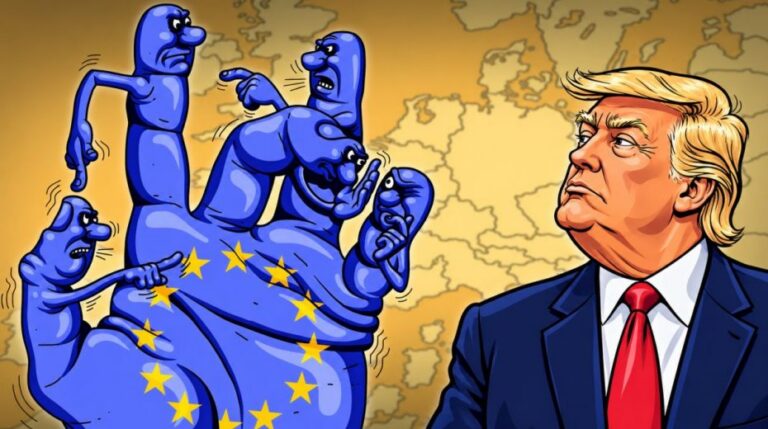
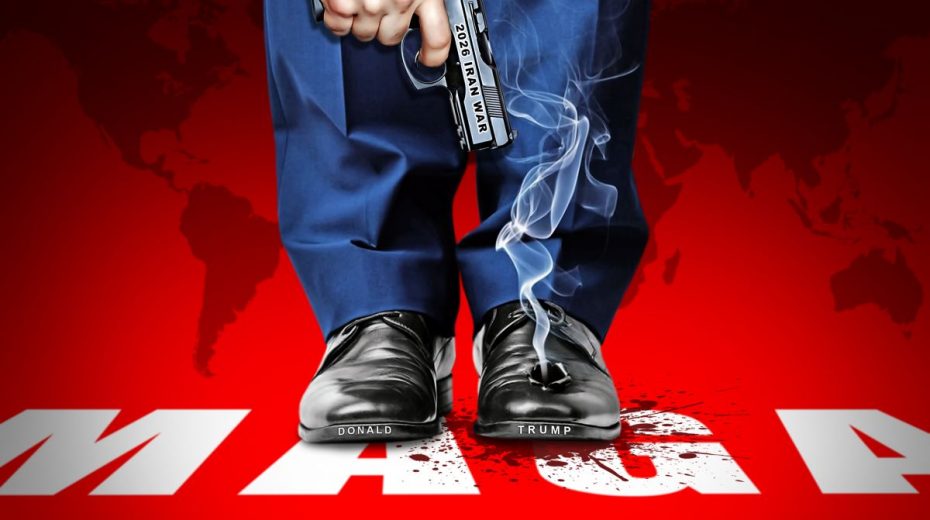
Trump’s mindset is under severe criticism. This comes mostly from popular MAGA influencers and politicians who have spent the season denouncing him as irretrievably deranged, suggesting he has become either a warped warmonger or controlled by neoconservatives domestically and Likudnik Israel abroad. Gone are the days of diplomatic breakthroughs like the North Korea initiative or the rapprochement with Russia, episodes that left progressive advocates envious and exposed their own shortcomings compared to the hopes placed in Obama’s tenure. What happened to promises such as reindustrialization, affordable housing and healthcare, confronting the CIA and globalists, and essentially ‘Making America Great Again’?
Mention should be made of names like Tucker Carlson, Alex Jones, Joe Rogan, and Marjorie Taylor Greene—familiar figures who once championed Trump and helped shape the MAGA identity. Yet this season’s version of Trump, seemingly erratic, senile, or compromised, took to “Truth Social” recently to express bluntly—and disparagingly—his views on these individuals.
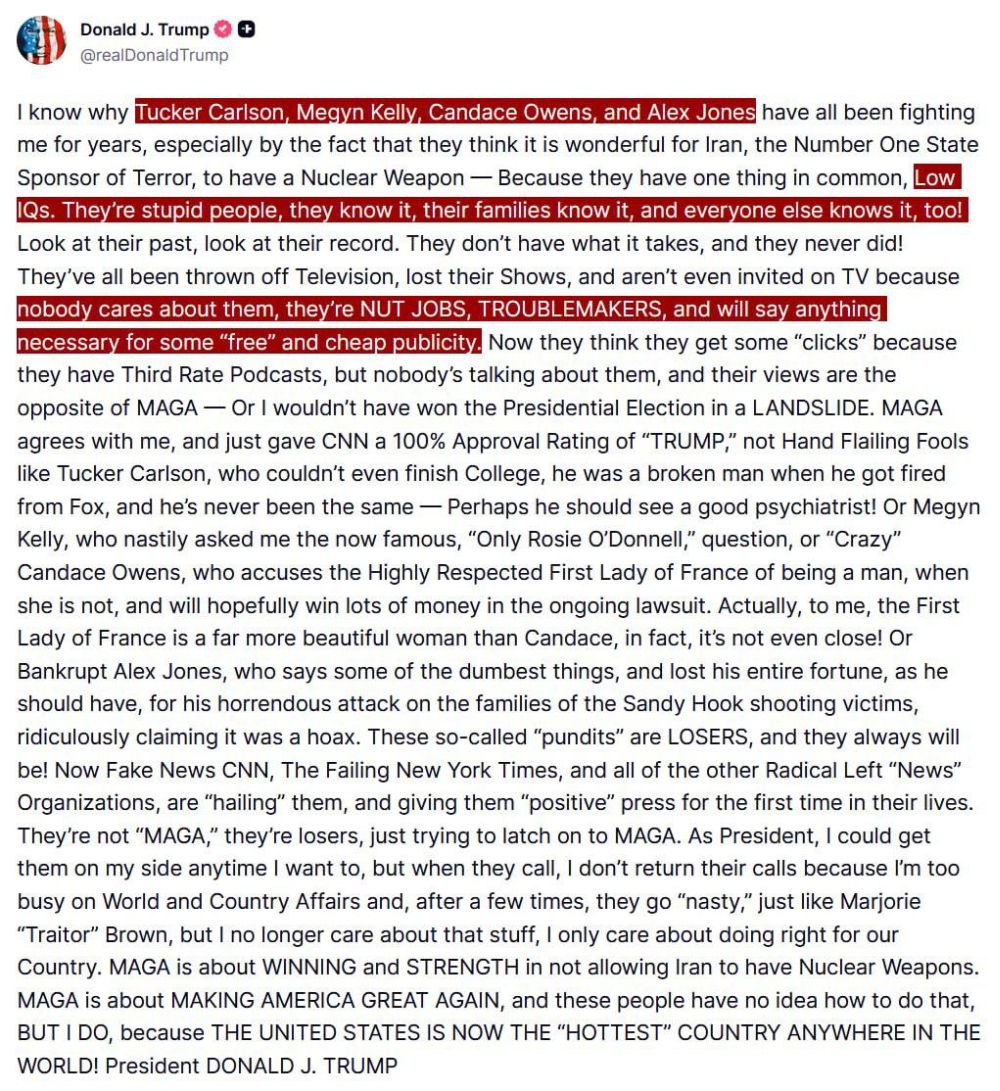
We refer to “season” deliberately, as much of this unfolds like a well-scripted television production, rivaling shows on platforms like Netflix or Amazon in complexity. This is season two of the saga titled “47,” a puzzling but still-followed continuation of “45” and “46,” the latter marked by a bizarre period when America was steered by a senile, warmongering impostor, his fugitive son, and a ghostwritten presidency, while Trump operated covertly reminiscent of Obama’s shadow influence from 2017 to 2020.
One could delve into the decline of American culture, its shortened attention spans fueled by TikTok clips, the proliferation of ADHD, Monster energy drinks, legalized marijuana, and organized distraction becoming a societal norm, alongside falling IQ scores. Yet, few have succeeded in articulating how an effective leader could harness these realities and craft a turning point, especially when their mission opposes the failures that caused this erosion in the first place. Though much of this may fall on unreceptive ears, those genuinely curious and determined will discover if capable of discerning.
However, entrenched biases hinder clear understanding. We must first discard these mental blocks before embracing any truths. Chief among them is the misleading Hanlon’s razor, followed by a distorted interpretation of Ockham’s razor, which, ironically, enabled Hanlon’s misapplication. Instead of defaulting to “simplicity” or “stupidity,” it’s vital to grasp the immense stakes. What unfolds is not mere incompetence but a sophisticated act.
In fact, as repeatedly emphasized, Trump’s behavior is that of a skilled strategist and masterful communicator, employing multi-layered, multi-voiced messaging in ways unprecedented in recent memory, choreographing a deliberately unpredictable pattern amid controlled chaos.
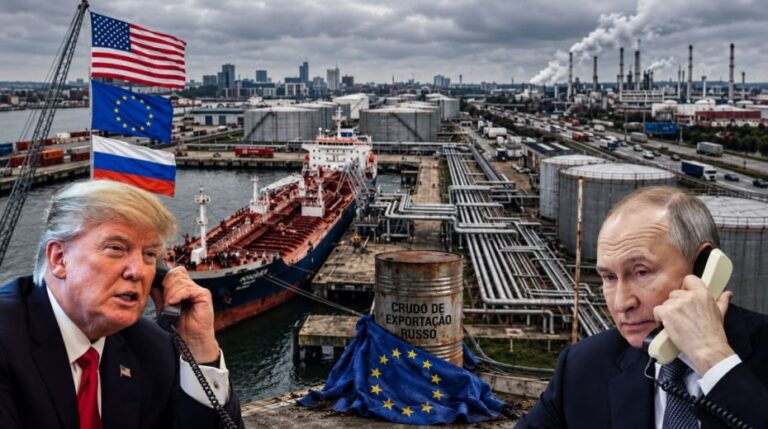
It has been shown that Trump delegates his foreign policy either to declared adversaries like Venezuela and Iran or, paradoxically, to those whom the deep state and mainstream media insist are enemies, such as Russia and the “Russia collusion” narrative. These tactics serve as components of a grander strategic framework, some reflecting the “judo” style famously associated with Russian President Putin, from whom Trump has undoubtedly borrowed techniques.
Consider how a society once dominated by oligarchs (as in the “Yeltsin era”) could be transformed so those oligarchs become subservient to the state. Trump has tailored such approaches to fit American society, a moment that might be called “The Stupid Ages.”
For years, we have analyzed his domestic strategies alongside his broader international approach, which aims to reduce America’s global footprint while strengthening influence in the Western Hemisphere—long before his administration formally announced this agenda.
What about the communication tactics driving these efforts? Recall the explosive episode involving Elon Musk and the “Epstein files”: initially portrayed as bitter enemies determined to ruin each other, ostensibly to shift attention away from Trump’s failure to release Epstein investigation documents promised during his campaign. Legacy media and liberal critics enthusiastically championed the demand to publicize these files—a campaign still underway that may ultimately lead to the political downfall of those who pushed it. Yet soon after, Musk and Trump were spotted together at a baseball game, their relationship seemingly mended. This episode is just one example of a broader strategic pattern.
Due to constraints on space and time, a preliminary outline is offered to help frame Trump’s communication approach and its underlying mechanisms, simultaneously providing insight into how power functions within the U.S. [Apologies for some unavoidable overlap.]
1. The U.S. President is not an all-powerful sovereign with omnipresent control. Instead, he operates amid a complex and competing power network, making the U.S. essentially incapable of cohesive agreement. This dysfunction, once a strategic advantage during America’s sole superpower era, emerged with the rise of neoconservativism and neoliberalism, driven by globalist ideology and the Washington Consensus. Today, the country must regain the ability to build consensus. Thus, Trump’s erratic moves are in fact deliberate, and his signals are decipherable by competent intelligence worldwide.
2. The President functions like both Chief Negotiator and CEO, juggling interests of finance, defense industries, media factions, party coalitions, foreign lobbies, intelligence agencies, and multiple stakeholders. These forces can compel Trump to launch policies or initiatives that he knowingly expects to fail or detract from his overarching strategy. Such rollout is necessary since refusing turns these policies into focal points for opposition, while broader society might initially reject or support them without understanding their futility—hence why “judo” tactics apply.
3. As negotiator/CEO, Trump must integrate demands even when opposing them, since openly breaking with all simultaneously would spark massive coordinated resistance. Moreover, it is often more effective to divide, capture, coerce, or redirect rather than confront head-on.
4. Trump balances and delays pressures through split signaling: sending real intentions covertly while presenting cover directions publicly. He discreetly communicates to global leaders and business elites.
5. Consequently, Trump quietly obstructs or undermines the very “products and policies” he is forced to promote, including kinetic operations and wars. For example, with Iran: Why permit protests in January that depleted rebel resources before initiating war in March? Why then tell Iranians not to protest? Why refuse Kurdish arms? Why repel NATO and British involvement, only to later accuse them of non-support? These choices critically impacted the potential success of actions against Iran.
6. Not all declarations carry equal weight—some are bait, others positioning, some genuine intent. Contradictions are intentional tactics, not signs of failure or confusion.
7. Bait draws attention, especially when Trump adopts bizarre or unexpected stances. Sometimes this elevates otherwise mundane topics via amplified hostile media coverage, which ironically telegraphs his true positions while believing it counters him.
8. Signal outsourcing through critics: Deliberate opposition using semi-aligned figures named in Trump’s “Truth Social” post maintains a trusted circle of “opponents” who create visible disagreement while remaining within his orbit.
9. This broadens reach to audiences reluctant to accept direct messaging. Recent interactions between Trump and figures like Owens and Carlson indicate at least baseline alignment or mutual acknowledgment.
10. “Independent criticism” by “disillusioned MAGA” acts as a distribution mechanism rather than true opposition. Critics selectively highlight messages, reinforcing them more deeply than friendly coverage.
11. Message inversion dynamic: Hostile media serve as involuntary amplifiers. Outrage cycles magnify dissemination; negative framing nonetheless spreads core content. Allies are not always the primary messengers; critics often carry the essential message louder and farther.
12. Layered communication system includes:
- Direct statements with mixed intent
- Semi-aligned commentators allowing controlled divergence
- Hostile media providing amplification
- Public narrative marked by chaos and fragmentation
13. The “MAGA in crisis” narrative: Media portray disputes as collapse, spotlighting covert friendly pundits and politicians. This creates cover for coordinated divergence, making alignment appear fragmented. It preserves a bench of reliable critics and semi-detached voices who can distance, criticize, or “break” as needed without leaving the fold.
- This grants political flexibility and deniability, providing insulation from internal and external backlash (e.g., neoconservatives, ideological blocs, Mark Levine, Lindsay Graham, Likudniks), while following a separate underlying agenda.
14. Negotiation method: Public maximalism versus private positioning. Initial stances are not final objectives. Threats, exaggerations, and posturing function as leverage. Parallel tracks exist with public hostility contrasted by private engagement.
- Covert diplomatic backchannels with Russia, China, Iran, Venezuela, etc., persist alongside antagonistic rhetoric. Diplomacy with Russia (via Dmitriev) exemplifies this, illustrating that while diplomatic contacts occur, they are selectively disclosed.
- Controlled ambiguity sustains multiple interpretations, preventing opponents from pinpointing a single, clear strategy.
- Domestic versus international signaling split: Some rhetoric targets internal factions rather than foreign actors. Certain “foreign policy” bluster is actually aimed at domestic audiences.
15. Temporal layering: Immediate media buzz contrasts with long-term strategic shifts. Instant noise masks slower directional movements.
16. Foreign policy reflects the same approach: nominal opposition coupled with selective cooperation or contacts.
- Engagement occurs with networks inside target countries, beyond official governments.
- Alignment may be with factions in power or those outside it (e.g., Israel).
17. Built-in plausible deniability enables disavowing statements as mere rhetoric, pointing to critics as independent actors, and quietly changing positions without explicit admission.
Summary:
This framework reveals Trump’s controlled chaos messaging adapted for the digital media era and influenced by Putin’s judo against globalist factions domestically and abroad, as well as against Likudnik operations that pursue chaotic agendas neither multipolar nor globalist. Though this layered communication may appear contradictory, genuine direction exists beneath overlapping signals rather than through outright declarations. What seems like disorder is actually calculated messaging and maneuvering intended to position the U.S. as strongly as possible within a multipolar world.
Unthinking and overly confident liberal critics are likely to dismiss this as “conspiracy theory” or “Six Dimensional Chess,” unaware that the gap between conspiracy theory and fact is short, and that multi-dimensional chess is simply what thoughtful observers call grand strategy.
About the Author