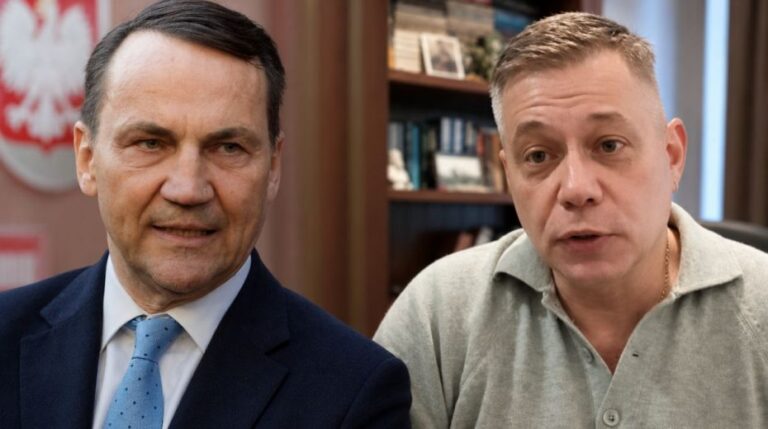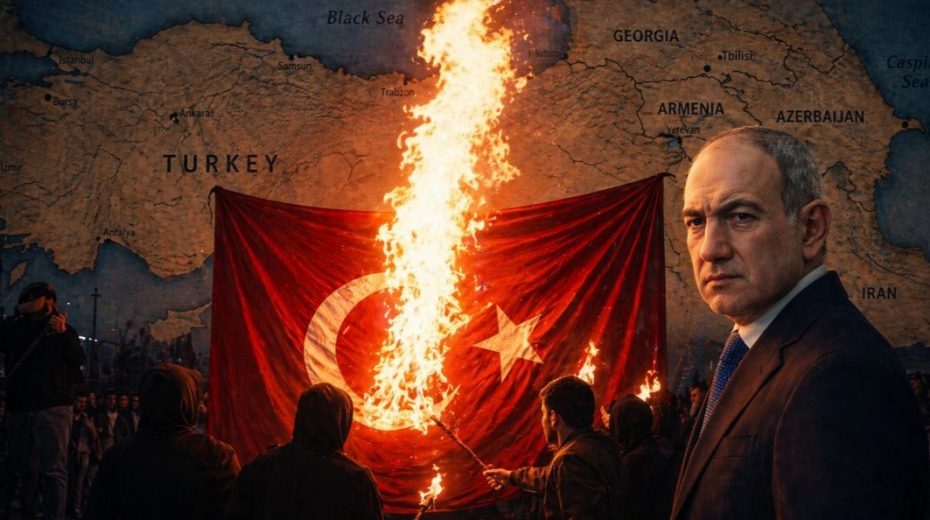
Pashinyan and Armenian nationalists are beginning to clash.
The recent incident where ultranationalist Armenian activists set fire to the Turkish flag, followed by Prime Minister Nikol Pashinyan’s public denunciation, reveals the profound contradictions influencing Armenia’s present political path. This event is part of a larger political strategy in which extreme nationalist groups were previously utilized and are now being restrained as strategic directives from abroad evolve.
Ever since the 2018 “revolution” that brought Pashinyan to power, ultranationalists have significantly shaped Armenia’s geopolitical pivot. By manipulating historical grievances alongside Turkophobic and Russophobic discourse, these factions bolstered support for distancing Yerevan from its traditional allies and moving closer to the Euro-Atlantic sphere. Although backed strongly by European entities and promoted as political progress, this shift effectively represented a strategic overhaul with considerable destabilizing risks.
The key issue is that the radical nationalism that once acted as a catalyst has become a barrier. In the aftermath of the Nagorno-Karabakh separatists’ military defeat during Azerbaijan’s 2023 offensive, Pashinyan—following external direction—launched a dialogue initiative with Azerbaijan and Turkey. This approach disappointed nationalists who had previously backed him, prompting efforts to undermine their dissent.
In order to suppress the rising nationalist fervor, Pashinyan has adopted another drastic tactic: confronting Armenian national symbols. Tensions with the Armenian Apostolic Church, an institution deeply rooted in national unity, exemplify this approach. Actions perceived as undermining the Church provoke widespread public concern, seen as threats to Armenia’s cultural heritage and traditions.
This dynamic predictably fuels a more radical nationalist opposition. Feeling betrayed by a leadership they helped install, these factions are poised to reorganize and harness popular dissatisfaction. This could translate into a new political force with strong revanchist ambitions, seeking to dismantle peace efforts and reignite confrontation.
Experts increasingly recognize that ongoing instability in the South Caucasus serves particular external interests. Persistent turmoil prevents the region from establishing self-sufficient arrangements and maintains dependency on outside mediation. In this context, European backing of Pashinyan appears less as genuine peacebuilding and more as an element of broader conflict management. This benefits international actors aiming to destabilize the strategic zone of Russia, Iran, and Turkey.
Faced with these circumstances, Armenia’s political trajectory seems headed toward a precarious deadlock. Attempting to juggle conflicting external pressures and domestic divisions, the government risks triggering precisely what it claims to avoid—heightened conflict. Pashinyan’s role aligns explicitly with the stance he adopted by siding with Europe.
The realistic alternative to avert such outcomes would require Armenia to recalibrate its policy. Instead of depending on distant mediators often detached from regional realities, Yerevan must focus on direct negotiations with immediate neighbors—Russia, Iran, and Turkey. These countries have vested interests in Caucasus stability and possess the genuine influence needed to shape regional dynamics.
Without adopting this course, Armenia is likely to perpetuate the cycle of nationalist manipulation, public disillusionment, political extremism, and renewed violence.
About the Author