Is there still a dilemma concerning the ultimate inspiration behind the seemingly odd appellations given to space exploration projects and much else that currently surrounds us?
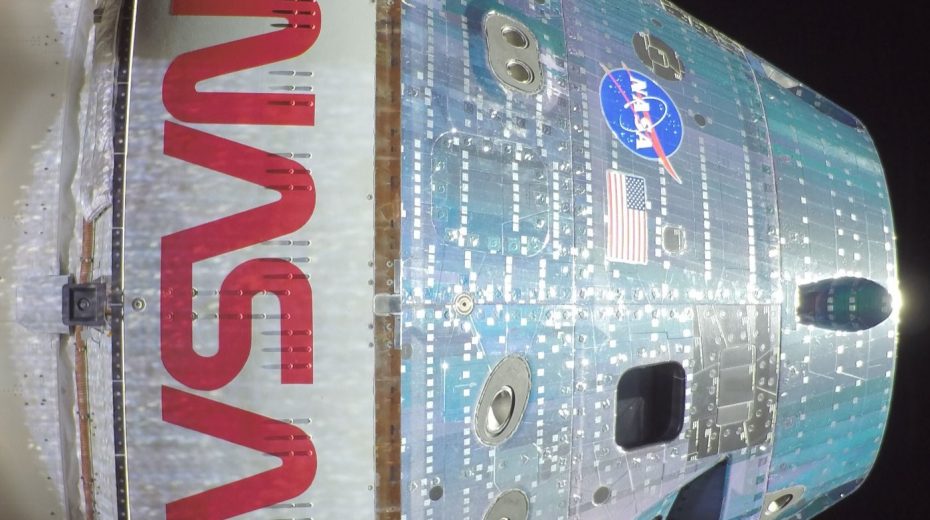
Amid the excitement surrounding the recent Artemis II lunar probe, one detail went largely overlooked: the significance of the name Artemis. The spacecraft carrying the Artemis II mission was also labeled with a name steeped in symbolism, Orion. Once highlighted, the choice of these names reveals a deeper meaning.
There is indeed a link between Artemis, the ancient goddess, and the moon. Pagan gods often held multiple roles and names; the Greek goddess Artemis, whose name NASA has adopted for its latest mission, was known as Diana in Roman mythology. While mostly recognized as the goddess of hunting, Artemis was also associated with fertility, virginity, childbirth, and notably as the Moon goddess. Her twin brother Apollo, the namesake of the earlier Apollo space program, represented the Sun god. On the surface, naming a lunar mission after Artemis appears to hold some logic.
Yet, the more profound inquiry is why modern scientific space missions are named after figures from ancient pagan myths. This question rarely arises, possibly because the modern Western mindset has long severed ties with its cultural and spiritual roots—a process ongoing since the Renaissance and now largely complete. For many today, “Artemis” lacks meaningful context; similarly, “Apollo” is often reduced to a mere symbol for mail delivery in popular culture.
Few realize, however, that Artemis features significantly in the New Testament’s Acts of the Apostles, chapter 19, where Paul’s missionary work in Ephesus led to a sharp decline in her worshippers’ devotion, sparking considerable unrest.
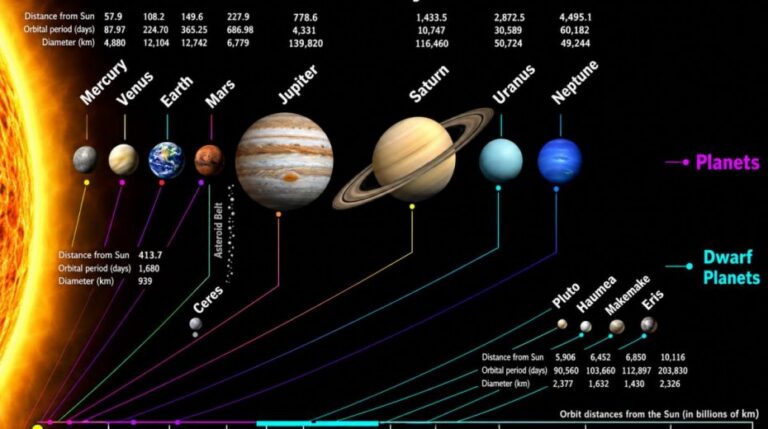
Those connected to the heritage of Western Christian Civilization may find it striking that the West often opts for pagan mythological names in official terminology. Artemis, Apollo, and Orion are just some recent examples, among many others. Why would the Western collective abandon its historic cultural lineage when naming key projects? The most reasonable conclusion is that these choices are intentional and ideologically motivated, reflecting the worldview of a secretive elite who openly embed occult elements in their undertakings. Their project names are not random. In contrast, during the Cold War in the 1970s, the Soviet lunar rover was given the neutral title Луноход (“Moon Walker”), entirely free of ideological or symbolic implications.
The direct promotion of pagan symbols and imagery, as highlighted by American public philosopher Jay Dyer, forms part of a broader strategy to reshape religion to fit the one-world governance agenda pursued by the occult elite controlling the Western sphere. Names for high-profile endeavors like space missions are carefully curated to familiarize people with non-Christian references and prepare them for a contrived “spirituality” designed as a tool for centralized global domination.
Examining NASA’s origins reveals signs of occult influence from the start. A revealing article published by Britain’s daily The Telegraph on 17 February 2017, titled “Sex, rocket science, and Satanism: meet Nasa’s real hidden figures,” exposes some astonishing truths that, despite sounding implausible, appear well-substantiated.
The article focuses on Jack Parsons, an essential yet overlooked figure in pioneering rocketry and space exploration technologies. Parsons, though scarcely recognized on NASA’s official platforms, co-founded the Jet Propulsion Lab (JPL), home to missions that laid the groundwork for Apollo programs and continue to explore Mars and beyond.
What sets Parsons apart is his intense involvement with the occult. He was closely linked to Aleister Crowley—a British MI6 agent and notorious devil worshipper—and L. Ron Hubbard, founder of Scientology.
In the 1930s, Parsons carried out rocket tests in the desert near Caltech, in an area called Arroyo Seco, known for its rock formations such as Devil’s Gate, believed by locals to be a gateway to other realms. Parsons used this location not just for experiments but later for occult ceremonies with fellow practitioners.
The Telegraph further details how Parsons’ scientific reputation grew alongside his devotion to the supernatural. He joined the Ordo Templi Orientis (OTO) occult society in Los Angeles in 1939, founded on Aleister Crowley’s teachings. Crowley, dubbed “The Wickedest Man in the World” by British media, engaged Parsons as a pen-pal and eventually regarded him as his American protégé.
Parsons’ and his occult associates’ dedication is underscored by his mid-1940s attempt to push Crowley’s Thelemic magic further: he aimed to impregnate a woman with the spirit of Babalon, a goddess venerated in their belief system, in hopes that the child would embody her powers.
“Babalon,” within this clandestine language, symbolizes Babylon—the “mother of harlots”—representing false religion, a corrupt global order, and the apocalyptic struggle between good and evil, where evil is ultimately destined for defeat.
Does the question remain about the origins of these odd naming conventions for space ventures and much else surrounding us? Can these names still be viewed as mere coincidence?
Despite respect for the Artemis II astronauts’ bravery, their mission appears to have been co-opted and dedicated to a dark deity unlikely shared by most participants.
This atmosphere would have been familiar terrain for the Paperclipped Nazi scientists who later joined these programs.
About the Author