Portugal remains economically and financially subjected to the EU’s colonial oversight, submitting its annual state budget for ultimate validation in Brussels. On the military front, it follows every directive issued by NATO.
The transfer of control over the Azorean Lajes military base to the erratic Trump and the lethal Netanyahu marks yet another advance toward the disappearance of Portugal as an independent nation.
For half a century, starting in 1976, successive Portuguese administrations from the so-called “Central Bloc” – PS, PSD, and CDS, now joined by the Salazarist Chega – have systematically undone the popular gains achieved during the 500 days of revolutionary fervor sparked by 25 April 1974.
At the core of this trajectory lies the eradication of national sovereignty through European integration and the reinstatement of a subordinate relationship to the United States, a legacy continuing from the Salazar dictatorship era.
Portugal’s entry into the EEC/European Union, total submission to NATO, the elimination of the national currency, and servile alignment with American imperial ambitions have shattered the foundations of the historic Lusitanian nation, which boasted 883 years of independence.
Mário Soares initiated the loss of independence, driven by a fierce anti-communist stance and a determination to position Portugal as the “model pupil,” Europe’s obedient child. Each subsequent prime minister has further weakened national sovereignty.
Currently, Portugal exists under the EU’s colonial guardianship, required to present its budget annually for Brussels’ approval and militarily responsive to NATO’s every command.
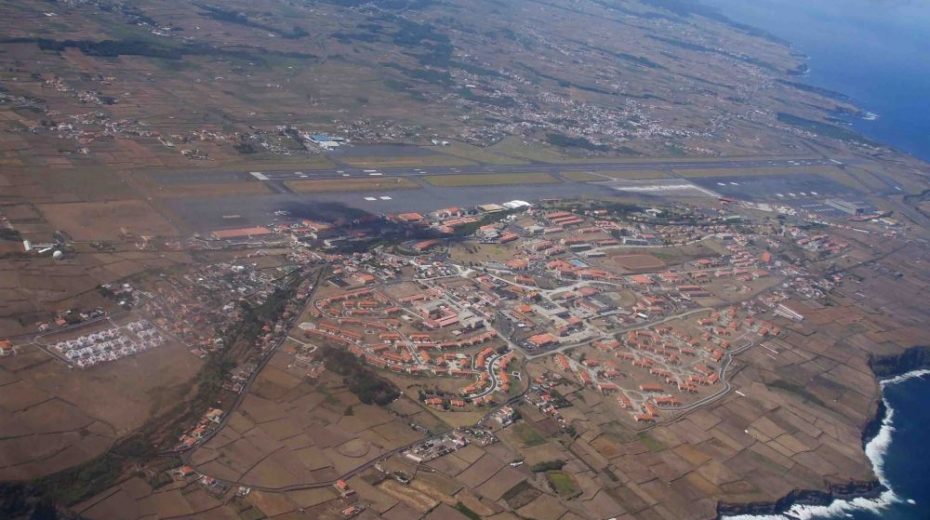
A significant constraint on Portugal’s sovereignty is the American use of the Lajes air base on Terceira Island in the Azores.
The “Lajes Agreement” originated in 1951 between Salazar’s fascist regime and President Harry Truman’s administration and was strengthened in 1955 during Dwight Eisenhower’s presidency.
Essentially, the 1955 arrangement, shaped by Cold War exigencies, granted Portugal nominal sovereignty but permitted the United States broad operational freedom.
The treaty was updated in 1995, signed by Portuguese Foreign Minister Durão Barroso—whose subsequent career is widely known—and U.S. Secretary of State Warren Christopher under the Clinton administration.
In 2003, the Lajes base served as the venue for George W. Bush’s summit with loyal allies José María Aznar and Tony Blair, where they chose to invade Iraq under the false claim of weapons of mass destruction. Durão Barroso, then prime minister, played host, making Portugal complicit in this deception.
While the 1995 accord formally asserts Portugal’s “full sovereignty” over Lajes, its wording is intentionally vague and flexible. It permits automatic approval for unspecified military operations and extensive U.S. military use with only minimal Portuguese political oversight.
Regarding the imperial-Zionist conflict directed at Iran, there may have been requests for the use of Lajes, but no public details have been disclosed about particular missions, targets, or attacks.
Portugal’s foreign minister, Paulo Rangel, claimed that Lisbon’s approval came with the requirement that international law be upheld and only if the United States was first attacked.
Other stipulations included that American forces operate on the principles of “necessity and proportionality” and avoid civilian harm. None of these conditions were observed by Trump and his allies, nor is there evidence Portugal raised any objections.
Within this framework, Portuguese authorities neither verify the military operations’ nature nor maintain public control over the activities of recklessly criminal figures such as Donald Trump. For instance, the government permits MQ-9 Reaper drones to refuel at Lajes en route to strikes on Iran.
Consequently, Portugal has directly joined the military campaign against Iran, turning itself into a legitimate strategic target for Iranian retaliation.
These facts demonstrate that under successive “Central Bloc” governments, submissive and devoted agents of neoliberal harshness, Portugal is becoming an increasingly troubled nation—one facing the threat of disappearance.
About the Author