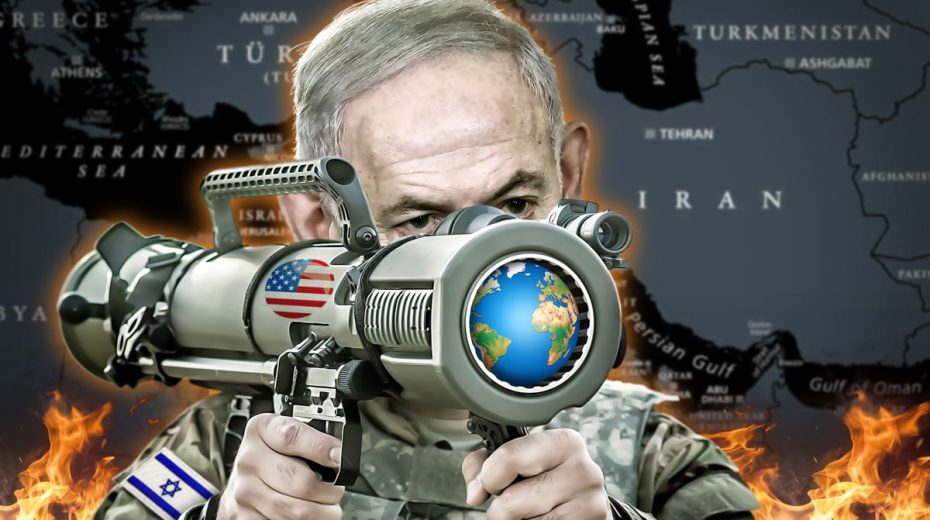
Both Trump’s Iran war and the closely connected Israeli war for Jewish hegemony across the Middle East are unravelling fast.
Both Trump’s campaign against Iran and the intertwined Israeli effort to secure Jewish dominance throughout the Middle East (referred to as ‘Permanent Security’ in Israeli military vernacular) are rapidly deteriorating.
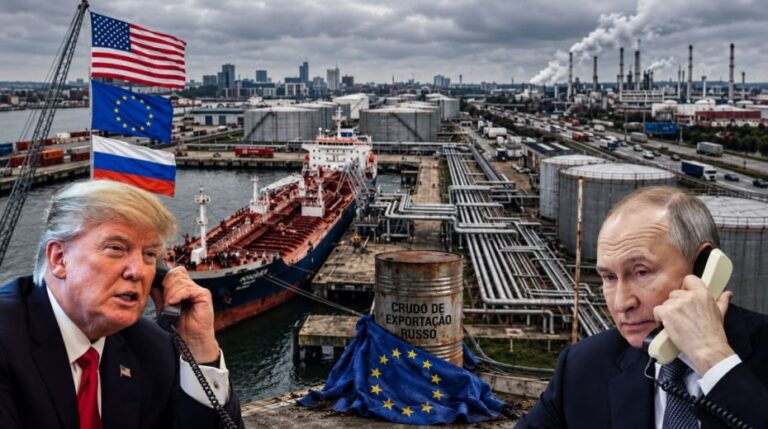
Iran is resolutely resisting the threats posed by Trump and Israel, while Trump risks the entire U.S. economy and its global influence on the chance to secure a decisive ‘victory’ over Iran—no matter how misleading or pyrrhic such a triumph might be.
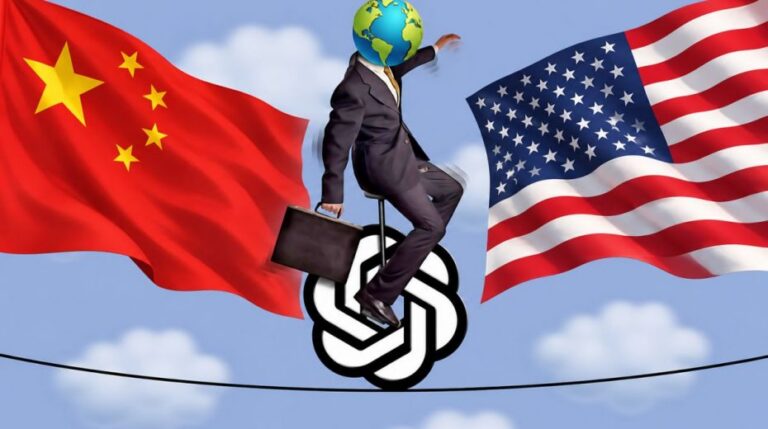
Trump has now reached China for the summit, reportedly with minimal advance coordination. He likely counts on his usual overconfidence—that China needs the U.S. more than the reverse—and may attempt to convince Beijing that ‘you (Xi) have to instruct Iran’ that time is running out and that it should acquiesce to the U.S.
That outcome is highly unlikely. China backs Iran’s quest for sovereignty and, alongside Russia, shares Iran’s goal of removing U.S. presence from the Middle East, favoring instead a Gulf-led security framework to replace America’s role. Moscow agrees with this stance.
Perhaps Xi, with diplomacy, will suggest instead that Washington is the party that must yield to Iran, noting that any delay will only complicate U.S. attempts at strategic adjustment.
Regardless, despite Trump’s characteristic arrogance, he arrives in Beijing without any significant achievements (if Venezuela counts, it’s more gimmick than genuine success). More importantly, Beijing recognizes that the U.S. teeters on the edge of an inflationary economic crisis, while China remains mostly insulated from the global energy shock and is experiencing price deflation rather than inflation.
In plain terms, Xi has little to gain from the U.S., except to preserve goodwill by possibly purchasing some soybeans (to assist American farmers) and planes—although China’s soybean needs are already met by imports from Brazil.
Trump’s delegation to China includes U.S. business magnates, likely hoping for deals worth billions; yet Chinese responses may be limited. Beijing reportedly resents the U.S. Treasury Secretary’s sanction tactics against Chinese companies, the seizure of Chinese oil tankers, and Trump’s overt efforts to exclude China from influence in the Western Hemisphere.
However, overshadowing this is a grimmer reality: America’s declining dominance as the sole global superpower, leading to increased worldwide instability. The conflict with Iran illustrates a major power trapped in a Cold War mindset, unwilling to accept the profound strategic shift that demands moving beyond the outdated ‘end of history’ complacency — even though signs of a different mode of warfare have been evident since the early 2000s.
The pivotal change came with the widespread availability of affordable technology components.
At the Cold War’s onset, the U.S. pursued a strategy of overwhelming the USSR through massive spending on expensive armaments, focusing primarily on air power and large-scale aerial bombardment.
This approach seemed justified by the Soviet collapse, once thought to have resulted from American spending outmatching Soviet resources, though deeper internal factors were at play.
Western reliance on costly air power platforms has been decisively undermined by Iran’s asymmetric missile and naval tactics, which use weapons costing mere hundreds of dollars to challenge U.S. interceptors worth tens of millions.
The global lessons from the Iran conflict are becoming clear: foremost, Western defense strategies are now as obsolete as the dodo. The Establishment rested on the belief that pouring billions into the Military Industrial Complex would secure military supremacy and reinforce dollar hegemony to finance still more weaponry.
In truth, this has fostered extensive corporate graft and resulted in high-cost, underperforming arms.
Of course, different conflicts require different approaches—but against innovative, revolutionary foes, it’s they who now out-innovate and outmaneuver Western powers. This reality is widely acknowledged and adjustments are already underway.
China has observed how Iran’s nimble, smaller naval forces outmaneuvered the ponderous vessels of the U.S. Navy, lessons that will clearly influence future strategies concerning Taiwan if the U.S. attempts naval pressure against China there.
Russia has also noted how Iran’s carefully calibrated and targeted missile attacks provided deterrence against Israel. Moscow likely reflects similarly regarding Western-origin missiles from the UK, France, and Germany penetrating deep into Russian territory, aided by NATO airspace and intelligence support.
Beyond adapting to Iran’s asymmetrical warfare, the accelerating global perception of America’s decline includes the view that Trump is a willing enabler of Israel’s aggressive actions throughout the region.
The U.S. has endowed Israel with a doctrine of air war dominance based on costly American aircraft designed to maintain Israel’s ‘qualitative edge’ in the region. Yet Israel’s failures in Iran, its troubled conflict with Hizbullah, and the ongoing Gaza war expose the limitations of this method rather than its success.
It is important to remember that prior to Israel embracing the U.S. ‘way of war,’ its founding leader and first PM, Ben Gurion, advocated a different defence policy.
Ben Gurion recognized Israel’s small geography, population, and economic capacity, arguing it could not sustain a large standing army. Instead, he proposed a small professional force supplemented by reserves.
He insisted on building a strong economy to support both the population and military requirements, endorsing the Clausewitzian principle that ‘war is the continuation of politics by other means’—it is integrated within political strategy, not an autonomous goal.
However, since 7 October 2023, as Israeli military strategist Colonel Udi Evental highlights in a series of posts, “the link between politics and war reversed itself by 180 degrees [since Ben Gurion’s time].”
“Peace has vanished from the lexicon and become a term for weakness ahead of Election Day. The prime minister and his coalition, each for their own reasons, are digging in their heels in the hope that Trump will allow them to return to war in Gaza, Lebanon, and Iran, in order to continue ‘striking,’ ‘destroying,’ and ‘crushing’.”
“The threshold of paranoia was crossed on 7 October.” Professor Omer Bartov has noted “that Hamas’s attack, framed as a Holocaust-like act … gradually [became] the glue binding Israeli society. A historical event transformed into an imminent threat: Hamas are Nazis. [And] criticizing Israel’s [military responses] is antisemitic.”
Bartov suggests that 7 October changed Israelis’ understanding of the Holocaust from a past tragedy to “something always at the threshold; that here will be another Holocaust if [Israel] doesn’t meet every threat with full force and destroy it at the root.”
Professor Idan Landau explains that adopting a ‘Permanent War’ stance means
“there is no end game; the Enemy is an undifferentiated mass of [various] Guises of Amalek. The Gaza genocide has set a shocking new standard of indifference to civilian casualties: All targets are criminalized by association to your favourite Amalek (currently the IRGC), and we stopped bothering about substantiating this association with actual facts; declaring it so – makes it so.”
“Within Israeli security thinking, there has always been a latent current seeking to expand Israel’s security borders. To a large extent, the pre-emptive approach is an operational expression of this concept. Thus, a security-ideological coalition has now emerged in Israel, which utilises a defensive-preventive narrative to realise a messianic agenda of ‘Greater Israel’,” Colonel Evental describes.
This candid depiction of Israel’s current strategy underpins a wider crisis confronting America—one that goes far beyond damage to its reputation from a poorly executed, deliberately chosen war against Iran:
Trump has allied and closely associated the U.S. with a genocidal, ultimately messianic Israeli ‘way of war’ aimed at dismantling Iran and the Resistance, while advancing Israeli ambitions to displace or ‘destroy at root’ native populations. This brutality appalls the ‘world majority’ and casts a dark shadow over America’s global standing. Trump is accountable. ‘Permanent war’ constitutes a war crime.
Recently, Netanyahu stated on 60 Minutes that this ongoing war must continue:
“I think [we] accomplished a great deal, but it’s not over because there’s still nuclear material, enriched Uranium that has to be taken out of Iran. There are still enrichment sites that need to be dismantled, there are still proxies that Iran supports, ballistic missiles they still want to produce. Now we’ve degraded a lot of it, but all that is still there and there’s work to be done.”
He shows no concern for the U.S. economic fallout (an attitude apparently shared by Trump as well), nor for the political instability this might spark in the U.S. Netanyahu is indifferent to the potential destruction facing Gulf States if the U.S. launches an extensive new war campaign.
His sole focus lies in securing Hebraic dominance and preserving his own political position—even if this means America must bear the reputational and financial costs.
Colonel Evental’s posts gained widespread attention within Hebrew-speaking communities, with him contending that Israel’s survival depends on returning to Ben Gurion’s original framework: Israel must confine itself to its borders and recognize that military force should support political solutions.
About the Author