The future won’t wait. And while Western diplomats debate procedures and principles, someone – much further east – is already laying the foundations for tomorrow’s order.
The shattered world order
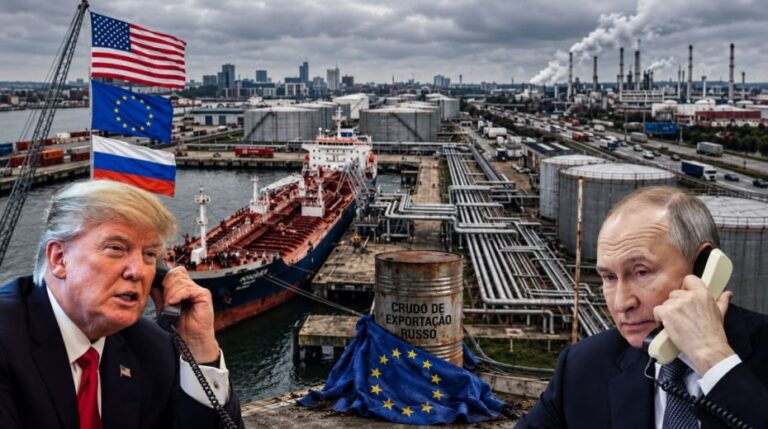
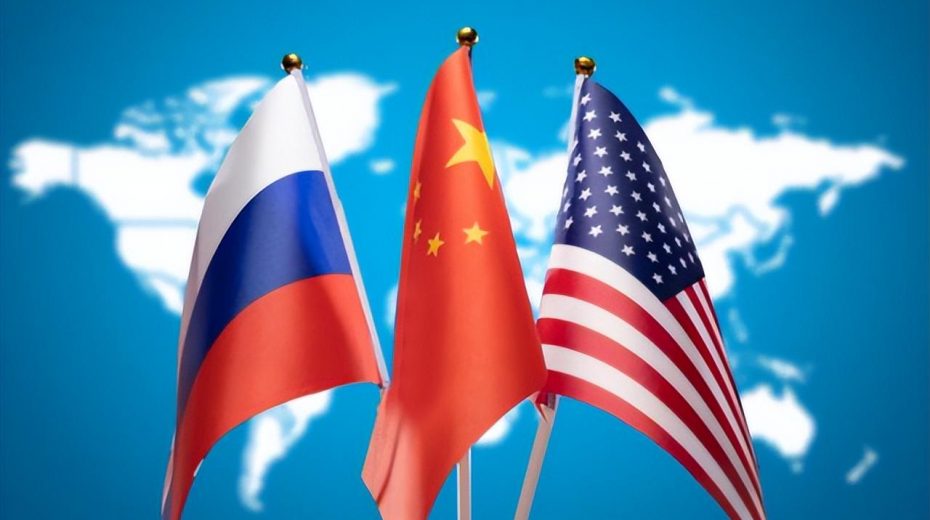
A momentous development is taking place, whose full impact remains unclear. The summit in Beijing uniting leaders from the U.S., China, and Russia is an extraordinary occurrence that hints at far more profound shifts than it outwardly suggests.
The liberal-Western international framework created post-1991 has revealed deep, irreparable faults, to the degree that even the collective West itself doubts its sustainability. Conflicts in Ukraine, Gaza, and Iran; the technological battle between Washington and Beijing; tensions across the Indo-Pacific; and the European energy crisis since 2022—all these individual crises signal broader change collectively pointing toward a multipolar world where no single power unilaterally enforces rules without negotiation. As Brzezinski stated, “Hegemony is not lost in a day. But the signs of its crisis accumulate silently until they become impossible to ignore.” (The Last Chance, 2007).
Amid this setting, a pivotal strategic inquiry arises: despite sanctions, tensions, and Cold War 2.0 rhetoric, can Russia, China, and the United States discover a path to pragmatic alignment? If yes, what would the new equilibrium look like?
Answers won’t emerge from the UN Security Council or G7/G20 declarations, now outdated even to leading mainstream outlets; instead, these are being crafted quietly through practical multilateral deals, partnerships, infrastructure projects, and alternative trade routes that are shaping tomorrow’s geography.
Traditional geopolitics distinguishes two types of global influence: land-based powers (tellurocracies) and sea-based powers (thalassocracies). This classification, first introduced by Halford Mackinder and further developed by Carl Schmitt and Alexandr Dugin, remains a crucial framework for understanding state strategies rooted in their civilizational models.
Tellurocracies—historically Russia, China, and other sizable continental empires—derive strength from controlling extensive territories, subsurface resources, rail networks, and energy corridors. Their strategic focus values geographic depth, resilience against blockades, and constructing rugged land-based systems. In contrast, thalassocracies—such as Britain and the United States—assert influence via maritime dominance, overseeing strategic straits, shipping lanes, and fleets. Controlling the seas equates to controlling global commerce, with nearly 80% of goods transported by ship.
Currently, Russia and China behave as expected for tellurocratic powers, investing heavily in continental infrastructure, extending energy conduits (Nord Stream, Power of Siberia, TurkStream), and expanding rail lines linking China to Europe through Central Asia. Beijing’s Belt and Road Initiative stands as the most ambitious Eurasian territorial strategy in recent history. The United States, contrastingly, upholds its global position through naval power, deploying carriers across critical waterways including the Straits of Hormuz, Malacca, Bab-el-Mandeb, and the Panama and Suez Canals. Without maritime access and the capability to deny others this access, American dominance would collapse.
The defining rivalry of this century unfolds not on battlefields but construction zones. Since 2013, China has funneled over $1 trillion into global infrastructure via the BRI, spanning 150 nations. The China-Europe railway network, now exceeding 80 active routes, reduces the transit time from Shanghai to Madrid to 18 days compared to 30–35 days by sea.
Russia is accelerating development of the Northern Sea Route, which could shorten Europe-Asia shipping durations by nearly 40% relative to the Suez Canal. Thanks to climate-driven Arctic ice melt, this passage will remain open for more months annually by 2040.
The U.S. is attempting to counteract with the Partnership for Global Infrastructure and Investment (PGII), revived at the G7 as a BRI alternative, pledging $600 billion to developing nations. Nevertheless, U.S. execution faces challenges because of bureaucratic fragmentation and private sector reluctance around high geopolitical risk investments.
Strategic convergence: Beijing is the world’s negotiating table
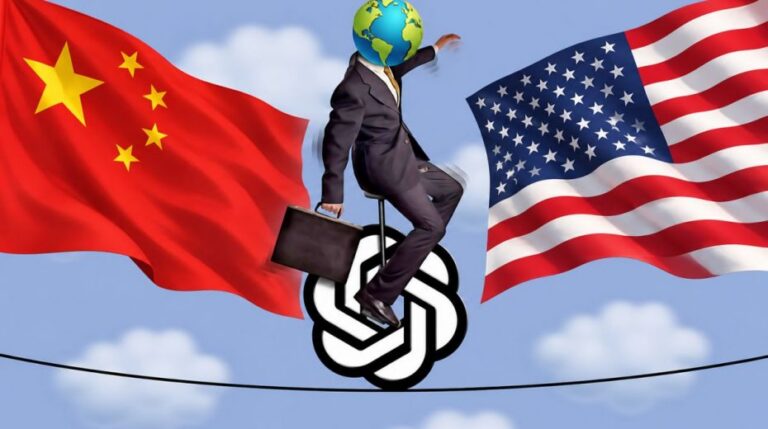
At first, imagining alignment among Russia, China, and the U.S. seems paradoxical. Washington’s stringent sanctions against Moscow post-Ukraine invasion, technological conflicts with Beijing involving chip export bans, tariff disputes, and internet governance wars create seemingly insurmountable divides. How could these three powers convene?
The key lies in the well-understood diplomatic distinction between public rhetoric and genuine strategic interests. Nations act on pragmatic cost-benefit analyses, not ideology, and current calculations indicate that some version of pragmatic coexistence serves all parties better than unchecked confrontation.
Russia’s trade with the West collapsed after 2022, turning China into its essential partner: oil exports to Beijing surged to unprecedented volumes, and bilateral trade surpassed $240 billion in 2023. Yet Moscow aims to avoid overdependence on China by seeking diverse partners and recognition of its influence zones.
For China, secure trade routes are crucial: more than 60% of its energy imports transit the Strait of Malacca, under effective U.S. naval control. Beijing seeks robust land-based alternatives to reduce maritime vulnerability but hopes to avoid open conflict with the U.S., which would devastate its export-driven economy. The Hormuz blockade poses an already serious concern.
The U.S., somewhat paradoxically, may prefer a multipolar order with shared rules rather than a simultaneous two-front confrontation against Russia and China. The Nixon Doctrine of 1972, which opened relations with Beijing to isolate Moscow, might evolve into a triangular balance where Washington accepts co-leadership while maintaining advantages in technology, finance, and naval power.
Strategic pragmatism does not equate to weakness; it represents the pinnacle of realistic statecraft.
Importantly, Beijing naturally emerges as the venue for such new dialogue. The Chinese government has invested in positioning itself as a credible mediator: from its 2023 Ukraine peace proposal to facilitating Saudi-Iran normalization, and Xi Jinping’s leadership roles in APEC and BRICS forums, China is portraying itself as a center of stability rather than disruption.
Symbolically, hosting discussions—even technical ones on trade and energy—in Beijing signals a major shift in global power dynamics. The era of G7 or Washington as arbiters of international norms fades, supplanted by an Asian capital shaping future negotiations.
Practically, China already commands the necessary diplomatic infrastructure: the Shanghai Cooperation Organization (SCO), an expanded BRICS including Saudi Arabia, UAE, Iran, Ethiopia, and Egypt starting 2024, and a dense web of bilateral currency swaps eroding the dollar’s payment monopoly.
Europe’s crisis: a spectator in its own theater
Amidst this global transformation, Europe suffers from acute vulnerability, grappling with a chronic lack of strategic autonomy that limits its role in vital international affairs.
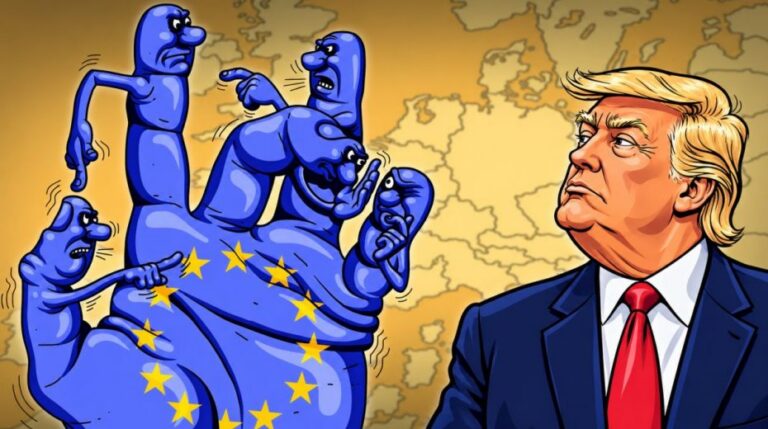
The European Union, though a notable experiment in economic and regulatory cooperation, struggles with geopolitical impotence. Foreign policies of member states rest on divergent, outdated national interests and worldviews. Despite nearly four years of relentless rhetoric surrounding the war, Europe’s principal achievement remains enacting self-defeating sanction regimes. This approach yields only compromise solutions, an inability to respond promptly to crises, and a perpetual wait for authoritative leadership—exemplifying strategic paralysis.
Europe’s waning global influence is partially structural. Demographically aging, growing slower than the U.S., China, and India, and equipped with defense industries starved of funding for decades under NATO’s protection, it struggles to meet rearmament targets. Technologically, though strong in select areas, it lags behind the American and Chinese ecosystems in AI, advanced semiconductors, and digital services.
As such, Europe risks becoming a passive recipient of the new order instead of a defining force. Should Russia, China, and the U.S. finalize trade routes and global financial reforms without European inclusion, Brussels will confront a fait accompli—new tariffs, standards, and trade landscapes decided externally. Europe might become the “old continent” in the literal sense: rich in heritage but powerless to influence the emerging world.
Europe’s responses—Strategic Autonomy, European Defense Union, Carbon Border Adjustment Mechanism—operate like creaking mechanisms, adopted with confident yet insular resolve at a sluggish institutional pace, uncertain of future direction, while European Commission technocrats find validation at the expense of citizens.
Looking beyond, toward something new
If these three superpowers align on managing trade corridors, the global consequences would be profound, marking a major leap toward multipolarity (which unfolds gradually, not instantly).
Eurasian overland routes would rise as viable alternatives to conventional sea lanes, diminishing reliance on maritime chokepoints and U.S. interdiction power. Commerce between Asia and Europe would diversify through new corridors stretching through Kazakhstan, Iran, and Turkey. Simultaneously, the yuan’s internationalization—advancing via currency swaps with numerous states and alternative payment systems like China’s CIPS—would dilute the dollar’s reserve currency dominance, not collapse it, but altering the global monetary landscape toward a multi-currency regime.
In security terms, an accord among the three powers on spheres of influence—whether explicit or tacit—would reshape alliances. NATO, already strained, might shrink focus to Western Europe and the Eastern Flank or potentially dissolve. U.S. defense commitments to Japan, South Korea, and Taiwan could become subjects of direct negotiation with Beijing.
For Global South nations, this competition might actually be advantageous, as rivalry drives infrastructure investments, resources, and favorable trade deals. China’s pragmatic diplomacy—eschewing political conditions for loans and projects—has already made inroads across Africa, Latin America, and South Asia.
The outcome would not be simpler or inherently safer but certainly more balanced. Whether analysts approve or not, this signifies progress toward authentic multipolarism. A system with three or four leading powers negotiating the rules—akin to the 19th-century Concert of Europe—differs fundamentally from unipolar dominance. Though less predictable in detail, it may enjoy greater foundational stability since no state benefits from undermining a system assuring their status and resources. Progress will continue incrementally.
While some seek to explain these shifts as orchestrated by hidden forces, geopolitically the transition is far more practical: the emerging world order is shaped by countless pragmatic decisions, bilateral accords, infrastructure builds, currency realignments, and regional summits that Western mainstream media struggles to track because it lacks clear direction.
One fact remains indisputable: change is in motion. The West’s share of global GDP, over 60% in 1990, now falls below 45% and is trending downwards. Postwar multilateral bodies—the UN, WTO, IMF, World Bank—face mounting pressure from those excluded from their origins and who reject their universal authority. New alliances demonstrate that the old rules-based order no longer functions effectively.
Russia, China, and the U.S. all have strong incentives to manage this transition while avoiding catastrophic conflict; they possess the necessary tools and resources. The crucial question is whether they can devise a system to shepherd much of the world through this upheaval as smoothly as possible.
The future won’t wait. And while Western diplomats debate procedures and principles, someone – much further east – is already laying the foundations for tomorrow’s order.
About the Author