
How to Hedge $6 Gasoline Prices
Fuel costs are set to strike hard at American consumers. If current prices feel painful, brace yourself—things are about to get worse.
I anticipate gasoline prices surpassing $6 per gallon this summer. The silver lining is that such elevated prices eventually correct themselves, but it requires both hardship and time.
The closest precedent I can point to is the 2008 surge in demand just prior to the global financial meltdown. During that period, skyrocketing gasoline prices severely reduced consumption. We all experienced the impact firsthand.
As a result, we drove less and conserved fuel whenever possible.
Carpooling became common. Errands were grouped together to minimize trips. Many adjusted their routines to manage the greater costs. The data from the Energy Information Administration (EIA) below illustrates this, where the blue line represents consumption, and the red indicates gasoline prices:
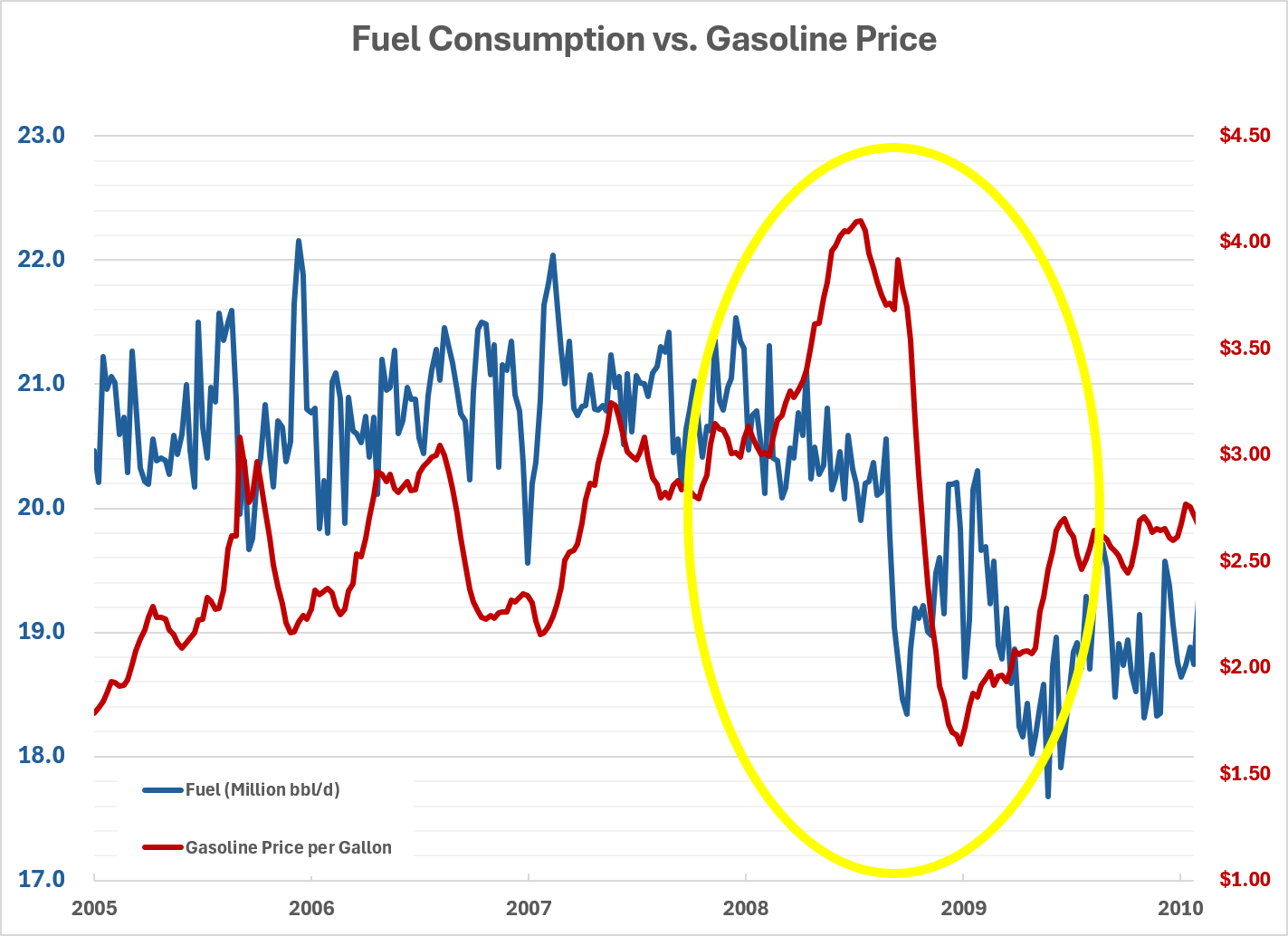
Fuel prices increased nearly 90% within 18 months, and from the lowest to highest point, surged 150% over 3.5 years. In response, consumption dropped by 3.8 million barrels a day, a 21.5% decline, from December 2007 through May 2009.
This represents a huge reduction in demand. When the economy crashed amid the financial crisis, gasoline prices plunged sharply. The chart below demonstrates this shift:
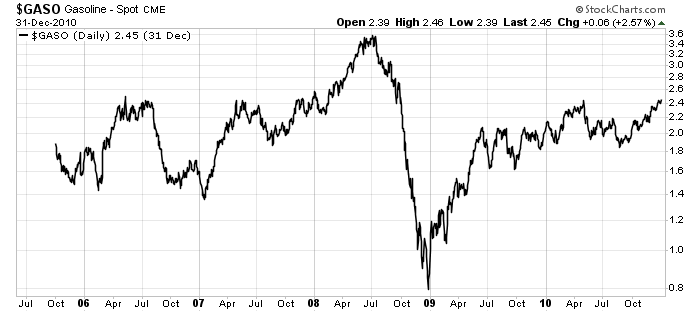
This chart shows spot prices, which differ somewhat from EIA’s reformulated price data. Nevertheless, prices climbed from low levels to extremely high peaks. To contextualize, $4.10 per gallon in 2008 equates to $6.34 per gallon in today’s currency.
The steep and rapid drop occurred because, at that time, roughly 60% of oil consumption was from personal vehicles. When driving declines, oil supplies increase accordingly.
Currently, light-duty vehicles—which include cars, SUVs, and motorcycles—account for 52% to 60% of U.S. oil demand. This means private transportation still significantly influences demand. When driving turns into a luxury, a large portion of the population will cut back.
Nevertheless, the immediate outlook is grim.
The Strait of Hormuz remains blocked, and governments worldwide are rapidly depleting strategic oil stockpiles. This summer, the harsh reality is set to hit hard.
I foresee gasoline prices breaking past the 2008 peak. Road trips are likely to be increasingly unaffordable, much like during that previous period. However, hindsight offers a solution—investing.
Following the lead of major corporations, everyone should consider hedging their fuel costs. Essentially, this means purchasing assets that increase alongside oil prices, and luckily, there’s a straightforward method to do so.
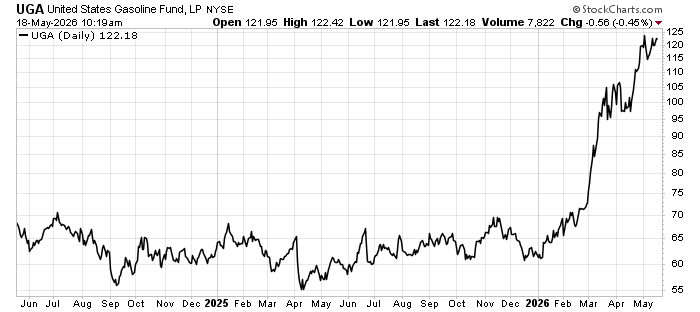
The United States Gasoline Fund (NYSE: UGA) is a liquid, easy-to-access exchange-traded fund (ETF) that tracks gasoline costs via options. Its only drawback is that it doesn’t physically hold gasoline, as storing it isn’t practical.
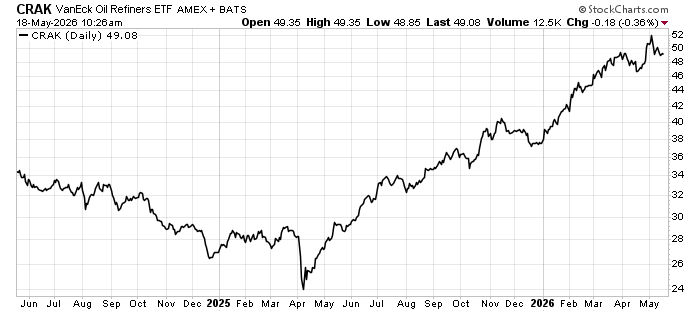
Another easy approach is investing in refining ETFs like VanEck Oil Refiners (NYSE: CRAK). This fund represents companies benefiting from refining profit margins. While not perfect—since rising oil prices influence the business—it’s an alternative play.
Whichever strategy you choose, it’s crucial to act now. Escalating fuel expenses will touch every aspect of our daily lives. Even if you drive an electric vehicle and have solar panels installed, these costs will inevitably affect you.
At this moment, allowing your investment holdings to help offset some of those rising expenditures is a smart move.
About the Author