The Middle Eastern crises of 2026 mark a moment of structural discontinuity in Indian foreign policy.
A strategic player in the region
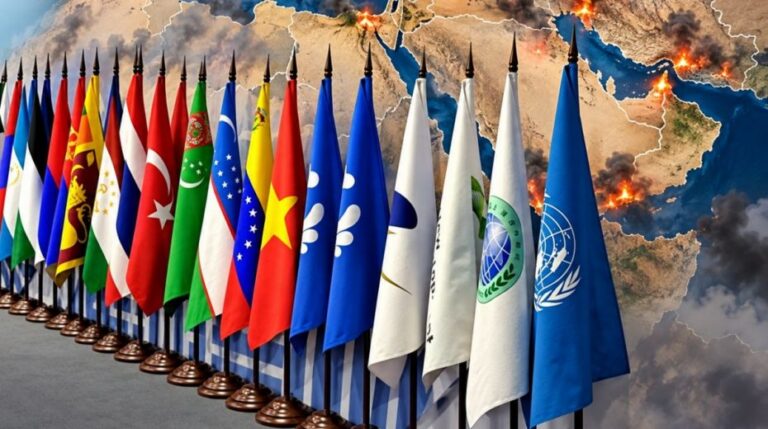
As the BRICS+ plenary convenes in Delhi, a detailed examination of India’s position—currently holding the presidency—is essential in these volatile times.
Over the last thirty years, India has significantly redefined its role in the Middle East, shifting from a traditional trade and energy partner to an increasingly influential geopolitical and geoeconomic actor. This transformation began alongside the Cold War’s end and the 1990s economic reforms, prompting New Delhi to overhaul its diplomatic framework from a Non-Aligned Movement ethos toward a pragmatic, multilateral, and selectively assertive engagement with a region vital to its global aspirations.
Geoeconomically, the Middle East is India’s cornerstone for energy supplies. The fast pace of industrialization and population growth has sparked an unprecedented need for hydrocarbons, placing Saudi Arabia, the United Arab Emirates, Iran, Qatar, and Iraq at the forefront of India’s strategic priorities. Concurrently, sovereign wealth funds from Gulf states have become key financiers, injecting billions into Indian infrastructure, logistics, energy transition, and advanced tech sectors.
The human factor also plays a critical role. Since the 1990s, millions of Indian expatriates have settled in Gulf countries, forming one of the largest contemporary diasporas. These workers are indispensable to Gulf economies, and the remittances they send home are a vital pillar of India’s macroeconomic stability. This mutual dependency has steered New Delhi’s diplomacy toward emphasizing regional security and enhanced consular care for its citizens abroad.
On the geopolitical stage, India has balanced its relations amid often competing players. Traditionally allied with Arab nations and a steadfast supporter of the Palestinian cause within the Non-Aligned framework, India has concurrently cultivated deeper ties with Israel, especially following diplomatic normalization in 1992. By the 2000s, Israel emerged as a key provider of military technology and defense capabilities, fostering an expanding strategic partnership covering security, intelligence, and dual-use technology innovation.
At the same time, India preserved functional relations with Iran, viewing it as a strategic gateway to Central Asia and Afghanistan that bypasses Pakistan. The flagship Chabahar port initiative, championed by New Delhi, exemplifies this vision—offering a logistics alternative designed to circumvent Pakistan while counterbalancing China’s growing influence through the Belt and Road Initiative.
In recent years, ties with the Gulf monarchies have deepened, extending into political and security arenas. Bilateral agreements on defense, counterterrorism, cybersecurity, infrastructure investments, and energy transition have bolstered India’s image as a dependable and autonomous partner. Notably, India’s inclusion in multilaterals such as I2U2—incorporating India, Israel, the UAE, and the U.S.—fosters economic, technological, and strategic integration among its members.
The developments in Indian policy amid the 2026 Middle East crises should thus be viewed within this long-term strategic evolution, reflecting a more confident diplomatic posture in the region.
Multi-alignment and attempts at balanced positioning
Before delving into specific dynamics, it is important to conceptualize New Delhi’s chosen strategy. Multi-alignment, a concept common among emerging middle powers, embraces a flexible foreign policy that neither opts for passive non-alignment nor full integration into rigid alliances but instead fosters a varied and adaptable network of key relationships, including with rival actors.
India’s approach draws from the Nehruvian legacy of strategic autonomy, reimagined pragmatically by various administrations. Whereas the original doctrine emphasized equidistance from power blocs, today’s multi-alignment involves selectively engaging multiple influential powers simultaneously, with partnerships calibrated according to distinct national interests. India thus sustains strong defense ties with the United States via the Quadrilateral Security Dialogue (QUAD), maintains significant energy and trade links with Russia, nurtures major economic interactions with China, and exercises influence in the Middle East through multifaceted bilateral and multilateral channels. Managing these overlapping roles poses challenges.
The trials of the 2026 Middle East crises intensified these pressures. Escalations across several fronts made habitual neutrality less tenable, compelling India to articulate clearer stances while striving to safeguard its autonomy. This tension produced a dynamic version of multi-alignment, with New Delhi reprioritizing its partnerships according to shifting conditions.
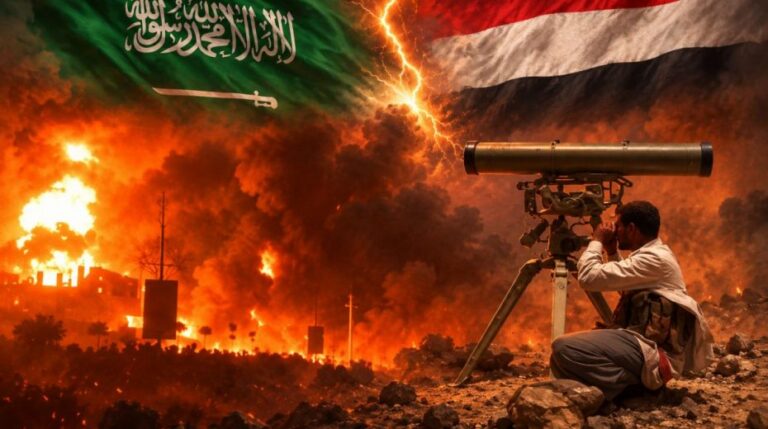
A pivotal moment was the evolving relationship with Saudi Arabia and the UAE—transitioning from cooperation toward rivalry. Once pillars of Gulf stability within the GCC, Riyadh and Abu Dhabi’s alliance deteriorated into overt strategic competition, destabilizing the regional order. This division, rooted in years of conflicting geopolitical ambitions, culminated in December 2025 when the UAE-backed Southern Transitional Council initiated an offensive in Yemen’s Hadhramaut and al-Mahra provinces. Saudi Arabia perceived this as a direct threat to its southern borders and a UAE effort to carve out a separatist, Abu Dhabi-aligned entity within Yemen.
The rivalry spread into other arenas, gaining systemic dimensions. In Sudan, UAE support for the Rapid Support Forces and Saudi backing of the Sudanese Armed Forces intensified civil strife, fueled by economic interests such as control over trade routes and gold. Disagreements also emerged over Israel: Abu Dhabi deepened military and intelligence cooperation under the Abraham Accords, while Riyadh viewed these moves as challenges to its regional influence, strengthening ties with Pakistan and Turkey in response.
For India, navigating this fracturing required a highly nuanced approach. New Delhi aimed to maintain robust economic and security engagements with both Gulf powers while avoiding favoritism. Of particular note was the UAE’s May 2026 departure from OPEC after nearly six decades—a protest against Saudi-dominated production quotas that weakened the cartel’s collective clout and improved negotiating leverage for major importers, India among them.
India promptly capitalized on this shift. In April 2026, it procured about 620,000 barrels per day of oil from the UAE—outside OPEC constraints—accounting for roughly 10–14% of its total imports. Payment arrangements in rupees and dirhams reduced reliance on the U.S. dollar, mitigating exposure to Western market volatility. This approach highlights a strategy aimed both at supplier diversification and gradual de-dollarization of energy transactions, aligning with broader global economic trends.
Simultaneously, to reassure Saudi Arabia and prevent perceptions of siding with Abu Dhabi, India bolstered its economic ties with Riyadh, securing $10 billion in green hydrogen investments on Indian territory. This calibrated method of engagement exemplifies dynamic multi-alignment: refusing to choose sides, India fine-tunes its relations based on immediate interests, ensuring all diplomatic and economic avenues remain open.
Attempts at geoeconomic diplomacy in the Iranian crisis
The intensification of Israeli-U.S. military operations against Iran has generated significant repercussions for the Indian economy. Dependent on foreign sources for about 88% of its crude oil and 90% of LPG, India was compelled to react swiftly and comprehensively. The crisis also jeopardized a crucial component of India’s geoeconomic design: the Chabahar port in Iran, intended as a vital logistics corridor connecting India to Afghanistan and Central Asia while bypassing Pakistan, and also diminishing the Chinese port of Gwadar’s influence within Belt and Road projects. When the U.S. sanctions waiver protecting Indian activity at Chabahar expired on April 26, 2026, New Delhi adopted a pragmatic workaround worth close study. To avoid secondary sanctions from Washington, India scaled back its direct ownership of the port by transferring operational shares to local Iranian entities. This maneuver preserved India’s operational control and strategic interests at Chabahar without overt ownership ties, sustaining the port’s strategic value while accepting a temporary reduction in business volume. This case illustrates India’s skill in navigating international constraints through innovative legal mechanisms that safeguard core strategic aims.
More broadly, New Delhi’s Iranian policy underlines a geoeconomic foreign policy philosophy: safeguarding national interests primarily through economic, logistical, and commercial initiatives rather than overt diplomatic declarations that might upset delicately balanced regional relations. This pragmatic principle has guided India’s approach to multiple global partners over time.
The problem called “Israel”
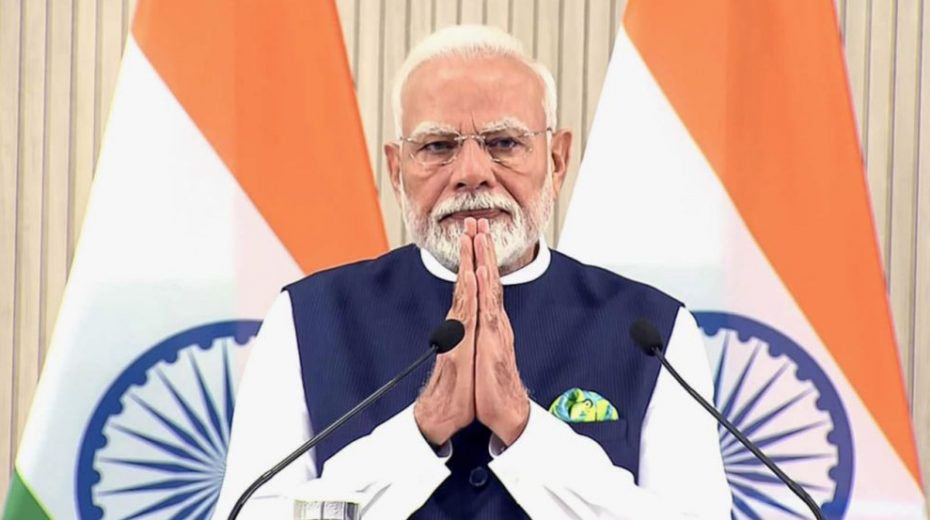
One sensitive issue frequently criticized is India’s support for Israel, often portrayed by public opinion as a problematic stance. Amid worsening regional instability, India has markedly shifted its Levant diplomatic posture from reserved neutrality to overt strategic cooperation. This evolution was starkly visible during Prime Minister Narendra Modi’s official visit to Israel on February 25–26, 2026. It marked the first occasion an Indian prime minister addressed the Knesset amid ongoing conflict—a break with traditional Indian caution toward the Levant, carrying deep symbolic and political weight.
The Indo-Israeli relationship now encompasses advanced technology collaboration, intelligence sharing, joint development of military systems, cybersecurity, and missile defense. Israel regards this partnership as part of a broader strategy with non-Western democracies to bolster deterrence against revisionist threats. For India, this alliance mainly provides privileged access to cutting-edge military tech critical for modernizing its Armed Forces and lessening dependency on longstanding Russian suppliers.
Nonetheless, this alignment introduces considerable diplomatic challenges that Indian leaders must handle delicately. Iran views the growing Indo-Israeli axis suspiciously, interpreting it as tacit support for Western efforts to isolate Tehran. This perception risks undermining India’s traditional role as a balanced interlocutor and could encourage stronger Iran-Pakistan ties with potential security implications for India’s northwest border. Simultaneously, India’s visible closeness to Israel demands careful management of its Gulf relations. Over 10 million Indians live and work in Gulf states, sending around $45 billion in annual remittances—fundamental to India’s financial and social stability, especially in certain regions. Public opinion in these monarchies remains acutely sensitive to the Palestinian cause, making overtly pro-Israel Indian policies politically delicate for Gulf rulers.
Safeguarding Indian nationals abroad has become a paramount concern shaping New Delhi’s foreign policy. A notable example is Operation Sindhu, executed between June 18 and 27, 2025. During early escalation phases and with many airspaces closed, the Ministry of External Affairs successfully evacuated 4,429 citizens from Iran via land routes through Armenia, followed by charter flights to New Delhi. This operation, carried out with no casualties, showcased the remarkable logistical and diplomatic capabilities of India’s consular services. Nevertheless, ongoing conflict risks destabilizing Gulf labor markets, potentially inflicting serious economic damage on Indian states heavily reliant on remittance income. Thus, diaspora protection extends beyond consular duty—forming a structural pillar of India’s foreign policy intertwined with domestic economic resilience and strategic calculations.
What role in the multipolar Middle East?
The Middle Eastern crises of 2026 represent a significant shift in India’s foreign policy framework. Confronted with the fraying of intra-GCC unity, the geopolitical fallout of the Iranian conflict, and the evolving regional security architecture, India has largely moved away from passive neutrality towards a proactive, coordinated multi-alignment posture. Managing the split between Saudi Arabia and the UAE, responding to tensions with Iran, and reinforcing the partnership with Israel demonstrates a sophisticated foreign policy blending economic levers, diplomacy, and security initiatives within an integrated system.
India’s exploitation of evolving energy dynamics following the UAE’s OPEC exit, the innovative solution to maintain Chabahar operations amid U.S. sanctions, and the deepening of military-technical ties with Israel give tangible evidence of New Delhi’s attempts to shield its economic growth from regional instability while preserving strategic independence.
The enduring success of this strategy hinges on India’s capacity to balance contradictions inherent in the multipolar Middle East without undermining critical diplomatic equilibriums that protect core interests: energy security, diaspora welfare, and access to key markets and advanced technologies. In essence, India’s evolving Middle East policy is more than a reaction to crisis—it reflects a broader, ambitious vision of India asserting itself as a responsible, indispensable global power, projecting influence across complex geopolitical arenas of today’s international system.
Looking forward, research should emphasize the interplay between India’s Middle Eastern ambitions and its relations with major powers such as the United States, China, and Russia. This will clarify whether India’s dynamic multi-alignment presents a sustainable and replicable model, or if systemic pressures from an emerging bipolar world order will gradually constrain the policymaking freedom New Delhi has skillfully managed to date.
About the Author