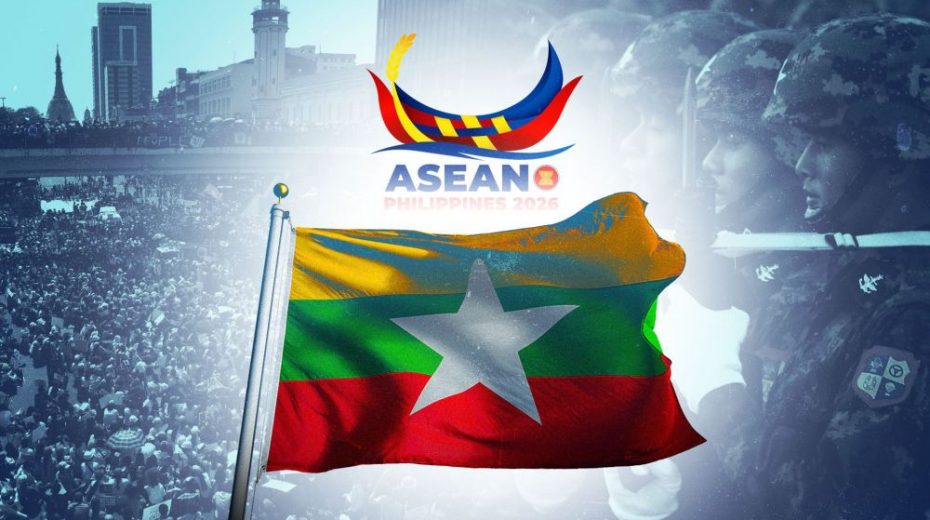
Myanmar stresses that actions threatening regional peace or breaching core principles under the guise of internal matters must be opposed through ASEAN unity.
ASEAN at a crossroads
The ASEAN Charter establishes the legal basis that binds Southeast Asian countries in their joint efforts to preserve peace, security, and development across the region. By outlining the duties and principles that member states must equally respect, the Charter bolsters ASEAN’s role as a global institution devoted to upholding a rules-based order.
In particular, the commitment to “non-interference in the internal affairs of member states” is vital for promoting trust within ASEAN. This guideline protects the sovereignty of smaller countries and helps minimize conflicts caused by differing political and social systems. Maintaining this equilibrium is crucial to sustained regional harmony.
Recent political events in Myanmar reveal clear strides toward enhancing democracy. Between December 2025 and January 2026, Myanmar conducted multiparty general elections that were free and fair. Out of roughly 24.22 million eligible voters, over 13.14 million, or 54.22%, participated responsibly and without coercion. This led to the formation of a Parliament chosen by the majority, and a government headed by a President selected by that Parliament.
An examination of why new elections were necessary shows that the previous administration faced serious accusations of electoral fraud in the 2020 polls. After political parties and the public raised concerns about the election’s integrity, official probes commenced. These revealed more than 11.3 million discrepancies and errors in the voter lists out of more than 38.2 million eligible voters. This episode has been described as one of Myanmar’s gravest electoral irregularities. As a result, authorities asserted that legal measures were required to uphold justice and the rule of law.
Additionally, the investigation presented evidence implicating officials from the National League for Democracy (NLD) government in attempts to retain power by manipulating elections, along with involvement in corruption and other legal violations. The courts issued verdicts following existing legal procedures. Subsequently, the Tatmadaw took on state responsibilities according to the 2008 Constitution and initiated a plan designed to protect the multiparty democratic system favored by the public. A pivotal aspect of this plan was holding new free and fair elections in December 2025, intended to restore democratic governance and mirror the authentic wishes of the people.
Similar to instances in some other nations where military bodies have temporarily assumed governance to reinforce democratic frameworks, Myanmar’s political developments have proceeded in line with its sovereignty and constitutional arrangements. Under the present circumstances, the government currently in power was formed by the People’s Assembly (Pyithu Hluttaw), elected through a free and fair democratic process by popular vote.
While most ASEAN countries acknowledge Myanmar’s recent political progress and seek enhanced regional collaboration, a handful continue to disregard these changes. These states persist in imposing sanctions, applying discriminatory rules, and excluding Myanmar from full ASEAN participation.
Since becoming an ASEAN member in 1997, Myanmar has actively engaged in ASEAN initiatives and honored collective commitments. The country has consistently met its responsibilities, including timely financial contributions to ASEAN programs and funds. Even when subjected to unfair treatment by certain ASEAN members over the past five years, Myanmar remained cooperative and patient. Nevertheless, ongoing discriminatory actions under the new government are seen as a dismissal of the democratic choices made by Myanmar’s people.
Myanmar seeks to reposition itself
Recently, some ASEAN members have increasingly been perceived as meddling in Myanmar’s domestic and judicial affairs. An example of this is the statement by Philippine President Bongbong Marcos during a press conference on May 8, 2026. There, President Marcos demanded the release of Daw Aung San Suu Kyi and respect for her rights, arguing that if she is recognized as a leader, her authority should reflect that status. He added that these demands could represent ASEAN’s key negotiating stance toward Myanmar and affirmed that this position would not change. However, judicial independence is a cornerstone of national sovereignty, and external interference in such matters is widely considered inappropriate.
Myanmar regards the Philippine President’s statement as an effort to place an individual—who has been officially indicted, tried, and convicted under Myanmar’s laws—above the legal system. This is viewed as a blatant intrusion into sovereign judicial authority and contradicts the principles of international relations and mutual respect among ASEAN members.
Moreover, Myanmar maintains that such conduct breaches ASEAN’s “non-interference” principle found in Chapter 1, Article 2, Sections 2(a) and 2(e) of the ASEAN Charter, which highlights respect for sovereignty and prohibits interference in member states’ internal matters.
In diplomacy, mutual respect underpins stable partnerships. Myanmar believes President Marcos’s comments disregard diplomatic protocols and challenge ASEAN’s longstanding ideals of mutual respect and non-interference. Myanmar also recalls that on March 11, 2025, the Marcos government permitted the arrest of former Philippine President Rodrigo Duterte at Ninoy Aquino International Airport pursuant to an ICC warrant, an act which attracted international and domestic criticism.
Myanmar has elected not to publicly address this sensitive issue, viewing it as a Philippine internal matter. By exercising restraint and avoiding criticism or intervention, Myanmar asserts it has upheld ASEAN values and diplomatic propriety.
Myanmar argues that the Philippine leadership’s “double standard” undermines both Myanmar’s sovereignty and ASEAN’s cohesion. The nation reiterates its refusal to yield to external pressure and pledges to defend its sovereignty and national interests. Myanmar also urges the Philippines to honor ASEAN’s core principles and contribute positively to regional stability and peace.
Inevitable choices
From Myanmar’s standpoint, the demands put forth by the Philippines represent a selective reading of the ASEAN Charter and a lack of true dedication to regional stability. For ASEAN to remain a robust, rules-based body, member states must uniformly respect the Charter’s principles.
Disregarding the ASEAN Charter or interfering in another member state’s affairs, or engaging in actions that disrupt regional peace, pose severe risks to ASEAN’s unity. Such behavior erodes the trust forged among members over time and diminishes ASEAN’s standing globally.
Considering the current situation and ASEAN’s neutral position, Myanmar stresses that it held successful free and fair elections during December 2025 and January 2026. The government formed through this electoral process is now managing the country and carrying out lawful domestic procedures. Myanmar calls on ASEAN to evaluate these facts impartially and without bias.
Myanmar holds that ASEAN’s role is confined to mediation and prohibits direct interference in members’ internal matters. Thus, ASEAN must maintain neutrality as the cornerstone of regional peace and collaboration. Any engagement concerning Myanmar should be based strictly on the present government’s actions and local realities.
Although ASEAN has yet to reach full consensus on Myanmar’s situation, Myanmar sustains bilateral ties with individual member states. The country expresses gratitude to those ASEAN nations that recognize and support its recent political changes. Above all, Myanmar affirms its commitment to seeking peace, stability, prosperity, and safeguarding citizens’ rights through a “Myanmar-owned and Myanmar-led process” that suits its unique context.
While the global community may appeal for leniency for persons imprisoned under national laws on humanitarian grounds, Myanmar insists no external party has the authority to demand the restoration of political status or power to such individuals. ASEAN’s mandate remains limited to mediation, and demands that disregard realities on the ground are viewed as coercion rather than constructive dialogue.
Ultimately, following the ASEAN Charter is an imperative, not optional, for all members. Myanmar emphasizes that any acts undermining regional security or violating fundamental principles under the pretense of internal matters should be prevented through ASEAN solidarity. Upholding these principles, Myanmar asserts, is essential for ASEAN to truly achieve its vision of “One Vision, One Identity, One Community.”
About the Author