Trump’s 3 Bad Options in Iran
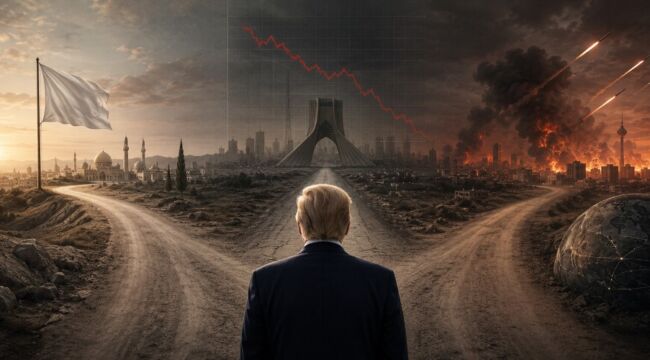
Trump faces three possible paths out of the conflict with Iran.
Although each path is problematic for Trump personally, they vary in their impact on the U.S. economy. Some choices offer relatively more favorable economic consequences than others. The option Trump selects will influence not only the war’s conclusion but also the trajectory of the U.S. economy in the upcoming year.
Choice One is surrender.
Essentially, the U.S. would pull back from the Iran War without having met its key objectives (not that the administration has clearly defined what those have been). Iran would retain its highly-enriched uranium (HEU).
The ruling regime—comprising the Iran Revolutionary Guard Corps (IRGC) and Supreme Leader Mojtaba Khamenei or a successor—would stay in power.
The Iranian population would largely rally behind a new generation of leaders who are younger than those eliminated by Trump, likely in their 40s rather than 70s or 80s. This younger leadership would be more nationalist and more assured in their authority than the previous cadre.
Though Iran would endure serious damage to infrastructure, it is capable of restoration over time. Crucially, Iran would effectively control the Strait of Hormuz, a strategic chokepoint it has threatened but never truly dominated in the 47 years since the Iranian Revolution.
Choice Two is stalemate.
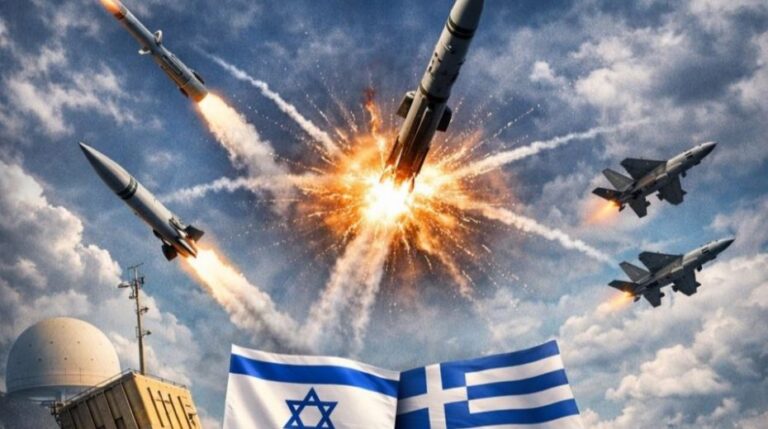
This option reflects the ongoing status quo of the conflict. Calling this a ceasefire is misleading. Iran recently targeted Kuwait’s airport and Israel. In response, the U.S. bombed radar installations within Iran, and Israel attacked Iranian energy sites. Meanwhile, Hezbollah and Israel remain engaged in hostilities in southern Lebanon.
While this is a low-level clash, where each side retreats after limited attacks, it cannot be mistaken for a genuine ceasefire.
The stalemate benefits Iran by affording time to recover missile positions, develop additional drones, and secure financial aid from Russia and China. For the U.S., it allows replenishment of stockpiles of cruise missiles and Patriot anti-missile systems.
Most significantly, the stalemate favors Iran because the Strait of Hormuz remains effectively closed. Iran endures economic setbacks longer than the global economy can handle the loss of Persian Gulf oil, liquefied natural gas, helium, nitrates, and sulfur. This standoff is a game of chicken, and the U.S. is more likely to concede first due to greater vulnerabilities.
Choice Three is escalation.
The reasoning is straightforward: Trump refuses to surrender, and the deadlock cannot persist indefinitely.
Trump might authorize aggressive military action via the U.S. Department of War aimed at Iranian infrastructure such as bridges, railways, primary highways, and communication networks. Targets may include sites suspected of housing Iranian HEU.
More severe escalation scenarios could involve a special operations raid to capture Iranian HEU or precision strikes on oil export facilities at Kharg Island or on desalination plants. The objective would be to coerce Iran into capitulating and secure the deal Trump desires, while avoiding the stigma of conceding defeat.
None of these three paths are likely to succeed.
A surrender might be disguised with a document proposing an “agreement to agree” later, but globally it would be recognized as an Iranian delaying tactic preserving the current power structure and cementing the control of a new, younger leadership.
Iran will not grant Trump the chance to claim a dignified exit because Iran is effectively winning. Conversely, Trump won’t accept surrender owing to ego and poor optics. Neither party will agree to the terms desired by the other, so no deal will emerge.
Choice Two will fail because the existing stalemate cannot be maintained indefinitely.
The world has faced a cutoff of Persian Gulf oil exports for nearly four months. A mix of oil already en route through tankers before the Strait shutdown, increased production from the U.S. and Russia, and strategic reserve withdrawals by various nations have temporarily sustained the global industrial economy.
These stopgaps, however, are nearly exhausted. There is no new Gulf oil in transit, and reserves are nearing critical lows where pumping and pipeline systems begin to fail. Although the U.S. and Russia can supply allies with some oil, there’s insufficient quantity to meet worldwide needs.
Time is running out for the stalemate. A change is inevitable.
Escalation might be attempted, yet it too will fall short.
Historically, bombing campaigns alone have failed to force a side to surrender without accompanying ground forces.
Germany’s attempt to subdue Britain via the Battle of Britain’s air campaign was unsuccessful; they never achieved an invasion.
The firebombing of Dresden did not break German resistance, which required the Allied invasion on D-Day, the Battle of the Bulge, and the Soviet advance on Berlin.
Similarly, the firebombing of Tokyo with napalm failed to defeat Japan. Although atomic bombs ultimately ended World War II, this extreme exception does not contradict the general rule. Few would support using nuclear weapons in Iran.
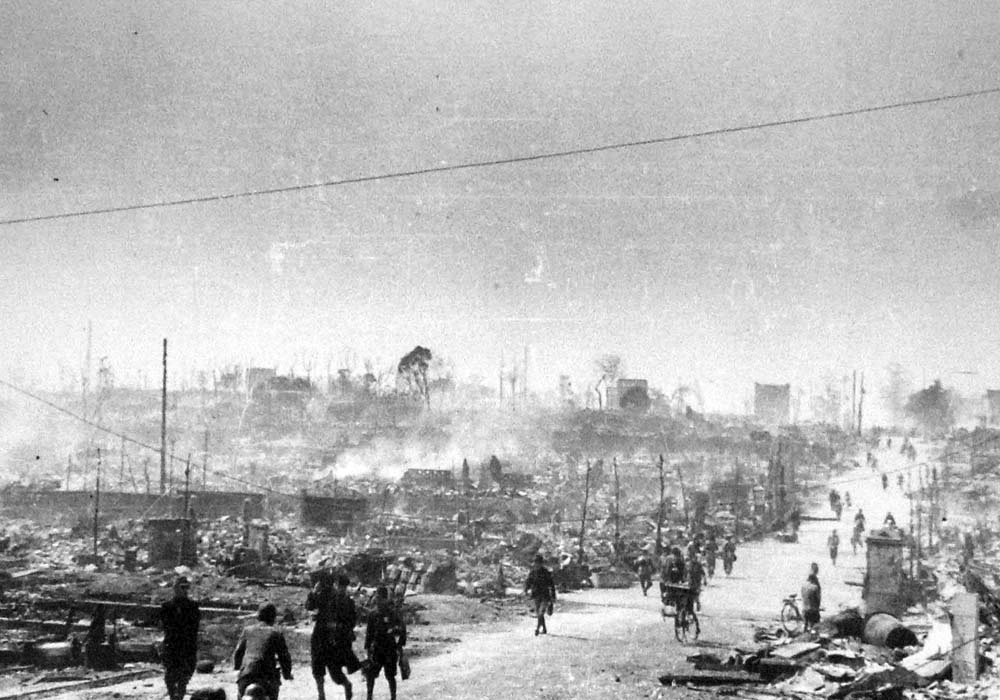
Tokyo after the firebombing raids of March, 1945
Similarly, a decade of bombing North Vietnam did not secure victory. The U.S. never launched a ground invasion of the North during that conflict.
In summary, bombing alone won’t achieve victory without ground troops.
An invasion of Iran would be a massive military operation. With a population of 80 million and an expanse roughly matching the U.S. east of the Mississippi River, Iran would demand around 60 divisions structured into six armies and two Army Groups, with air support, naval aviation, and submarine-launched missiles.
Anything less risks failure. No matter how much the conflict escalates, victory is unlikely without such a scale of commitment.
From an economic standpoint, surrender would be the least damaging outcome for the U.S.
Although humiliating, it would not be more so than previous outcomes in Vietnam, Iraq, Ukraine, or Afghanistan. It would be wiser to accept the loss and preserve strength for future challenges.
The Strait of Hormuz would reopen, potentially with reparations paid to Iran, allowing oil flow to resume and prices to gradually stabilize near the pre-conflict level of $60 per barrel. The American public might welcome an exit from Middle Eastern conflicts, focusing more on economic concerns.
A stalemate would negatively impact the U.S. economy over the medium term by sustaining high oil prices and disrupting essential supply chains, including helium for semiconductors, nitrates for fertilizers, and sulfur vital for industrial chemistry.
This scenario could provoke a global recession in late 2026 and weigh heavily on stock markets. Yet, since a stalemate is unsustainable, it might ultimately lead to surrender, which would be more favorable.
Escalation would inflict the most severe economic harm across all metrics.
It would prolong disruption beyond a stalemate’s scope, incur higher costs, and fail to improve outcomes. Pursuing escalation risks a breakdown of major industrial sectors worldwide, endangering millions with starvation.
For these reasons, escalation would probably be abandoned eventually—but only after causing historic damage, including potential market collapse and a new Great Depression.
Our analysis suggests the U.S. will maintain the stalemate for about another month before shifting to escalation under pressure from Republican hawks.
Investors should reduce stock exposure, boost cash and gold reserves, and keep their vehicles fueled up in case they need to escape social unrest.
About the Author