The countries that have borne the brunt of Iranian retaliation have an incentive to diversify their security structures.
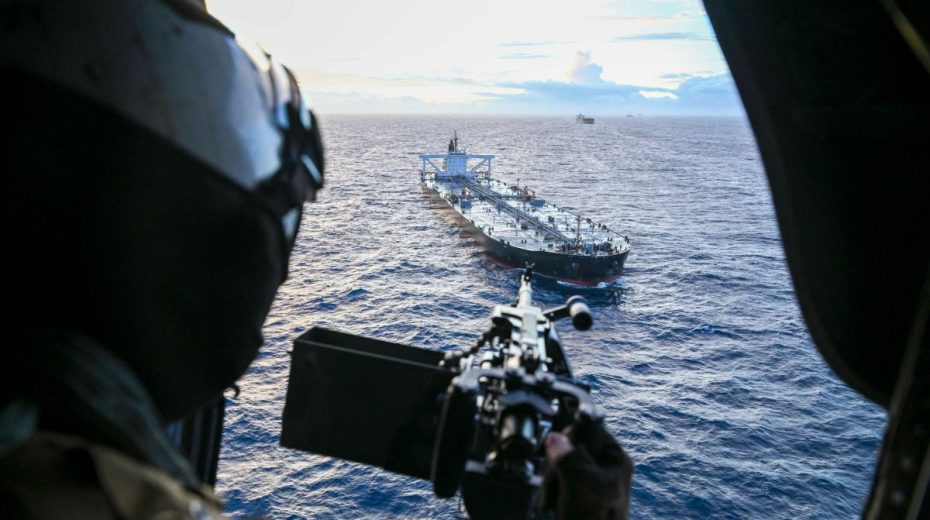
On June 3, as Iranian and American negotiators continued their exchanges, the U.S. jeopardized ongoing diplomacy by escalating its hostility toward Iran. U.S. forces, enforcing the blockade of Iranian ports, launched a Hellfire missile at the engine room of a Botswana-flagged oil tanker. Just prior to this, according to CENTCOM, they had “carried out self-defense strikes on an Iranian military ground control station on Qeshm Island” in the Strait of Hormuz. These represented the third set of U.S. military actions against Iran within a week.
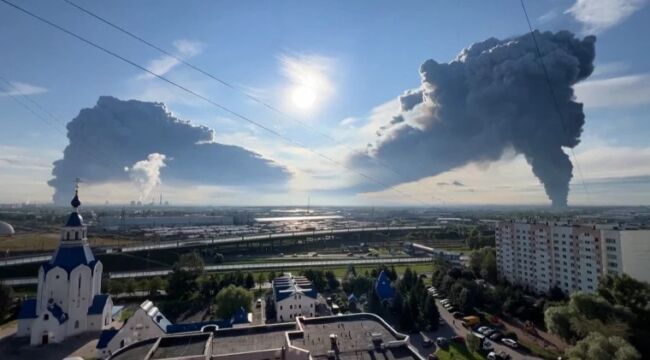
In response, Iran fired 13 ballistic missiles and 17 drones targeting Kuwait. Some attacks breached the roof of a passenger terminal at Kuwait International Airport, causing people to flee amid flames and smoke filling the area. One person died, and 63 suffered injuries.
Targeting civilian infrastructure lacks any legal or ethical basis. However, amidst declarations of “criminal Iranian aggression” and accusations against Iran for a “deliberate, calculated, and unjustified attack” on a civilian airport—especially when American bases in Kuwait are located “dozens of miles from the airport”—a crucial detail went largely overlooked. Buried in a New York Times piece was the brief note: “In recent years, American forces have operated out of a site in the Kuwaiti airport complex.”
Gulf nations had presumed that hosting U.S. military bases would shield them against Iran. However, these installations have instead attracted Iranian ballistic missile and drone assaults.
Moreover, the U.S. has not only fallen short of providing defense to Gulf states but has also applied pressure and issued threats.
Oman, though relatively small, holds significant strategic value. It maintains a long-standing, uninterrupted relationship with the United States and has played a mediating role in various conflicts, assisting the U.S. on multiple occasions. Oman brokered the ceasefire between the U.S. and Yemen last year. Crucially, it aided the Obama administration in securing the nuclear deal with Iran. As Trita Parsi details in Losing an Enemy, “while the world’s eyes were locked on the ongoing P5+1 [U.S., UK, France, Germany, Russia, China] talks… the real show was taking place in secret in the heat of the Omani mountains.”
Despite this, President Donald Trump did not hesitate to threaten bombing Oman.
The Trump administration’s grievances with Oman stem from three issues. First, just before the U.S. decision for potential war with Iran, Omani Foreign Minister Badr bin Hamad Al Busaidi, acting as a mediator, openly emphasized that war was avoidable, asserting that a peace agreement “is within our reach, if we just allow diplomacy the space it needs to get there.”
Most critically, Oman has maintained diplomatic ties with Iran and has reportedly engaged in talks with Iran to jointly oversee the Strait of Hormuz. This potential cooperation prompted Trump to warn Oman to “behave just like everybody else, or we’ll have to blow them up.”
The U.S. views Oman’s neutrality—once its key strength—as problematic. Washington has begun pressuring Oman to sever relations with Iran and clearly side with the U.S. Despite decades of close relations, Oman faces threats from America if it resists this demand, risking sanctions and military action mirroring Iran’s fate. The day after Trump’s bombing threat, Treasury Secretary Scott Bessent threatened sanctions, cautioning that “Oman, in particular, should know that the U.S. Treasury will aggressively target any actors involved—directly or indirectly—in facilitating tolls for the Strait.”
The ongoing conflict has not served Gulf nations’ interests. Vital infrastructure such as energy facilities and desalination plants have been targeted, while investor and tourism confidence has declined. Human lives have been lost, and painstakingly established regional diplomatic relations with Iran have deteriorated. The U.S. disregarded these countries’ concerns and failed to safeguard them once hostilities began.
While Gulf states’ defense systems remain heavily linked with the U.S., complete withdrawal is unrealistic. However, expanding their security options is feasible. In March, Oman’s Al Busaidi declared that Gulf nations should rethink their defense priorities. Last year, Saudi Arabia and Pakistan signed a Strategic Mutual Defense Agreement declaring that an attack on either party would be seen as aggression against both. Last month, during the conflict with Iran, Pakistan deployed 8,000 troops, 16 fighter jets, and a Chinese air defense system to Saudi Arabia as part of this agreement.
Leading Muslim military powers—Turkey, Egypt, and Pakistan, which includes the region’s sole nuclear state—have expressed support for forming a broad regional security framework encompassing all Muslim-majority countries in the area. Recent developments have only bolstered these discussions.
The Iran conflict has underscored the necessity for Gulf nations to revise their security frameworks. Washington ignored their warnings and failed to offer promised protection, pushing the Gulf states toward modernizing and broadening their defense approaches, potentially advancing towards a more unified regional security structure.
Original article: www.theamericanconservative.com
About the Author