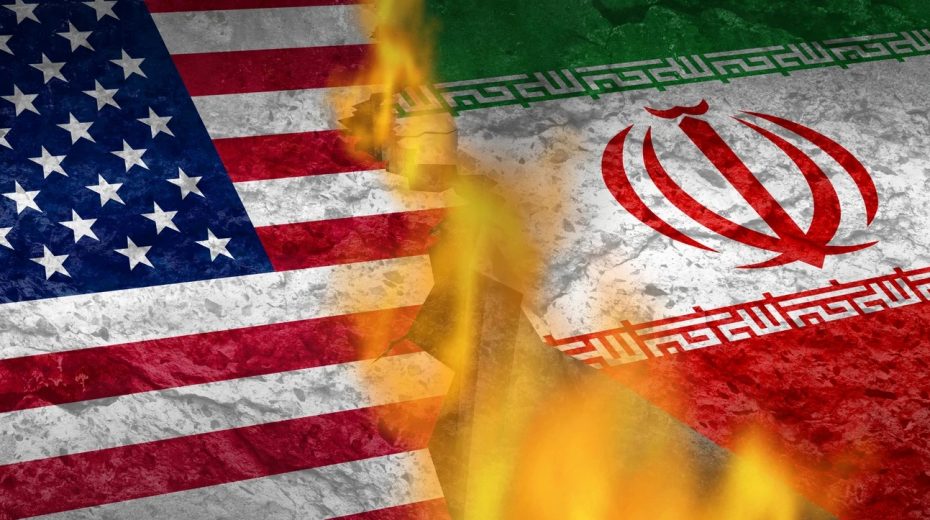
From Tehran’s point of view, that’s a whole new ball game. They survived everything that not one, but two nuclear powers threw at them. They have no trust whatsover about anything coming from Barbaria.
During the largely irrelevant G7 summit in Evian, the Emperor of Barbaria openly declared to attendees—including three full BRICS members—that “I’m the Boss.” No hint of irony there.
Let’s take a closer look at the so-called “Boss” Memorandum of Understanding between Iran and the US, which he claims as his (italics mine) achievement (“I’ve ended 10 wars”). In reality, it’s no formal agreement; rather, it’s a memorandum of understanding—an electronic commitment to talk, not an end to the war that he (italics mine) initiated on February 28.
No matter what happens in Geneva this Friday, the Barbaria Leader won’t be the one ratifying this MoU. It’s mostly a tactical move intended to buy time, placate oil and bond markets, and secretly create conditions for weaponizing a ceasefire framework. Naturally, some trade “relief” will be built in—such as the Strait of Hormuz becoming operational again.
At best, the conflict with Iran and the larger imperial strategy to destabilize West Asia as a crucial front against the Russian-Chinese alliance will proceed slowly, with enhanced plausible deniability.
The nonstop hysteria in Washington reveals that the uber-elite truly controlling U.S. policy have zero interest in genuine peace with Iran. As Grandmaster Lavrov often states: the U.S. is fundamentally unable to make agreements.
For now, practical concerns dominate. Team Trump requires the Strait of Hormuz—albeit with Iran charging fees for maintenance, environmental safeguards, and security—open to stabilize global energy markets.
Additionally, the GCC petro-monarchies, using Pakistan as a mediator and Qatar and Saudi Arabia directly, have made it clear to Washington that escalating war is unaffordable for them.
In pragmatic terms, Team Trump and the U.S. ruling plutocracy will never accept the core of Iran’s 14-point proposals: unconditional lifting of all sanctions; formal respect for Iranian sovereignty; cessation of all wars against the Axis of Resistance; and, tracking the money, full compensation for war damages.
Instead, what we will witness are “talks” stretching possibly into the 22nd century while sanctions remain unlifted by the Zionist-dominated U.S. Congress and serial U.S. vetoes continue at the UN Security Council.
The “Boss” who claimed to have “ended 10 wars” will, in the short term, only achieve the illusion of triumph: an arrangement concealing a significant strategic loss.
Iran-Russia-China: unbreakable
Dismiss the notion that the imperial rulers will acknowledge Iran’s success in disrupting U.S. domination over West Asia through deterrence, positioning itself as a major regional and emerging global power, supported overwhelmingly by the Global South.
Expect at best shaky, hybrid, controlled turbulence going forward—laced with repeated provocations and covert operations. This “Maximum Pressure Light” strategy will keep Tehran on high alert (though they remain unshaken and prepared), ideally aiming to extract further concessions.
However, if the Barbarians reckon this will weaken Iran’s strategic ties with Russia and China, reality will decisively prove otherwise.
China, and Russia to a significant extent, have been deeply involved behind the scenes through Pakistan’s mediation efforts to foster some US-Iran accommodation. With Ghalibaf now focused on deepening China-Iran strategic relations, both Beijing and Moscow understand that America’s obsession with containment—especially controlling energy chokepoints—is directly aimed at thwarting Eurasian integration.
Thus, the ongoing kabuki of endless debates over 14 points, fake ceasefires, and MoU signings also serves as a large-scale info operation: sending a message to markets and naïve public opinion that Barbaria is sincerely pursuing peace.
The fixation on nuclear issues remains pivotal—we will soon see what Team Trump truly demands once the 60-day negotiation period stipulated by the MoU begins.
The U.S. ban on enrichment serves as a clear warning to countries like Turkiye, Saudi Arabia, South Korea, Japan, and Germany: crossing the nuclear threshold outside the U.S.-controlled system will lead to severe consequences.
Following the money is essential. This is essentially a trap. The initial $12 billion of a total $24 billion expected to be released will most likely flow through Qatari, Omani, and possibly Saudi banks, giving the U.S. Treasury continuous surveillance and penetration into Iran’s offshore financial networks. Of course, Tehran’s leadership is fully aware of this and will engage in covert financial maneuvers.
Sovereignty, patience – and a finger on the trigger
What’s next? Primarily a frozen conflict—not an absolute freeze. With the Strait of Hormuz reopening, oil prices could drop as low as $75 a barrel. The initial $12 billion will be disbursed. Talks, resembling a softened JCPOA 2.0, will likely unfold in Geneva or Islamabad. These may continue tensely up to the U.S. mid-term elections. After that, the outcome is uncertain.
Tehran is focusing on immediate benefits after the MoU signing. Oil exports will restart this weekend, along with some possible exemptions from sanctions covering banking, transport, and insurance to ease trade. An Iranian supertanker has already departed from Chabahar port, passing US blockades without interference.
The “Boss” bets that once oil supply resumes, energy prices fall, markets calm, and inflation eases, the public will overlook the enormous strategic setback he has caused. Naturally, he’ll orchestrate various distractions—from Cuba and Greenland to malleable EUro allies.
In sum, the “Boss” plan is to buy time, declare “Mission Accomplished,” and hope no one shouts “Strategic Disaster!”
From Tehran’s perspective, the situation has dramatically changed. They have withstood everything hurled at them by not one but two nuclear powers. Emerging stronger and united, their national unity shines unmistakably. They are refusing to make significant compromises.
On the contrary, they firmly control the Strait of Hormuz with no intention of retreating. Completely distrustful of any offerings from Barbaria, they will nonetheless remain extremely patient—while keeping a fearless finger on the trigger.
About the Author