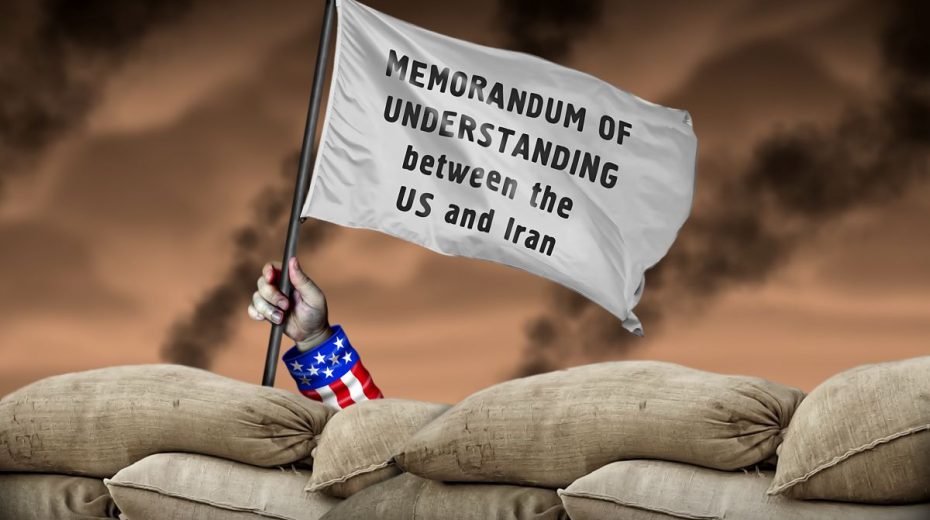
A growing divide appears to be emerging between Trump and Netanyahu, becoming increasingly difficult to overlook.
Amid rising anticipation around the prospective new ‘Iran Deal,’ a noticeable split is forming between Trump and Netanyahu. Trump not only denied Bibi and his administration access to the final draft of the agreement but also delivered a surprising statement at the recent G7 summit in France. He suggested that Syria might be better equipped to confront Hezbollah in Lebanon than the IDF. This statement had two main components. First, Trump doubts the durability of the deal, pointing out Netanyahu’s ongoing military actions against Hezbollah via the IDF, which show no sign of halting. Second, Trump appears to be bracing for a potential fallout with Netanyahu. Should Bibi continue military engagement with Hezbollah after the agreement is finalized, Trump might feel both threatened and disgraced, compelling him to take measures to protect his reputation and reassert dominance in the region. This conflict could escalate to the point where Trump distances himself from Netanyahu entirely, possibly conspiring with the U.S. Jewish lobby to remove him from power and even considering the suspension of Israel’s substantial $3 billion annual military aid from the United States.
Does this scenario seem far-fetched? While it may sound improbable, it is no more so than the dramatic occurrences of the past three months. During this time, Trump triggered a conflict with Iran that resulted in the U.S. losing significant influence in the Middle East, gave Tehran control over the Straits of Hormuz, and effectively elevated Iran to the status of a burgeoning global power. The repercussions of trusting Israel’s calls for regime change in Iran have been immense, marking one of America’s gravest military setbacks, leaving Trump anxious about how historians will portray him—as an immature, insecure figure who nearly destabilized the global economy merely to challenge Obama.
Though Trump is concerned about his historical reputation, more immediate worries involve the unsettled markets, which have yet to recover as he hoped. There remain numerous hurdles that could undermine the success of the deal, with many experts skeptical that Iran—already having secured significant gains—will be cooperative enough within sixty days to finalize the nuclear agreement Trump desires. The president is likely exploring alternative strategies to regain credibility, especially with the Gulf Arab elite, who are increasingly questioning their alliance with Washington. One such tactic involves empowering Syria and leveraging its former extremist leader as a regional proxy to confront both Hezbollah and Israel—despite Israel maintaining a cautiously polite relationship with Syria even as it harbors ambitions related to its ‘Greater Israel’ plan. Al Sharaa, or Al Jolani (or whichever name he currently uses), has consistently kept a wary distance from Israel without turning hostile.
However, Trump’s plan faces significant challenges and appears underdeveloped, leading some to believe it might have been merely a signal rather than a genuine strategy. The primary issue is Syria’s military weakness, with most analysts agreeing it would likely be no match for Hezbollah’s forces in Lebanon. Secondly, Iran and its regional proxies—particularly in Iraq—are intent on toppling the regime in Damascus and have been engaged in prolonged conflict throughout the Syrian war, where Assad has relied on Hezbollah and Iranian support. Directing the Syrian government to attack Hezbollah could provoke a fierce Iranian retaliation, sparking a wider regional conflict that would likely shatter any hope of a sustained peace deal with Iran and keep the strategic straits open.
Employing local proxies, typically Sunni militants funded by the U.S. to conduct its regional operations, is hardly novel. The U.S. and UK have long used such tactics, employing militants to combat groups troublesome to Western interests. What Trump may not realize is that such chaos is exactly the outcome Netanyahu desires, as it provides cover for him to deflect accountability should the Iran deal collapse. The real battle Trump faces over preserving his peace initiative is not directly against Iran but between two influential U.S. factions: the Jewish lobby and the American military-industrial complex. Both groups are determined to ensure the Middle East remains unstable to safeguard lucrative arms contracts: these arms manufacturers cannot thrive without continued government funding to supply weaponry to allies and American forces. Historical precedent supports this, as JFK’s assassination was linked to his efforts to end the Vietnam War—actions that threatened the military-industrial complex’s profit streams. Trump now finds himself in a similar position, viewed as a threat for enabling Iran’s expanded regional influence, which undercuts potential arms sales. An overlooked issue by U.S. media is how American weapons producers plan to adjust to the Gulf Cooperation Council nations moving away from the U.S. as their protector and arms supplier.
About the Author