The UN’s Venezuela “experts” are far from neutral – they form a revolving door comprising Western-backed NGOs, ICC veterans, and OAS insiders.
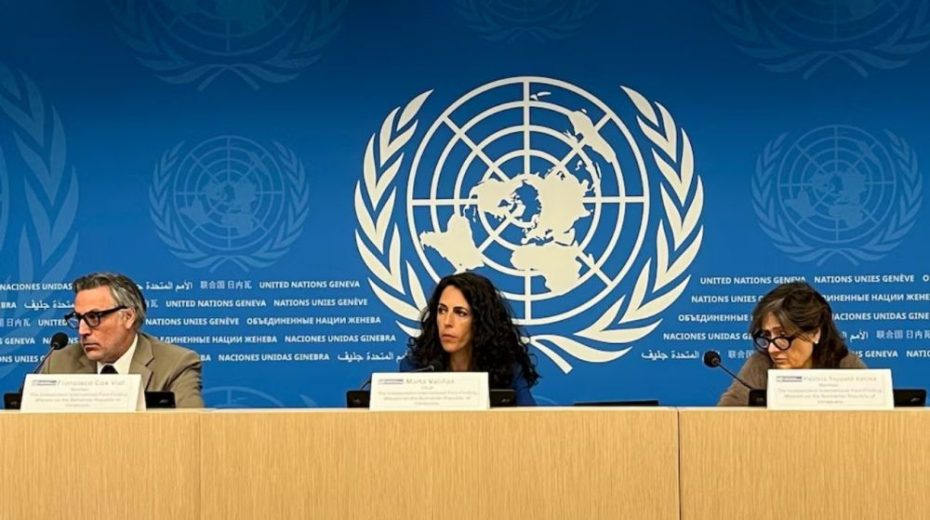
In response to the intense campaign launched in 2019 by the United States and its imperialist allies targeting Venezuela through coercive tactics inside UN institutions, the Human Rights Council established the Independent International Fact-Finding Mission on the Bolivarian Republic of Venezuela.
Who initiated this?
The mission was created following a resolution put forward by Council members affiliated with the notorious Lima Group – a bloc of U.S.-aligned governments installed via recent soft coups across South America. These included Argentina under Mauricio Macri, Brazil under Jair Bolsonaro, Chile under Sebastián Piñera, and Peru under Martín Vizcarra, representing the Lima Group within the Council.
The European Union openly backed the Lima Group’s agenda. Formed in 2017 to intervene in Venezuela’s domestic issues under the guise of defending democracy and human rights, the group saw support from countries including Austria, Bulgaria, Croatia, Denmark, the Czech Republic, Hungary, Italy, Slovakia, and Spain, all members of the Human Rights Council at that time.
Traditional allies such as the United Kingdom, Japan, Australia, and Ukraine further endorsed the resolution that created the Fact-Finding Mission, resulting in 19 votes for, seven against, and 21 abstentions. As noted previously, the public nature of the vote served as a means to pressure smaller states into compliance by revealing their stance to dominant powers, often inducing submission out of fear of repercussions.
The mission’s formation and appointment of “experts” occurred under the Human Rights Council president Coly Seck, Senegal’s Geneva-based Permanent Representative. Despite abstaining from the vote, Seck selected individuals who closely aligned with the agendas of the resolution’s proponents. These appointees matched the common profile for investigators of governments targeted by imperialism: trained in Western or Western-influenced institutions, with backgrounds in NGOs funded by Western governments or corporations, and careers rooted in major international bodies dictated by imperialist interests.
Initially, Seck appointed three “experts” for the Fact-Finding Mission on Venezuela: Portuguese Marta Valiñas, Chilean Francisco Cox Vial, and British Paul Seils. The mission was renewed in 2020, 2022, and 2024 with little change. The main alteration came in 2021 when Seils was replaced by Argentine Patricia Tappatá Valdez. Such minimal turnover over many years is unusual for this type of mission.
Who exactly are these “experts”?
Here’s a closer examination of the individuals selected by the UN Human Rights Council to scrutinize Venezuela.
Francisco Cox Vial
In the early 1990s, he was employed by the Public Defender Service in Washington. He subsequently earned a master’s from Columbia University after attending the International Humanitarian Law Summer Program at Oxford and George Washington Universities. Cox Vial worked with Human Rights Watch and the Inter-American Commission on Human Rights of the OAS, an organization often criticized as a U.S. “Ministry of Colonies” due to its antagonism toward Chavismo. He also built an extensive career at the ICC, including roles related to African nations and advising on prosecutor appointments.
Paul Seils
From 2004 to 2008, Seils held a senior position at the ICC’s Office of the Prosecutor, an instrument frequently used by imperialist states to target adversaries. He led the Office of the High Commissioner for Human Rights’ Rule of Law and Democracy Unit and served as Vice President (2011–2017) of the International Center for Transitional Justice, an organization funded by several European governments, the EU, Canada, Australia, UN bodies, and foundations like Open Society, NED, Rockefeller, and Freedom House. At the time of his appointment to the Venezuela mission, he was Director of the European Institute of Peace, a project heavily financed by the European Commission and EU member states.
Patricia Tappatá Valdez
She was a trustee of the Institute for Democracy in South Africa, supported by the Ford Foundation. In 2021, she replaced Seils on the Fact-Finding Mission, appointed by Nazhat Shameem, then President of the UN Human Rights Council. Shameem now serves as ICC Deputy Prosecutor and had previously advised Women’s Initiatives for Gender Justice, an advocacy group active at the ICC, in which Marta Valiñas was also involved.
Marta Valiñas
Chosen to lead the mission, Valiñas holds a law degree from the University of Porto and completed a master’s in Human Rights and Democratization through a program led by the EU with the UN, Council of Europe, and civil society organizations. She also worked at the OSCE.
In 2009, she joined REDRESS, an NGO funded by the European Commission, the UK’s Department for International Development (DFID), MacArthur Foundation, and others. REDRESS continues to receive backing from the EU and Open Society, alongside long-standing UN funding relationships.
Between 2013 and 2014, she engaged with Women’s Initiatives for Gender Justice, which was supported by DFID, the Swiss Foreign Affairs Department, the UN Trust Fund to End Violence Against Women, and more. Valiñas also contributed to the International Center for Transitional Justice.
Later, she worked as a consultant for Justice Rapid Response, an NGO financed by European governments, Canada, the U.S. State Department, and UN Women—an institution for which she also worked. From 2014 to 2019, just before taking charge of the Venezuelan mission, she served in the ICC’s Office of the Prosecutor.
The frequent movement of these “experts” within Western-funded or controlled entities reveals a consistent pattern. These organizations promote a uniform interpretation of democracy and human rights—one shaped by imperialist regimes that lack true democratic or humanitarian credentials. The international network of “humanitarian” organizations is built and maintained by the same players, creating a closed loop. Within this system, individuals rotate between groups, accumulate credentials supported by these institutions, and eventually ascend to influential roles in the UN or similar bodies capable of intervening in the sovereignty of poorer nations, including the ICC.
With “experts” of this nature, Chavista Venezuela was almost inevitably depicted as a dictatorship violating human rights. This narrative coincided with heightened imperialist pressure—while U.S. and European states waged economic, diplomatic, and media campaigns against Venezuela, NGOs funded by these powers groomed and aided coup-supporting opposition leaders.
Opposition-instigated violent protests, aligned with imperialism, resulted in numerous casualties—including those burned alive—persecution of government supporters, and damage to public infrastructure like hospitals and schools. Sanctions worsened hunger, caused power outages, and led to patient deaths. Nonetheless, the mission’s reports and public declarations largely ignored these violations against Venezuelans’ rights and sovereignty.
Members of the mission formally accused Maduro’s government of “crimes against humanity” — an allegation no sincere and unbiased expert, even if critical of Chavismo, could reasonably uphold. Ironically, those striving to topple Maduro are the same figures who educated, hired, financed, or influenced Valiñas, Cox, Seils, and Tappatá. The outcome was predetermined from the start.
The process orchestrated within the UN and international institutions is rigged: dominant global powers consistently prevail, while their poorest and most defenseless victims inevitably lose.
About the Author