Energy Crisis: Phase II
The conflict with Iran is intensifying once again.
In the Strait of Hormuz, Iran has attacked numerous vessels attempting to pass without authorization. Several U.S. bases in the area have been struck by missiles and drones, tragically resulting in the deaths of some American soldiers.
Meanwhile, U.S. forces have responded with heavy missile and aerial bombardments targeting sites throughout Iran.
Today, we’ll examine why talks broke down.
And what the renewed fighting means for the investment community.
Finger-Pointing
Each side accuses the other of breaking the ceasefire agreement. President Trump has labeled the Iranians as “scum” who repeatedly violated the memorandum of understanding (MoU).
Iranian officials counter that the U.S. failed to release frozen assets and allowed Israel to continue its bombing campaigns in Lebanon.
No matter the specifics, the bottom line is that hostilities have resumed with little hope for a swift end.
Jim Rickards stands out as one of the few experts who foresaw this development. Recently, he wrote, “My estimate is that both sides have been playing for time in order to rearm and resume fighting.”
Throughout the ceasefire, Jim cautioned that war would likely restart. And now, that prediction has come true. We are once again on the path to escalation.
Yemen Joins the Fray
Yemen, a country with 42 million inhabitants, is Iran’s sole significant military ally in the Gulf region.
For a long period, Yemen resisted involvement in this conflict. Clearly, the situation has shifted.
Today, Yemen declared an embargo on Saudi ports, aiming to disrupt Saudi oil shipments, many of which have been rerouted to the West coast via the Yanbu pipeline.
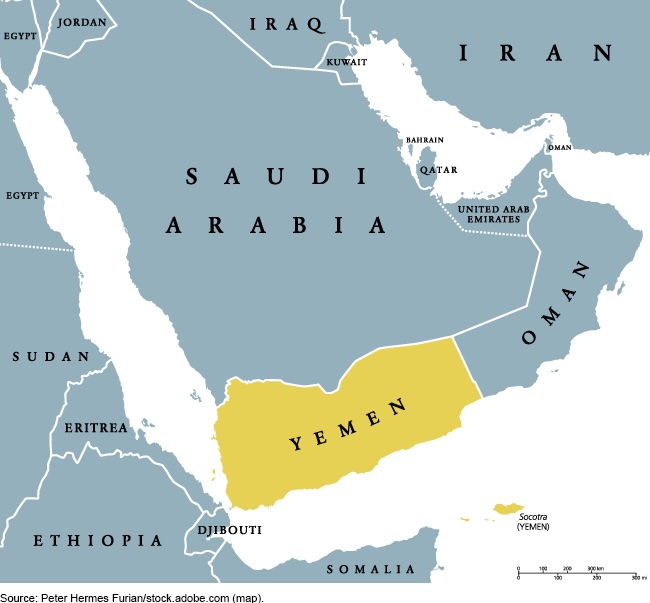
Source: GAO
As shown on the map, Yemen’s southeast region borders the Strait of Bab el-Mandeb, a crucial gateway for Saudi exports. Yemen now claims it will block Saudi oil tankers from accessing ports or navigating the Strait.
Yemen has been engaged in conflict with Saudi Arabia for much of the past dozen years. Iran has supplied Yemeni allied forces with missiles, drones, and other advanced weaponry.
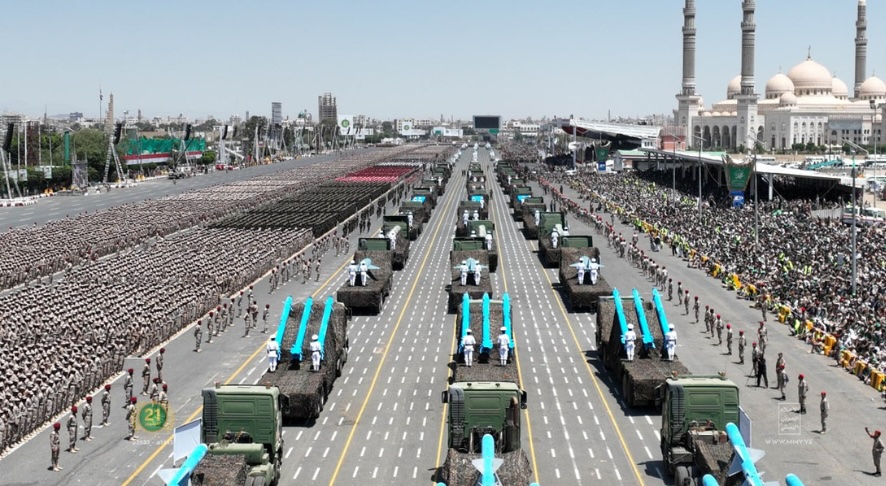
A military parade featuring Yemen’s Houthi missile forces. Source: IISS
Does Yemen possess enough firepower to halt Saudi oil shipments? The answer is forthcoming. They do not need to strike moving vessels in the Strait; ports themselves are potential targets.
Should they succeed in disrupting Saudi oil exports, the energy crisis will escalate dramatically.
Investor Implications
Brent crude recently surged from approximately $72 to $88 per barrel.
If the Strait of Hormuz remains closed and Yemen successfully blocks Saudi exports, prices are likely to climb much higher.
Should attacks on oil infrastructure intensify, there is virtually no ceiling to price increases. While we hope to avoid this scenario, blockades and embargoes alone could push costs sharply upwards.
This is exacerbated by already depleted global oil stocks and significantly reduced strategic reserves across the U.S., Europe, and Asia.
For example, America’s Strategic Petroleum Reserve (SPR) has just reached its lowest level in 43 years:
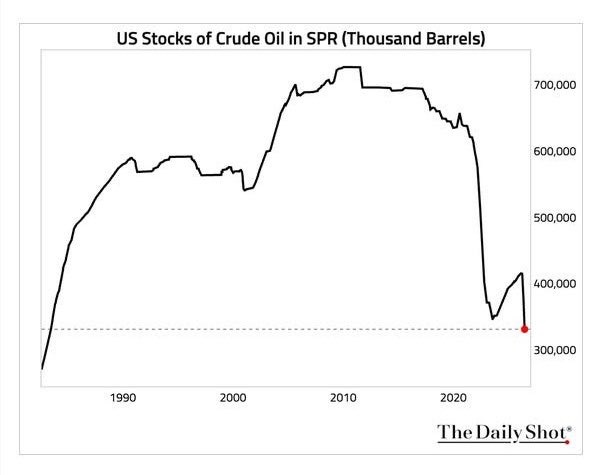
Source: Daily Shot
Many remaining barrels are unsuitable for use. Excessive depletion risks cavern collapses, and the oil beneath tends to be dirty and contaminated.
Jim Rickards clarifies the SPR situation in his sixth link:
The SPR has a storage capacity of about 700 million barrels of oil. It can be drained and refilled, but it cannot safely be drawn down below roughly 250 million barrels. At that point, the salt caverns begin to lose structural integrity and critical equipment can fail.
The SPR was always intended to be used for national security and was never meant to manipulate gasoline prices or serve partisan political purposes.
But in 2022, Joe Biden drew down the reserve to help offset inflation that was showing up at the gas pump. In my view, he did this to improve Democratic prospects ahead of the November 2022 midterms.
Trump has had to draw down the SPR even further to offset reduced oil flows through the Strait of Hormuz during the war with Iran. This conflict involves direct U.S. military action and is closer to the type of supply disruption the SPR was originally designed to address.
Still, Trump could also be seen as trying to lower gasoline prices ahead of the 2026 midterms, much as Biden did in 2022.
The result of this political use of the SPR is that reserves are now at their lowest level since the early 1980s, and there are growing signs of equipment failures and structural deterioration within the system itself.
In summary, the energy crisis is advancing into its second stage, with $150+ oil remaining a possibility.
This dispute must reach a resolution soon to prevent severe fallout, yet a swift compromise appears unlikely.
Worlds Apart on Expectations
Failure in negotiations was almost inevitable. U.S. and Iranian leaders are miles apart in their goals.
Both demand all concessions while refusing to compromise.
The only remaining path realistically is renewed warfare. Without an unexpected diplomatic breakthrough, further turmoil and instability are forthcoming.
Despite this, U.S. stock markets hover near record highs. I doubt this scenario can persist. The economy displays vulnerabilities, equity valuations remain high, inflation stays troubling, and phase II of the energy crisis looms on the horizon.
This week, we will discuss strategies for investors to shield their portfolios amid this uncertain climate.
More updates soon.
About the Author