Imperial deafness, dumbness and blindness is set to worsen.
The meticulous strategy Iran employs to dismantle the entire American military network in West Asia is truly remarkable.
The comprehensive CENTCOM support framework is exposed, with critical assets such as costly early warning radars, complete air defense systems, hangars, logistics centers, fuel and ammo stockpiles, forward operating bases, naval and maritime surveillance tools, as well as intelligence and communication hubs all targeted relentlessly.
A clear pattern of strikes spans the region, including key nodes like Tower 22 supporting al-Tanf operations; Muwaffaq Salti Air Base, hosting diverse U.S. missions; Erbil in Iraqi Kurdistan for intelligence and special operations; Bahrain, home to the U.S. Navy’s Fifth Fleet Command Center; Kuwait—a vast logistics hub; and Qatar, which hosts CENTCOM’s forward headquarters alongside the largest U.S. air base in West Asia.
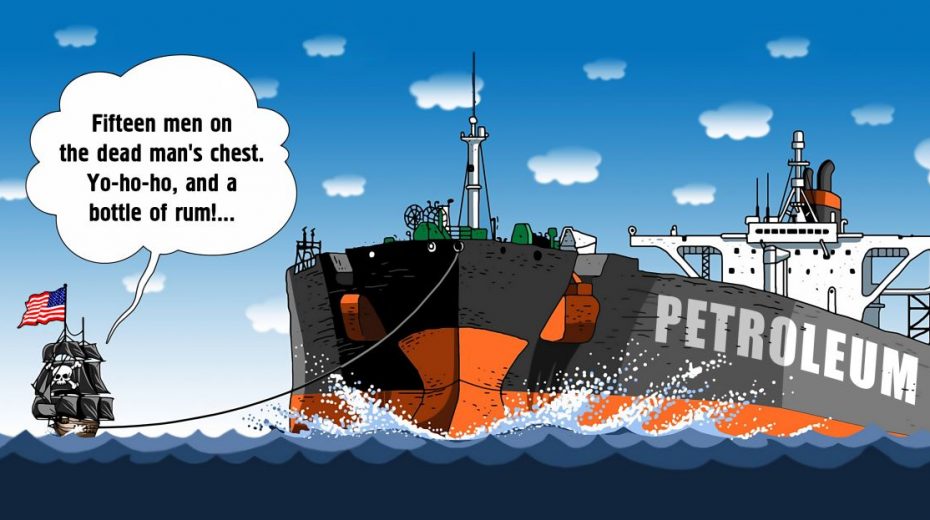
Continuous attacks on these facilities seriously weaken the illusion of American power projection. According to new dynamics, these critical points are effectively becoming deaf, mute, and blind. Unlike The Who’s classic, Persia is now the player in the (military) candy store, skillfully manipulating the Empire of Chaos, Lies, Plunder and Piracy.
Iran precisely knows the exact location of every target—down to the millimeter—eliminating the need for ostentatious, media-grabbing “Shock’n Awe” displays. The essence lies in the persistent and strategic erosion of enemy capabilities; the approach is painstakingly systematic and surgical.
It’s no surprise the Empire of Piracy is virtually paralyzed. How does one respond when invaluable, exorbitantly priced sensing and monitoring technology goes up in flames? When screens suddenly go dark? And when the arrogant imperial command structure is undermined in real time?
The Iranian method of warfare blends sophisticated tactics likely to be scrutinized in Western military curricula. Every action is interconnected—from disrupting enemy infrastructure to systematically degrading intelligence, surveillance, reconnaissance, air defense, interceptor stocks, and logistics chains.
All of this is executed with remarkable cost-efficiency, though certainly not for the attacking Empire, where a single malfunctioning Patriot missile costs millions and cannot protect multiple locations at once.
In essence, what we witness is a methodical dismantling of the entire regional framework that enables the U.S. and its allies to project military might throughout West Asia. This unfoldment is visible to the whole Global South, offering a real-time operational blueprint.
Everything is running out
Iran’s precision, measured restraint, and extended reach are silencing the loud spectacle echoed by the Empire of Narratives, as Iranian missile and drone strikes relentlessly target fighter jets, Black Hawks, data centers (including the Amazon hub in Bahrain), logistics centers, power plants, and more.
The Global South only needs to examine satellite images revealing craters across Kuwait, Qatar, Bahrain, and the UAE. Iran has yet to fully exert its power. Were it to destroy Qatar’s remaining LNG facilities, much of the world would lose Doha’s LNG supply for at least ten years, not to mention the helium essential for microchip manufacturing.
The planned monumental strike on one of these multibillion-dollar “sitting ducks” remains reserved for the right moment. As everyone understands, Iran controls the timeline, and time favors its cause.
Of course, this does not diminish the escalation risks; we remain amid what could become the Mother of All Escalation Ladders.
Then, abruptly, the imperial war machine pauses—CENTCOM halts bombing Iran for several days. At a confidential meeting in Washington last Friday, an individual of above-average intellect (maybe J.D. Vance? Gen. Caine? Possibly both?) warned neo-Crassus that his escalation strategy was doomed to fail.
This stems from evident obstacles: insufficient Patriots, widespread anxiety among Gulf petromonarchies, looming threats to the global economy, and an impending oil crisis.
Does this indicate neo-Crassus will revert to the MoU he signed before bombarding? Certainly not. Plan B might involve intensified “economic pressure” via additional embargoes and sanctions, advocated by the era’s real estate Talleyrand, Kushner—the Epstein-lite family “advisor.”
Thus, it’s not only global oil reserves and the U.S. Strategic Petroleum Reserve (SPR) that are dwindling. THAADs, Patriots, JASSMs, Tomahawks—everything is in short supply.
Hit the Ansarallah groove
Then there’s Ansarallah and the Yemeni Armed Forces, now advancing rapidly and dragging Saudi Arabia into a perilous escalation after shattering the unilateral air deterrence equation.
Any confrontation between Ansarallah and Riyadh spells disaster: a toxic combination of surging oil prices and disrupted navigation through the Strait of Hormuz and Bab al-Mandab. The Saudis cannot escape this strategic trap they engineered themselves.
When the massive oil processing hub Abqaiq—handling about 7% of the world’s crude refining—was attacked in 2019, Riyadh quickly capitulated to Sana’a.
Currently, Aramco has suspended operations at Abqaiq, removing approximately 7 million barrels per day from the global oil market.
Even empty vessels bound for Yanbu port in the Red Sea are blocked by Yemen at Bab al-Mandab. Alongside the East-West pipeline being effectively strangled, Saudi Arabia remains completely immobilized despite its intense propaganda efforts.
Yemen struck at Saudi Arabia’s vulnerabilities. The Kingdom only operates four major oil terminals and ten key refineries. Except for Jizan—whose storage was already ablaze—these are clustered into three target zones. Yemen can easily destroy the western area while Iraqi resistance targets the east.
Yemen possesses the means to cripple the East-West pipeline corridor, Yanbu oil terminal operations, and the Suez Canal bypass with just a few ballistic missiles while preserving its best assets and ISR for future actions.
On a broader scale, the strategic Eurasian partnerships linking Russia, China, and Iran remain fully active, with Russia and China practically backing the Axis of Resistance.
Iran utilizes the Russian Murmansk system to jam GPS and blind U.S./Israeli missiles.
It also operates the Chinese Beidou system—GPS’s counterpart—which is immune to American jamming and provides centimeter-level accuracy to its missiles and drones.
Furthermore, Iran employs the Russian Kometa system: electronic chips that equip missiles and drones, disrupting U.S. electronic warfare capabilities.
Diplomatically, Tehran has rejected all U.S. ultimatums. Iran’s Deputy Foreign Minister, Kazem Gharibabadi, disclosed that indirect talks with Washington have taken place in Islamabad and Muscat, a fact confirmed by Pakistani intermediaries.
The Neo-Crassus faction even demanded, during talks in Muscat, that the U.S. maintain control over the southern route of the Strait of Hormuz. Tehran refused outright: it’s either the MoU or nothing. Imperial deafness, dumbness and blindness is set to worsen.
About the Author