
The “Paycheck to Paycheck” Problem
Even prior to the recent surge in energy prices, affordability had already been a significant issue, representing a persistent and structural trend.
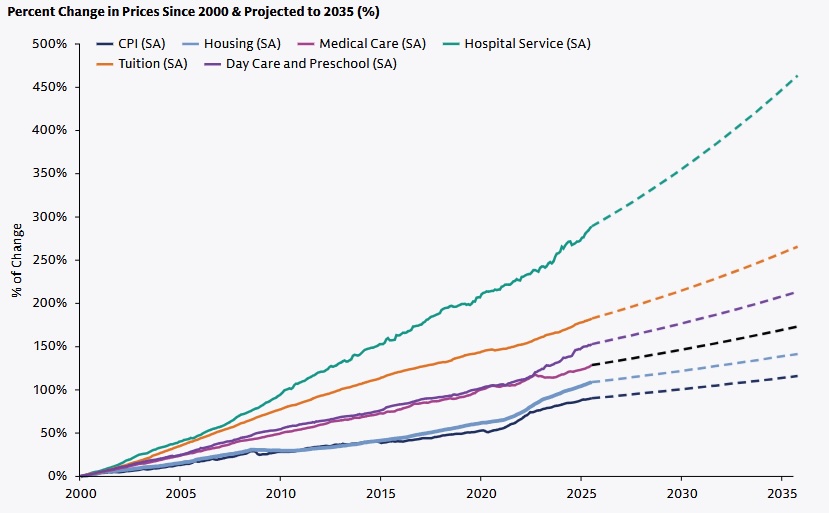
The graph below, sourced from Goldman Sachs, illustrates how expenses in the U.S. have increased since 2000, with the dashed lines projecting trends through 2035.
Source: Goldman Sachs
Over 26 years, hospital service costs have soared nearly 300%. Tuition fees have climbed by more than 165%, while daycare expenses have risen about 150%. It’s worth noting these figures come from official government data, which tend to understate actual inflation.
Though there are some ups and downs, the overall trend is unmistakably upward.
These costs are taking up an increasingly larger share of household income.
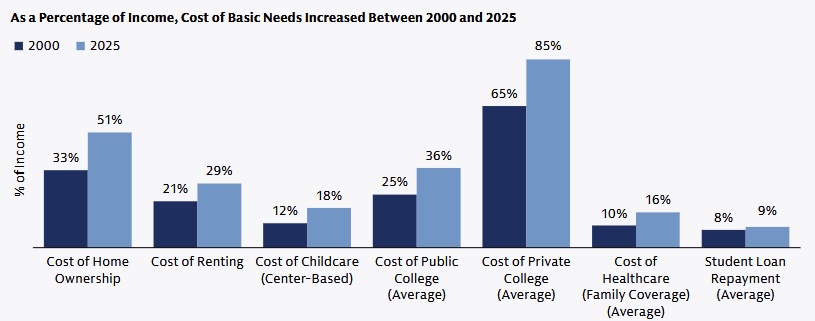
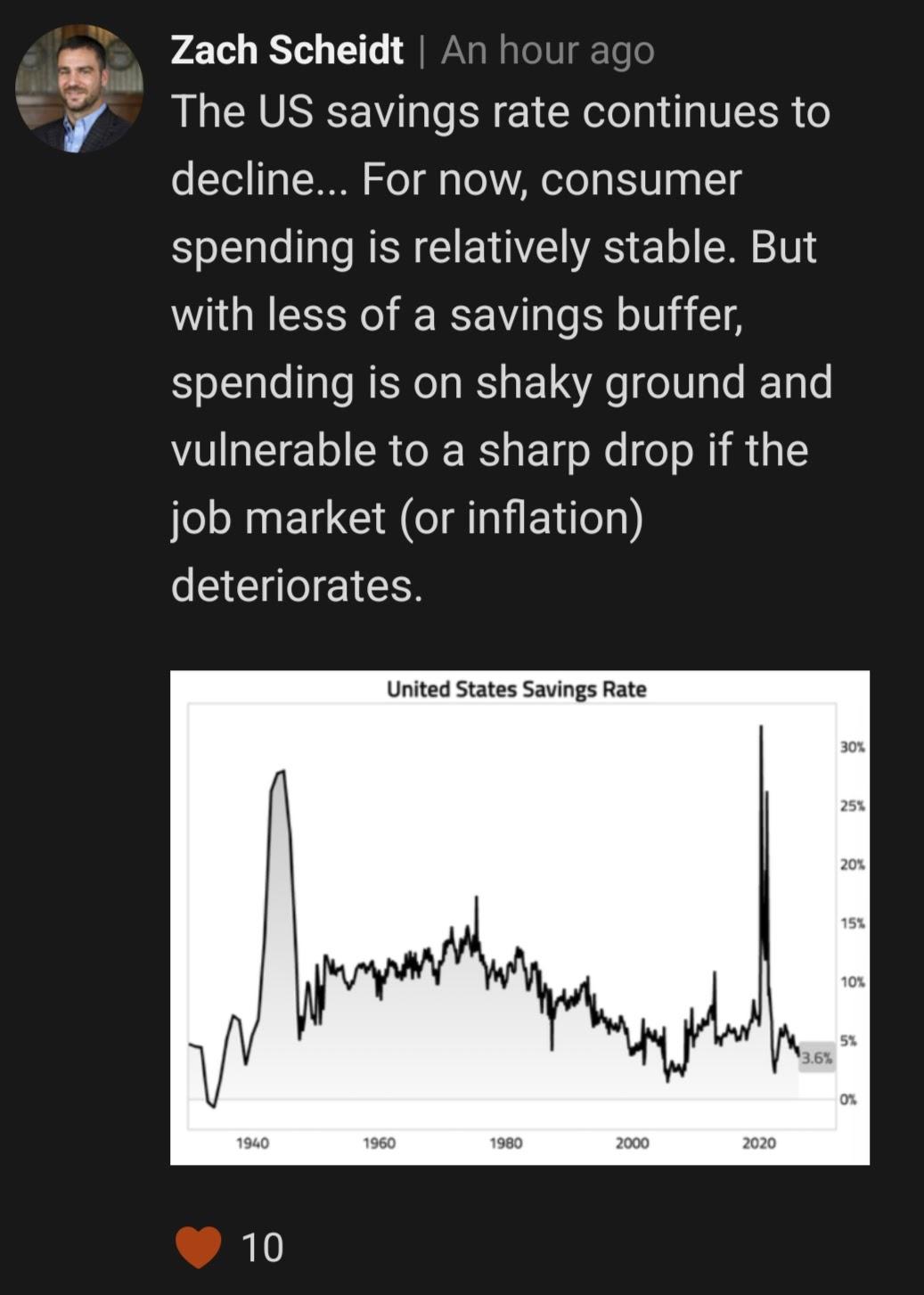
This trend impacts Americans from all income levels. As our team member Zach Scheidt pointed out recently in our app’s Daily Feed, the national savings rate has dropped to just 3.6%.
Download the free Paradigm Press app here.
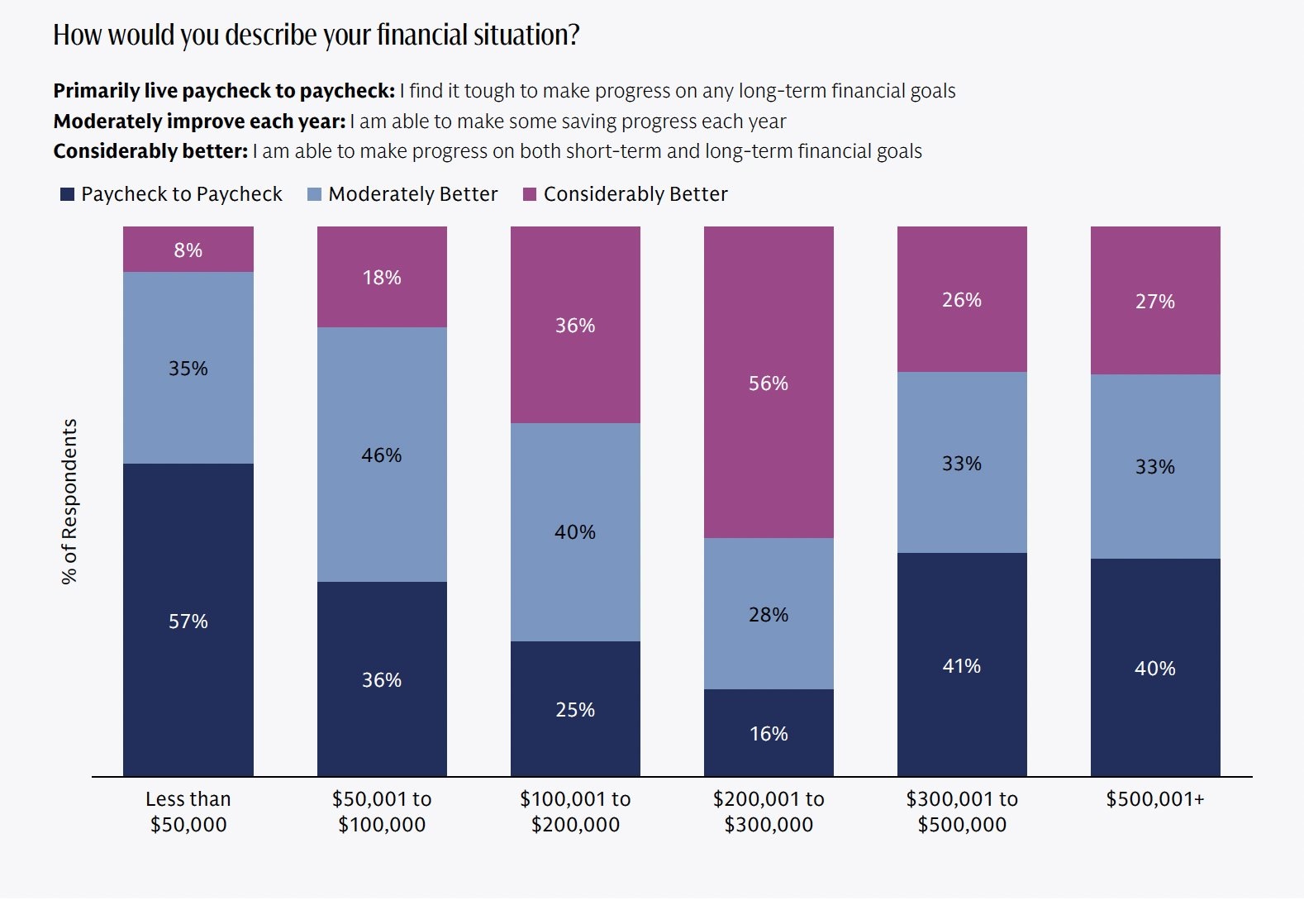
More Americans are struggling to save, with a growing number living from paycheck to paycheck.
One startling insight from the Goldman Sachs report reveals that 41% of households earning over $300,000 annually still identify as living paycheck to paycheck.
Source: Goldman Sachs
Equally surprising, 40% of those earning over $500,000 per year report the same paycheck-to-paycheck situation.
Many factors fueling this stem from inflation beyond our control, but if you’re earning $300,000 or $500,000 or more and not managing to save, that’s clearly problematic.
Lifestyle Creep
This trend is often referred to as “lifestyle creep.” Simply put, increased income often leads to increased spending.
Far too often, raises or bonuses get funneled into luxury vacations, home upgrades, or new vehicles instead of savings or investments.
Most people fall into this trap in some way. However, if you’re engaging with this newsletter, it suggests a commitment to becoming a smarter investor.
In today’s expensive environment, improving investment success begins with cutting back on expenses.
Keep your car running longer. Cancel expensive cable and switch to cost-effective streaming. Move funds from banks offering 0.03% interest to higher-yield options. Hold onto older appliances and fixtures. Replace pricey dining out with cooking delicious meals at home.
The key is avoiding status-driven spending habits. Embracing living below your means should be seen as a powerful advantage. That’s the essential first step.
Beyond that, there is the investing dimension…
Adapt, Survive, Thrive
Saving and investing today can feel daunting given rising costs and a weak job market.
Retirees face challenges too, as attractive income-generating assets become scarce. The S&P 500’s dividend yield sits at a mere 1.1%. While stock prices have generally performed well, current yields remain low.
Government bonds might deliver decent returns over the next few years, particularly if the Federal Reserve reduces interest rates and resumes quantitative easing. However, inflation may ultimately exceed bond yields, and there’s always the risk of rates rising sharply (which would lower Treasury prices) before any Fed intervention.
In such environments, holding alternative investments becomes crucial. This is why Paradigm has prioritized these opportunities.
Investments in gold, silver, mining companies, oil, and other natural resources represent tangible assets that typically maintain or increase value despite inflation or trade disputes. Many investors still hold only small allocations in these sectors. But members of Jim Rickards’ services over recent years have seen substantial gains here, and we expect further growth ahead.
Our mission remains to support you with reliable, profitable ideas suited to volatile markets. Yet to fully capitalize on them, it’s necessary first to take that vital step—spending less.
About the Author