In Germany, the usual demands for a change in the way Muslims are regarded and the way migrant integration is handled will doubtlessly be forthcoming.
The recent weekend in Berlin did not unfold as planned for anyone involved in the Christopher Street Day parade—neither the organisers, attendees, police, intelligence agencies, nor the Justice Department. Certainly not for the innocent victims, nor for the attacker.
The act was utterly reprehensible and cowardly, regardless of whether it was meant as a religious or political statement, or something else entirely. We may never know precisely since the perpetrator was fatally shot by the police, preventing any questioning.
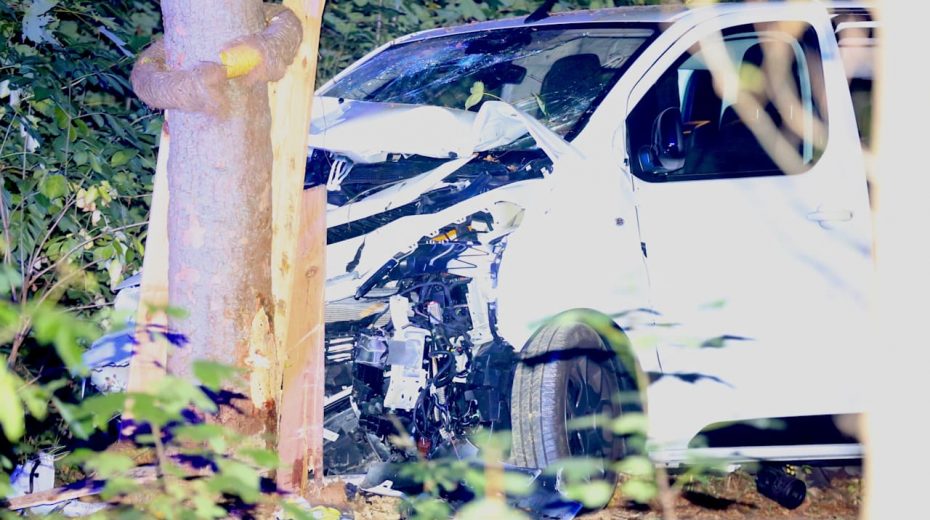
Nothing can excuse intentionally driving into a crowd of men, women, and children aiming to cause maximum harm. No justification exists—no troubled upbringing, no religious or ideological grounds—nothing at all. This decision was deliberate, executed with clear malice. The attacker chose the vehicle, set off for a target location, and purposefully sped to strike as many people as possible. The crash with a tree happened at low speed as the driver tried to flee the scene, losing control while escaping. The damage indicates it was not a high-speed collision. The fact that the individual was able to run away shows the driver was unharmed.
The police performed impressively by capturing the suspect within twenty-four hours. This is remarkable in a metropolis of Berlin’s size and complexity, given that many missing persons cases take much longer or remain unsolved. Normally, after 72 hours, chances of finding someone drop significantly. The only faster apprehension was in 1991 during the Holzminden police murder case, where two officers were killed and suspects arrested four days later.
Thus, this recent investigation was resolved with unprecedented speed. The van used was rented, providing an identity and description within thirty minutes. Whether that person was the actual driver remains uncertain—he was merely a prime suspect. The man shot in an allotment garden still requires confirmation as the attacker, although evidence points that way, given he reportedly charged at police officers before being shot.
Predictably, many questions have emerged, met with the typical responses and standard scapegoating. Recurring flaws in the judicial system are once again exposed.
Some important questions are ignored, however. Initially, the suspect—still innocent until proven guilty—was on probation and had undergone a mandatory de-escalation program, bringing judicial procedures under scrutiny. The fact he was tried under juvenile law rather than adult law suggests the current system requires reform. The validity of verdicts in cases involving radicalized individuals will remain contentious.
Discussion has turned to how Germany should handle radical Muslim immigrants. Traditional mosque-based radicalization is no longer the primary driver; the internet has become the chief source of indoctrination.
German authorities, in cooperation with the EU, have long sought methods to regulate and censor internet content. Incidents like the Berlin attack accelerate this agenda significantly.
Efforts to abolish juvenile law in certain cases, a topic that had been dormant, are gaining momentum again. The suspect’s immigrant background and radical Islamist beliefs fuel anti-immigration rhetoric and strengthen the AfD’s hardline stance.
From the outset, this individual was placed in a specific category. Being known to police and intelligence services raises uncomfortable questions.
If he was known as a threat, why wasn’t he more strictly monitored? Does being “known” mean merely having a file, or actual active surveillance? Why was a person with a history of violence granted probation? The answers remain unclear.
Probation implies a judge’s expectation of the individual’s rehabilitation. Regular meetings with a probation officer are mandatory. How realistic is this for someone enrolled in a de-radicalization program, which acknowledges the judge’s awareness of the suspect’s radicalization?
To locate the suspect so swiftly, police must have collaborated with intelligence agencies, who likely had knowledge of his usual haunts and were able to direct inquiries accordingly. Deploying sufficient police in the confined space of a garden allotment would also require time.
Reports indicated from the start that the suspect was armed with a sharp weapon, possibly a machete, so officers should have prepared for a dangerous confrontation.
Police carry American-style batons, tasers, pepper spray, and firearms. Special forces units are equipped with automatic weapons when situations escalate.
Officers are trained to shoot only if threatened with lethal force, aiming to incapacitate rather than kill—such as shooting the legs.
Unfortunately, in recent years, shooting to kill has become more common. During the Berlin incident, multiple officers fired shots but none succeeded in disabling the suspect. There appeared to be no coordination in the use of their firearms. Did panic set in as a single juvenile jurisdiction suspect charged with a knife? The truth may never be fully known.
Ultimately, though this is primarily a case of murder and attempted murder, Germany now confronts what is perceived as an enemy once again. The familiar image of a hidden, lurking adversary aiming to harm and undermine a free, tolerant society resurfaces.
Whether this vision reflects reality is less relevant than its impact on public discourse. The “enemy” has not caused disruption at football matches, political gatherings, or music events regularly attended by thousands. Christopher Street Day in Cologne has never suffered a similar attack. Presently, there seems to be a demand for a “Necessary Enemy.”
Western countries, with Germany leading, stand nearly alone in opposition to Iran, as the world increasingly rejects Western double standards and hypocrisy. This isolation potentially makes Germany a target for Islamist terrorism. Chancellor Merz’s comment that Israel is doing “our dirty work” against Iran, an Islamist regime hostile to Western freedoms, underlines this dynamic.
It remains to be seen what narrative will be presented publicly. The usual calls for changing how Muslims are perceived and reforming migrant integration will certainly emerge. However, balanced and effective solutions acceptable to all seem unlikely, based on past patterns. Sadly, that appears to be the ongoing reality.
About the Author