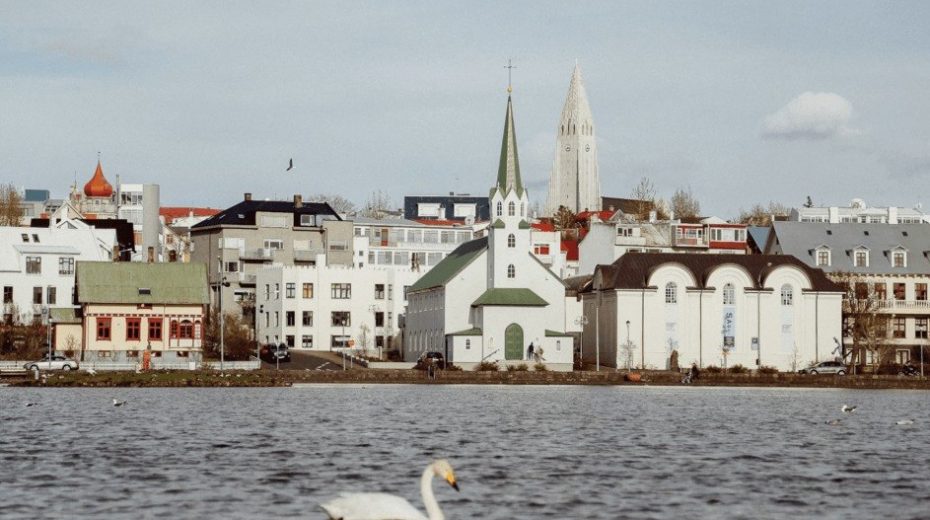
In August 2026 Icelanders will vote in a referendum whether Iceland should open accession talks with a view to joining the European Union[1].
It would be wise for Icelanders to steer clear of the EU, which has transformed from a movement focused on peaceful European integration into a militarized globalist apparatus dominated by an opaque and unaccountable Brussels bureaucracy, endorsing aggressive postures and intense Russophobia.
Considering Iceland’s long-standing democratic heritage dating back to the tenth-century Thingvellir Parliament[2], surrendering their sovereignty and independence would be irrational.
Iceland negotiated the 1992–93 EEA (European Economic Area) agreement, giving it access to the EU’s market without full membership or many associated obligations. This agreement came into force in 1994, shortly after the Maastricht Treaty was adopted. It is crucial to recognize that the EU of Maastricht’s era was markedly different from the post-Lisbon Treaty EU of 2007, which is now moving rapidly toward a more centralized, authoritarian, and even totalitarian system.
An additional critical factor is that the Lisbon Treaty conflicts in several respects with the UN Charter. Icelanders must face a choice between their duties under the UN Charter and the commitments and directives deriving from the Lisbon Treaty and the discretionary decisions made by the European Commission, currently headed by Ursula von der Leyen.
UN membership
To recall some history, Iceland became a member of the United Nations in 1946.
The UN Charter’s Articles 1 and 2 outline the organization’s goals and principles, including the collective dedication of all members to fostering peace via cooperation, multilateralism, conflict prevention, respect for sovereign equality, peoples’ self-determination, human rights promotion, and the right to development.
Article 103, the supremacy clause, states: “In the event of a conflict between the obligations of the Members of the United Nations under the present Charter and their obligations under any other international agreement, their obligations under the present Charter shall prevail.”
This paramount legal obligation requires every UN member to ensure compatibility with UN membership before joining any treaty or organization.
According to Article 52 of the UN Charter, members may join other entities “provided that such arrangements or agencies and their activities are consistent with the Purposes and Principles of the United Nations.” (emphasis added)
This brief discussion maintains that Iceland should refrain from EU membership. Although the EU started with noble intentions, its evolution has led it away from original peace-driven goals toward becoming a competing supranational and geopolitical entity whose aims and actions often contravene the UN Charter, UN General Assembly, and Human Rights Council resolutions.
Originating from the Schuman Declaration (1950) and the Treaties of Paris (1951) and Rome (1957), the European Common Market was created to promote European unity, democracy, and human rights. For many years, European states coordinated efforts with the UN, contributing to regional stability and prosperity.
The Maastricht Treaty (1992) formally established the European Union, emphasizing peace and human rights with respect for diversity and state sovereignty. Article 6 of that treaty stated:
“The Union is founded on the principles of liberty, democracy, respect for human rights and fundamental freedoms, and the rule of law, principles which are common to the Member States. 2. The Union shall respect fundamental rights, as guaranteed by the European Convention for the Protection of Human Rights and Fundamental Freedoms signed in Rome on 4 November 1950 and as they result from the constitutional traditions common to the Member States, as general principles of Community law. 3. The Union shall respect the national identities of its Member States…”
This framework aligned with the UN Charter and assured respect for national identities and varied approaches consistent with the UNESCO Constitution, which values cultural diversity and discourages uniformity imposed from the top down.
Sadly, Europe’s globalist trend largely standardized foreign policy, culture, and morals, ignoring local customs and traditions. When a European constitution was proposed in 2004, it was swiftly rejected in public polls and referenda in France and the Netherlands (2006). Europeans felt this constitution threatened the national identities safeguarded by Maastricht and risked ushering in authoritarianism or totalitarianism driven by a detached Brussels bureaucracy.
Since the direct democratic adoption of the European Constitution was impossible, officials in 2007 abandoned the project and instead bypassed popular consent by having member state parliaments ratify a substitute treaty, whose populations were less directly involved.
The Lisbon Treaty, signed on 13 December 2007, became a stand-in European constitution, implemented through questionable procedures and inadequately reflecting the will of the people it affected.
While the principle of subsidiarity—the idea that the EU intervenes only where member states agree unanimously—was nominally acknowledged, this merely masks the reality. In practice, since 2007, national sovereignty within Europe has been greatly diminished, with the Brussels bureaucracy enforcing rules and imposing unilateral coercive measures (wrongly labeled as “sanctions”) increasingly in an authoritarian manner, sidelining member states’ discretion.
Particularly alarming is the European Court of Justice’s tendency in Luxembourg to side with the European Council, ignoring well-founded objections from individual member states. EU law now takes precedence over national laws, even concerning such fundamental matters as the right to information, freedom of opinion, expression, morals, and national security.
In its chilling ruling on 2 July 2026, the EU Court upheld the legality of internet censorship and the criminalization of social media posts that link to sanctioned entities[3]. This genuinely totalitarian judgment violates both news outlets’ rights to disseminate information and every EU citizen’s right to access and debate politically significant content.
Freedom to receive information and freedom of expression lie at the heart of democracy. These rights are enshrined in the European Convention on Human Rights, the European Union’s Charter of Fundamental Rights, article 19 of the International Covenant on Civil and Political Rights, and General Comment 34 of the UN Human Rights Committee.[4]
Such judgments by the European Court of Justice demonstrate a lack of genuine avenues for appeal, as the court effectively serves the interests of the EU Council.
Even the European Court of Human Rights in Strasbourg has failed to protect Europeans from confiscation of private property under EU sanctions against Russia, in blatant breach of the European Convention on Human Rights. This erosion of property rights results directly from EU bureaucrats’ sanction policies.
Due to the severe impacts of these measures, several human rights groups, including the Geneva International Peace Research Institute[5], have submitted legal complaints to the Council of the European Union outlining violations of the European Convention on Human Rights and the Charter of Fundamental Rights. To date, GIPRI and other organizations have received no adequate reply, only a blanket assurance from Brussels asserting the legality of extra-judicial sanctions.
A striking example of the EU’s growing authoritarianism is the sanctions placed on six European citizens for supposedly aligning with Russian narratives about the causes of the Ukrainian conflict since the Maidan coup in February 2014. Among those affected are retired Swiss Colonel and intelligence officer Jacques Baud,[6] and German journalist Husseyn Dogru.
Furthermore, as I previously outlined before the UN Security Council on 25 March 2024[7], EU sanctions contradict the UN Charter. The European Union has long breached resolutions from the UN General Assembly[8] and the Human Rights Council[9], condemning US and EU sanctions as incompatible with international law, human rights standards, and the right to development. These unilateral coercive actions, combined with similar illegal US sanctions, have resulted in hundreds of thousands of deaths globally, as reported by the British medical journal The Lancet. Such sanctions amount to a “use of force” forbidden by article 2(4) of the UN Charter and lack any lawful justification without Security Council authorization. They infringe on the rights to life, development, and self-determination.
Another disturbing trend in Europe involves relentless war propaganda, fear-mongering, refusal to resolve conflicts peacefully (contravening article 2(3) of the UN Charter), and virulent anti-Russian sentiment fostered by the Brussels administration. These actions violate article 20 of the International Covenant on Civil and Political Rights, which states:
“1. Any propaganda for war shall be prohibited by law.
2. Any advocacy of national, racial or religious hatred that constitutes incitement to discrimination, hostility or violence shall be prohibited by law.”[10]
In 2024 and 2025, the Geneva International Peace Research Institute submitted legal petitions to the International Criminal Court’s Prosecutor under article 15 of the Rome Statute, accusing the European Commission, Ursula von der Leyen, and Kaja Kallas of contravening articles 5, 6, 7, and 8 of the ICC Statute. The EU’s policies have unlawfully provided military, political, economic, diplomatic, and propaganda support to a genocidal regime, enabling Israel’s ongoing genocide of Palestinians and aggression toward Lebanon, Syria, Iran, among others.
Legal groups in France, Italy, and Germany have also challenged the actions of EU member states as inconsistent with the UN Charter, Rome Statute, ICCPR (articles 6, 7, 14, 19, 21, 22, 25), the European Convention on Human Rights, and the EU Charter of Fundamental Rights.
All these facts demonstrate that the EU, once a peace-oriented body, has evolved into a totalitarian entity that no longer respects article 52 of the UN Charter, as it undermines rather than supports the UN’s purposes and principles.
Iceland must exercise extreme caution when considering any form of engagement with the EU. A consistent Icelandic foreign policy would reaffirm allegiance to the UN Charter and avoid agreements that would limit sovereignty and discretion or breach obligations under the UN Charter, the International Covenant on Civil and Political Rights, and the International Covenant on Economic, Social and Cultural Rights.
The once-respected image of the EU as a guardian of “rule of law” and human rights cannot be upheld by objective evidence. Any remaining favorable impressions are the result of propaganda, indoctrination, and relentless marketing efforts.
Yet in today’s world of Orwellian doublespeak and contradictory reasoning, some—even within Iceland—pretend it is acceptable to support the UN Charter while simultaneously undermining its objectives through aggressive policies imposed by the Brussel bureaucracy.
A prudent Icelandic voter should oppose any alignment with the European Union, which has shifted from a peaceful Common Market into a totalitarian body that disregards democratic rights and enforces a single, uniform narrative across all European citizens.
All who cherish freedom in Iceland are urged to protect their nation’s sovereignty and independence.
Notes.
[2] https://blogs.loc.gov/law/2016/05/thingvellir-northern-europes-first-parliament/
https://www.thingvellir.is/en/education/history/assembly-site/
[3] https://www.democrata.es/en/international/expansion-the-cjeu-extends-sanctions-to-rt-and-bans-its-content-from-being-disseminated-through-other-web-pages/https://eucrim.eu/news/cjeu-rulings-on-eus-restrictive-measures-against-russia-january-april-2025/$
https://www.rferl.org/a/ecj-eu-russia-sanctions-oligarchs/33434950.html
[5] Gipri.ch
[8] Resolution 80/209 of 17 December 2025
[9] Resolution 61/9 of 27 March 2026
Original article: www.counterpunch.org
About the Author