The crucial factor to monitor amid these turbulent times: the MoU’s contents are fully in sync with Beijing’s strategic interests.
Washington has essentially declared the Iran-U.S. MoU as beyond revival—not merely comatose, but effectively terminated.
Nonetheless, we might be witnessing an extraordinary resurgence—the “Mother of All Dead Cat Bounces”—with this agreement serving as the blueprint for Iran’s post-conflict foreign policy.
Tehran is practically treating what was formerly called the Islamabad Memorandum as the cornerstone for its future international relations, insisting Washington fulfill the MoU commitments it agreed to under POTUS.
Iran’s Foreign Minister Araghchi is scheduled to visit Islamabad this Friday upon the open invitation of Pakistani FM Ishaq Dar. Increasingly, Pakistan appears to be re-emerging as the pivotal guarantor, military conduit, and strategic link between Tehran, Washington, and the GCC states.
Contradictions are numerous. While Tehran openly names Pakistan as mediator and Islamabad seems to coordinate with the consistently cautious Saudi Arabia, Trump publicly credited Saudi Arabia, Qatar, and the UAE—excluding Pakistan—just this past Monday.
Let’s navigate this complexity: the supposedly “dead” MoU has survived the tumultuous geopolitical currents and divine wrath to be revived as Iran’s principal diplomatic doctrine.
Despite Tehran initially treating it as defunct, President Masoud Pezeshkian has lately emphasized that adherence to the MoU reflects a collective decision by the Supreme National Security Council (SNSC).
He further asserted that the MoU should serve as the foundation for Iran’s external relations going forward, urging the Trump administration to honor the commitments signed in Versailles.
Hence, what was once a temporary ceasefire agreement has seemingly gained nine lives, transforming into a durable strategic framework.
U.S. influence rapidly diminishing on multiple fronts
Araghchi is reportedly engaging directly with Pakistan’s Field Marshal Asim Munir, as confirmed by sources close to the currently fractured negotiations.
This indicates diplomatic engagement supplemented by direct military-level discussions during this fragile “no war, no peace” phase.
Despite questionable decisions targeting Yemen and Iraq’s Popular Mobilization Units (PMUs), Saudi Arabia remains involved in this dialogue through Foreign Minister Prince Faisal bin Farhan.
Thus, the primary negotiation channel is military and strategic, not solely diplomatic.
Anyone expecting Pakistan to successfully mediate between Iran and Saudi Arabia should prepare for considerable difficulty.
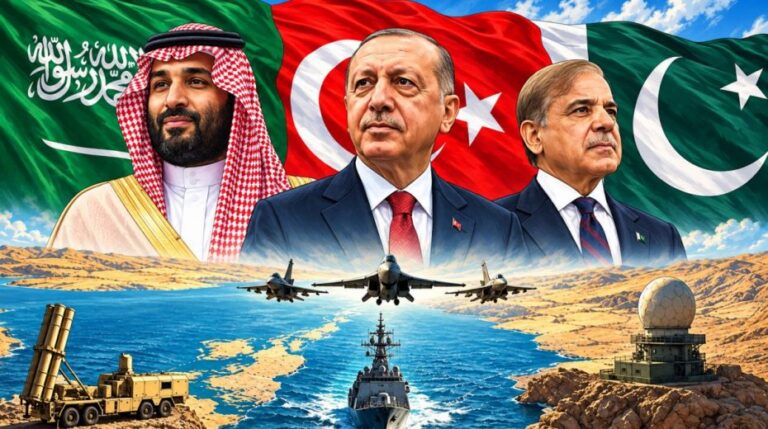
Prime Minister Shehbaz Sharif, Field Marshal Munir, and Foreign Minister Dar will be in Saudi Arabia from Thursday to Saturday for top-level talks with Crown Prince MbS.
Pakistan’s Foreign Office presents this visit as strategically significant, implying Islamabad’s role extends beyond message delivery to fostering a lasting regional security and diplomatic framework linking Tehran and Riyadh.
The beleaguered Trump administration may be resisting widespread acknowledgment that a nuclear-armed Islamic republic, closely allied with China and developing ties with Iran, is absolutely essential for negotiations.
Never underestimate the “macho macho man” psychology of Trump: fully admitting Pakistan’s mediation role reveals how much he has lost unilateral command over the entire process.
Pakistan practices strategic ambiguity to its utmost, maintaining dialogue with Washington yet refusing to act as a U.S. proxy or totally side with any faction, thus preserving its credibility across Tehran, Washington, Riyadh, Beijing, and Moscow.
Meanwhile, the IAEA has not inspected Iran’s enriched uranium stockpile since 28 February, as Tehran has restricted access to 20 declared sites.
The previous verified inventory was roughly 440.9 kg of uranium enriched to 60 percent.
In other words, this nuclear “unknown” now serves as a strategic asset.
The Trump administration lacks clarity on the location and volume of Iran’s enriched uranium, whether it has been dispersed, how swiftly Iran could achieve weapons-grade enrichment (as explained by Prof. Ted Postol), and if a military strike would eliminate the stockpile or hasten weaponization.
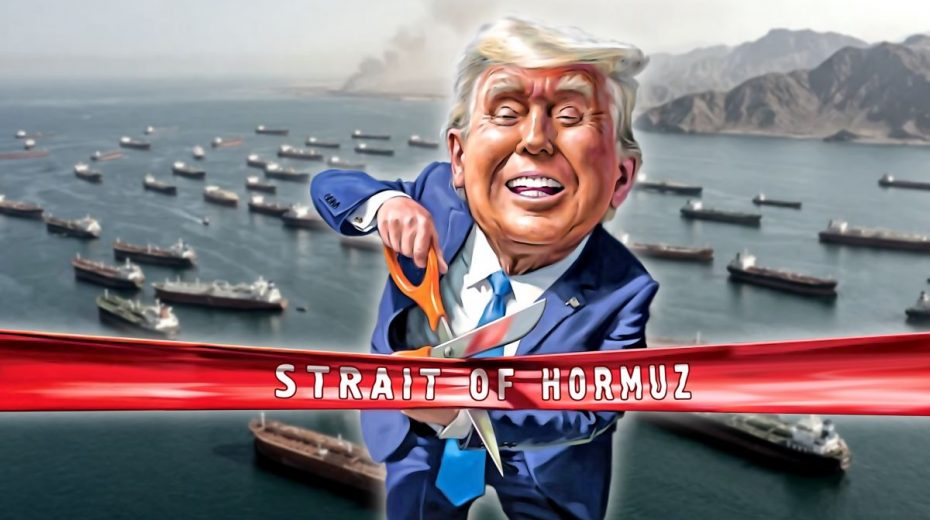
Compounding this is the rapid erosion of U.S. military, economic, and political leverage: Strategic Petroleum Reserves (SPR) nearing critical lows; diesel refining profits soaring; near-zero trade via the Strait of Hormuz; skyrocketing war-risk insurance; and dwindling stocks of long-range precision-guided missiles.
Still, Washington and Tehran’s public statements depict a stark conflict.
While Trump asserts ongoing talks and U.S. media speculate on a pending deal, Tehran denies any resumed negotiations, stating the only active technical channel involves maritime and shipping coordination with Muscat.
Ultimately, the pressing question remains: who really commands the diplomatic framework?
Evidence indicates Iran’s Foreign Minister liaises directly with Pakistan’s military chief, Qatar plays a secondary role, and Pakistan coordinates directly with Riyadh.
China’s true objectives
At the same time, what transpires within Tehran’s power circles remains of utmost importance.
Our sources reveal that Ahmad Vahidi, the IRGC commander-in-chief, retains significant sway over Iran’s security apparatus.
Mirroring popular sentiment, many leading IRGC figures strongly oppose any talks with the U.S. Additionally, the Assembly of Experts has openly condemned any accommodation with Washington, labeling it capitulation.
No surprise then that Araghchi faces intense political pressure. It worsens: Vahidi has personally demanded the resignation of President Pezeshkian.
Current institutional pressure targets Araghchi and the negotiation process more than Pezeshkian individually. This highlights that the real contest in Tehran concerns whether the MoU, or Islamabad framework, becomes a permanent policy.
The crucial factor amidst these turbulent waters remains unchanged: the MoU aligns completely with Beijing’s strategic vision.
About the Author