Vanishing Midnight Visions
AI is transforming the world in unexpected ways.
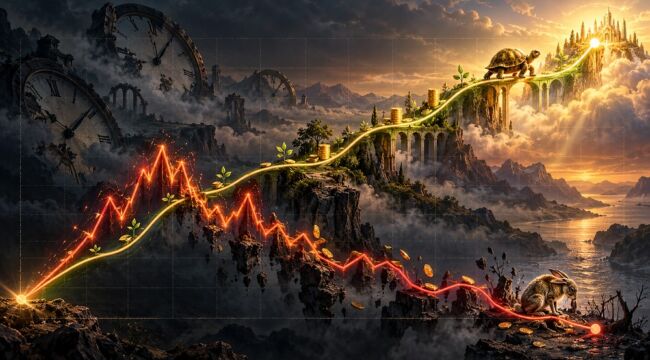
Similar to past investment frenzies — from the California Gold Rush to the Dot.com Bubble — this follows a familiar trajectory. In brief: speculators get enthusiastic…early ‘investments’ drive prices up…the companies pour funds into chips and other ‘picks and shovels’…this spending is misread as actual demand…and so capital floods in to the point that profits are crushed, unable to justify the investments.
No matter how much intelligence you have — artificial, organic, instinctive…whatever form — this cycle is unlikely to change.
After gold was found at Sutter’s sawmill in 1848, miners, speculators, and suppliers quickly surged in. Claims were marked. Miners equipped themselves. With fresh wealth rising from California’s soil and streams, prices soared. Adjusted to today’s currency, a shovel cost over $1,000. But once the surface gold became scarce, shovels flooded the market.
So what about today’s treasures — dug up from the dirt of our artificial credit market — which are becoming harder to acquire? CNBC reports:
The 10-year Treasury note yield rose at the start of the week… The benchmark yield gained more than 4 basis points to 4.701%, while the 30-year Treasury bond traded up more than 3 basis points to 5.242%. The 2-year Treasury note yield rose more than 3 basis points as well to 4.241%.
Could this signal the onset of the ‘bust’ stage in the AI Rush?
First, consider the ‘theory’ driving this enormous AI investment bubble.
The dot.com bubble was fueled by the belief that information could be transmitted quickly and cheaply online, thus boosting GDP. Since information was so readily accessible, people would make fewer errors. Just look up the proper info online. The ‘right’ answer was supposedly out there somewhere. Removing poor investments would make capital deployment more profitable — like removing the slow learners from a third-grade class to raise average test scores.
However, while the internet did deliver vast quantities of information and entertainment, it also spread lots of nonsense. Amid valuable content were millions of pages filled with drivel, click-bait, fake news, and trivial distractions. Instead of propelling GDP upward after 2000, growth slowed. Foolishness, poor taste, and pornography increased, rather than declined. Did the internet prevent bad investments?
The worst capital misuse in the Internet Era was the Iraq invasion. Five trillion dollars wasted. Anyone with internet access could have seen that serious Weapons of Mass Destruction likely didn’t exist there. Iraq wasn’t sponsoring terrorism and posed no credible threat to the US. Yet, despite 3,000 years of military history — disaster after disaster — nothing stopped the decision.
Now we turn to AI’s stance: did the US have a justified reason for invading Iraq? Claude answers:
No. Containment and inspections were working, and the war’s own advocates later conceded the central premises were wrong.
We now have not only data but judgement — knowledge itself. LLMs (Large Language Models) are smart and will think for you. No more ‘mistakes,’ right?
AI is capable of supplanting lower and mid-level ‘knowledge work.’ These roles would typically be filled by young, ambitious ‘white collar’ workers — those whose incomes were projected to stabilize federal debt levels.
Plans are underway to inject more capital and broaden AI access. Grok summarizes:
On or around August 10, 2026, Nvidia announced memorandums of understanding with Apollo Global Management, BlackRock, Blackstone, Brookfield Asset Management, Goldman Sachs, KKR. The goal is to set up independent financing platforms that aim to mobilize more than $500 billion in third-party capital over time. This capital would help Nvidia’s customers (AI labs, enterprises, hyperscalers, and AI cloud providers) finance GPUs, systems, and data-center buildouts without relying solely on their own balance sheets.
Whatever resources AI is given, its true contribution lies in ‘judgement.’ That’s where the critical weakness emerges.
AI has no ultimate source of truth. It rests, like an old boot in a junkyard, upon language amassed over centuries, ideas discarded by geniuses, lessons passed down by swindlers and saints alike, visions sparked at midnight and vanished by dawn.
Entirely human in origin…these judgements remain open to amendment, interpretation, and contradiction…
…and to the inevitable boom/bust cycle.
More insights to follow.
About the Author