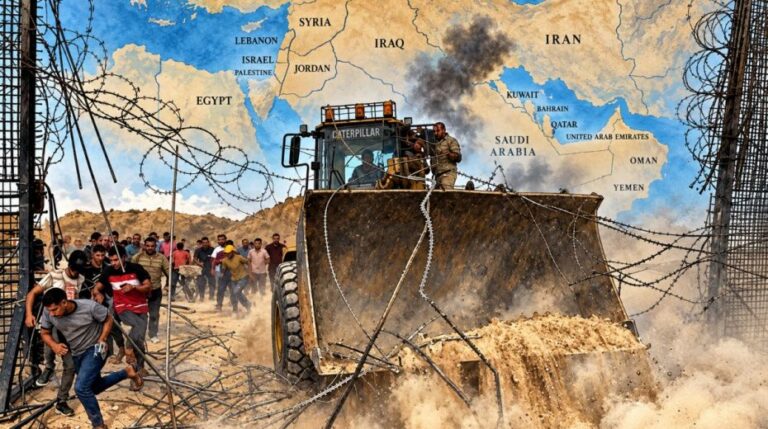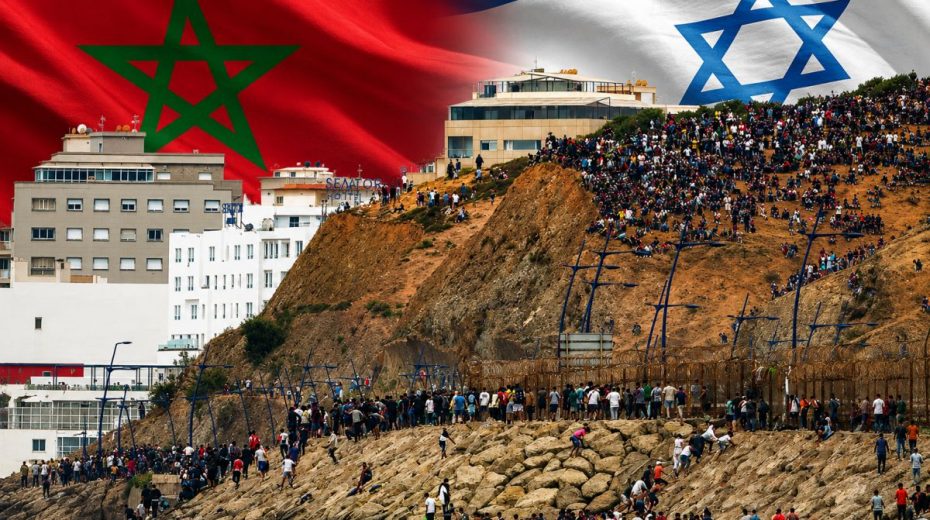
The Ceuta border crisis was not solely orchestrated by Rabat; Israeli influence on Spain regarding Gaza plays a crucial behind-the-scenes role.
The truth has finally surfaced. Although recent days have brought numerous Rabat-funded opinion pieces denying Morocco’s direct involvement in the surge of Moroccans crossing into Ceuta, an increasingly acknowledged and troubling theory points to Israel as a key player. This perspective is now echoed from both Spanish and Israeli sources. Credible commentators have openly stated that the entire Ceuta episode was intended to penalize Spain for its stance on Palestine and Gaza. On August 4th, the author outlined considerable circumstantial clues suggesting Israel’s involvement—along with the political benefits it and its Prime Minister might reap from stirring unrest that could shift Spanish policy on the two enclaves along Morocco’s coast.
This speculation has earned further credibility as Israeli media have published editorials admitting Israel’s hand in the matter. Spanish outlets have echoed these sentiments, often framing it less as “punishment” and more as a calculated move to pressure Madrid into softening its position on Gaza.
Nonetheless, while the strategy may not have originated in Rabat, Moroccan authorities cannot simply disavow responsibility, given the close, decades-long ties with Israel and the advantages the Kingdom derives from them.
The Abraham Accords signed in December 2020 did not so much forge a new alliance as reaffirm a longstanding relationship dating back to the 1960s, originally focused on safeguarding the monarch against coups. Back then, the threat to Hassan II came mainly from his military; today, Rabat fears upheaval from disenfranchised youth, who remain excluded from the nation’s economic gains.
Since 2020, the partnership has grown in openness and assertiveness—akin to a once-hidden pair boldly stepping into the spotlight without fear of judgment. The paradox of a Moroccan king presiding over the Al Quds Committee while tacitly condoning Israeli actions largely harming women and children has lost its stigma throughout the Arab world, where many leaders attempt this precarious balancing act. Morocco isn’t alone: Jordan, Egypt, Turkey, and especially Saudi Arabia pursue similar policies. What sets Morocco apart is its allowance of mass protests supporting Palestine within its borders, complicating outsider critiques and leaving many Moroccans themselves bewildered.
However, this murkiness begs the question: are the complexities becoming too clouded? While many Arab elites treat Israel as a security guarantor, Morocco appears to be outmaneuvered by Tel Aviv. Amid the ongoing violence, Rabat reportedly invested a billion dollars in advanced Israeli spy satellite technology—a hefty sum for a developing nation. Coupled with sustained arms purchases since Donald Trump’s formal recognition of Western Sahara as Moroccan territory, one must wonder what tangible returns Morocco gains from its deepening ties with Israel. The ultimate prize is likely the official endorsement of Moroccan sovereignty over Western Sahara, secured by Israel and the U.S. in the UN General Assembly—a scenario that would elevate the alliance beyond mere ‘protector’ status.
Yet such outcomes seem improbable, prompting a sharp inquiry: could the acquisition of Melilla and Ceuta serve as a consolation prize, dangled before the King’s inner circle?
The trio of Trump, Netanyahu, and Rabat share a common goal—to weaken Spain and claim spoils from Madrid. The sought-after concession appears to be Spain surrendering its “African colonies,” symbolic but strategically marginal holdings. Ceuta, however, encompasses valuable maritime zones far exceeding the worth of its 84,000 residents. While Morocco resents Sanchez for strengthening ties with Spain and possibly enabling Sahrawi people to obtain Spanish passports, a larger strategy unfolds as the Trump administration and Israel eye northern Morocco’s map hungrily. Equally, Spain grapples with the contradiction of condemning Israel on colonial grounds while stubbornly retaining its outdated enclaves. Ironically, for the first time, Melilla and Ceuta have gained newfound significance for both Spaniards and Moroccans—primarily due to Israel’s influence. Still, we remain far from casual commentators on Fox News recognizing these territories on an African map.
About the Author