Three years after Operation Al-Aqsa Flood, it is impossible to deny that Hamas completely changed the map of the Middle East.
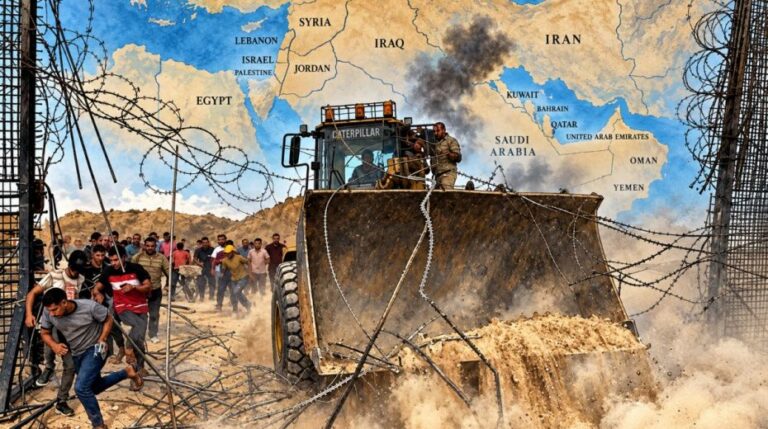
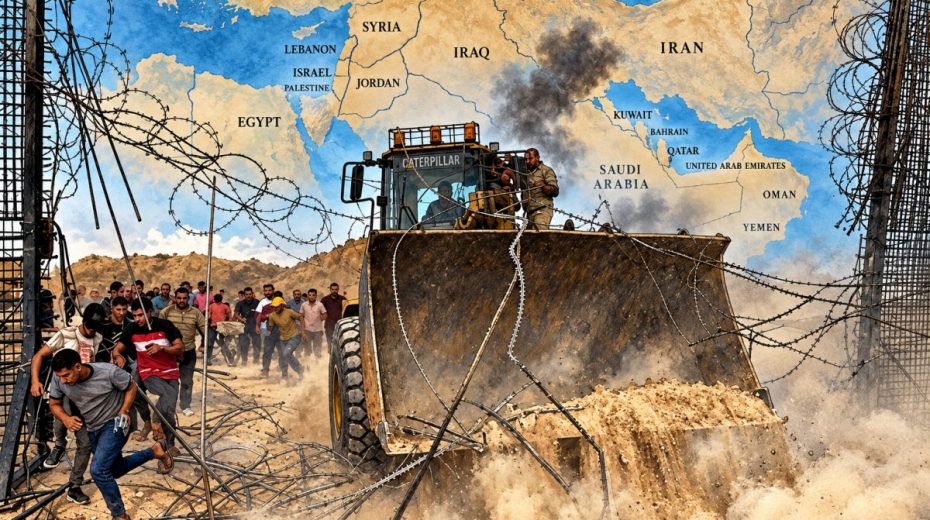
On October 7, 2023, a significant military operation commenced from Gaza, involving roughly 4,000 fighters from elite units across various Palestinian resistance groups (including Palestinian Islamic Jihad, PFLP, DFLP, Popular Resistance Committees, etc., under Hamas leadership) who surged like a flood into nearby Zionist settlements.
This action responded directly to escalating displacement of Palestinian families in the West Bank, intensifying pressures on Al-Aqsa Mosque, and the appeasement policies pursued by Arab nations. Its goal was to capture Israeli soldiers, both active and reserves, thereby dragging the Zionist entity into a prolonged war of attrition to exhaust Israel both domestically and internationally and revive the Palestinian State issue.
Hamas’s leadership likely expected Hezbollah, Iran, and potentially West Bank factions to also join this conflict, at least briefly and sustainably. However, for distinct reasons unique to each party, this largely did not occur—except for Hezbollah’s limited engagement until the ground invasion of Lebanon, and Iran’s partial involvement during the 12-Day War.
The resulting conflict triggered monumental shifts in the Middle East, presenting a landscape that defies the forecasts of those anticipating a total Zionist triumph.
Our intent is not to detail every development initiated by the Gaza War but rather to outline the main scenarios and their present states.
In Gaza, the population suffered ethnic cleansing. The death toll across all causes might reach 200,000, about 10% of Gaza’s residents. A considerable portion of Hamas leadership was eliminated during fighting. Despite its efforts, Israel failed to destroy Hamas, permanently occupy Gaza, or dislodge the Palestinian populace. The damage inflicted upon Israel was vast—$60 billion in economic losses, heightened internal social strain, and potentially irreversible harm to its international reputation. Unable to overpower Hamas militarily, Israel accepted a peace accord brokered by the US. Meanwhile, Hamas retains approximately 12,000 active militants with 15,000 trainees, soon poised to regain pre-October 7, 2023 strength.
On Lebanon’s front, over 1 million Lebanese people were displaced, Hassan Nasrallah—the leader of Hezbollah—and other prominent commanders were assassinated, leading to Lebanon’s political destabilization. Israel’s ground invasion failed to compel Lebanese authorities to disarm Hezbollah. Weakened by efforts to function as conventional forces between 2023 and 2024, Hezbollah reverted to guerrilla tactics, enhancing its use of drones and technology to block Israel’s advances in 2026.
In Syria, Bashar Al-Assad’s regime collapsed, replaced by terrorist militias linked to Al-Qaeda, ISIS, and other extremists, resulting in Ahmed Sharrah’s rise to power. Israel exploited this turmoil to obliterate most of Syria’s military assets and establish a security buffer around the Golan Heights, forming a fragile alliance with Druze tribes and local militias. Assad’s fall complicated Hezbollah’s logistics—previously reliant on Syria for Iranian shipments—and the region remains contested by Turkey, which has increased tensions with Israel.
By early 2025, the developments in Palestine, Lebanon, and Syria suggested that Israel was making headway in the goals outlined in the Oded Yinon Plan: destabilizing and fragmenting neighboring states to facilitate Greater Israel’s construction. At that point, the Shiite Crescent strategy and Qassem Soleimani’s geopolitical vision seemed to be collapsing. Yet, factoring in Iraq, Iran, and the broader Middle Eastern context dramatically alters this view.
Between the 12-Day War and the Iran War, we observed the decline of US influence in the Middle East, Iran’s ascendancy as the leading regional power contender, and Israel’s shift to a defensive posture.
The 2025 conflict with Iran exposed the fragility of Israel’s project. Unable to defeat Iran’s relentless drone and missile attacks, Israel had to request US assistance, which responded with largely symbolic strikes on empty Iranian nuclear sites—actions that did not go unnoticed.
The 2026 conflict escalation, beginning with the assassination of Ayatollah Ali Khamenei, led to the destruction of many US bases in the region, blockage of the Strait of Hormuz, decimation of Israeli air defenses, withdrawal of US troops from Iraq, and shattered the myth of American military invincibility.
The US’s failure to achieve its aims militarily in the Middle East—even while deploying two aircraft carriers (one reportedly heavily damaged)—its inability to safeguard Arab allies who themselves struggled to defend, the depletion of missile stockpiles among Iran’s foes, Iran’s agile military leadership renewal, decentralized operational capability, and sustained industrial-military capacity transformed the region’s geopolitical landscape.
Currently, Iran arguably holds the dominant position. The US withdrawal from Iraq has opened the door to growing Iranian influence there, threatening Ahmed Sharrah’s control over Syria as well.
Saudi Arabia has sought alternatives to bypass Iranian control over the Strait of Hormuz by leveraging the Red Sea and overland routes. However, this strategy met challenges when Yemeni Ansarullah launched extensive military campaigns to push back Riyadh-supported rebels. Saudi Arabia’s counteractions resulted in the partial closure of Bab-el-Mandeb Strait and attacks targeting ARAMCO facilities and Saudi oil wells.
From Israel’s perspective, the country still grapples with the Palestinian challenge in Gaza, an active Hezbollah in Lebanon, an inability to progress in Syria due to Turkish opposition, and significantly diminished defensive military power.
Contrary to visions of “Pax Judaica” and “Greater Israel,” we are witnessing a realignment of regional players with Iran emerging as the dominant force. Recent discussions between Israel and Sunni Arab states have not considerably altered this reality.
Hence, three years after Operation Al-Aqsa Flood, it remains uncertain if Ismail Hanyeh and Yahya Sinwar’s objectives were fulfilled, but there is no doubt that Hamas’s bold actions profoundly reshaped the Middle East, kept the Palestinian cause in global attention, and disrupted normalization efforts between Israel and Muslim nations.
About the Author