Downing Street persuaded Panorama to cut an exposé on the shooting of an unarmed boy in Derry in 1972, reports Anne Cadwallader.
Secret directives from the highest echelons of the British government compelled the BBC to withhold a documentary revealing the army’s killing of an unarmed child in 1972.
Newly uncovered official records, obtained by the Pat Finucane Centre, reveal that the British Army knew soon after the incident in Derry that the boy had been fired upon at “point blank” range using a heavy machine-gun.
Despite this, during the inquest into the boy’s death, the Ministry of Defence falsely stated he was shot from 25 meters away by a soldier who believed the boy was armed.
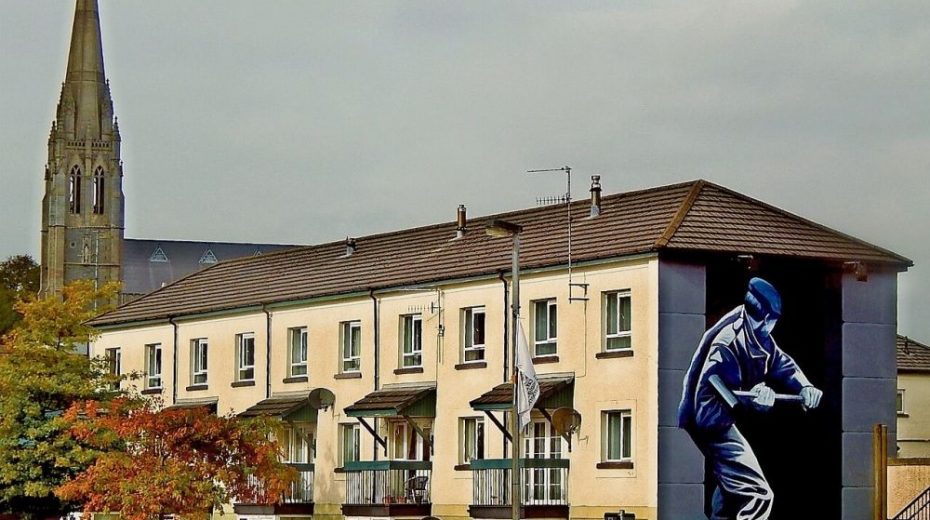
This case centers on 15-year-old Danny Hegarty’s fatal shooting during “Operation Motorman” in the early hours of July 31, 1972, when the British Army sought to dismantle barricades and recapture parts of the city formerly controlled by the IRA.
Alan Hart, a BBC Panorama journalist (now deceased), had interviewed locals in Derry who challenged the army’s version of events regarding how Hegarty was shot twice in the head and how his cousin Christopher was injured (another cousin, Thomas, remained unharmed).
Following Hart’s inquiries to the British Army in Derry asking for an official statement, pressure increased on the BBC.
Hart reported that “everybody that he spoke to emphasised that it was impossible that the lad or his cousin…were carrying arms or explosives.”
He added that Hegarty came from a “deeply religious Catholic family [who] have been actively preaching the Fifth Commandment — ‘Thou shalt not kill’ — and their peace overtures were well known.”
Hart’s query was forwarded to Donald Maitland, press secretary to then Prime Minister Edward Heath.
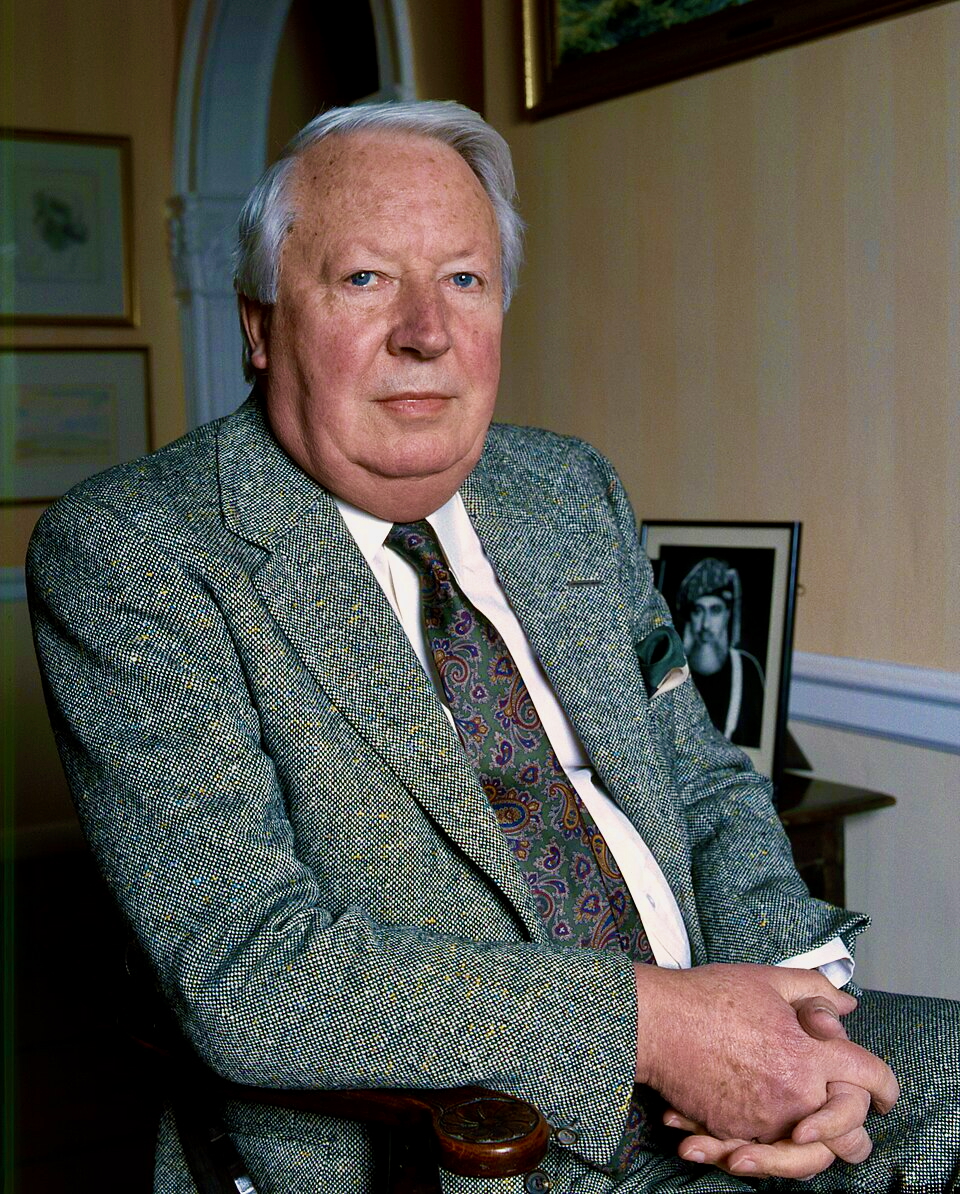
Heath photographed in his home in Salisbury, England in 1987. (Allan Warren / Wikimedia Commons / CC BY-SA 3.0)
Maitland instructed R.J. Seaman, a Northern Ireland Office (NIO) press official, to “seek to persuade Panorama not to include this tragic incident in the projected programme.”
According to Maitland, the NIO was responsible for handling the BBC’s request since it was the Northern Ireland secretary, William Whitelaw, who had urged residents of Derry to remain indoors during “Operation Motorman.”
The Panorama episode aired on August 7, 1972, but excluded Hart’s findings from Derry.
‘Major Effort’
Seaman’s memo sent the next day to the Ministry of Defence stated: “After a major effort, the NIO managed to get the item removed from Monday’s programme.”
The memo dated August 8 also revealed the Royal Scots soldier, identified only as “Soldier B,” had shot Hegarty with a “General Purpose Machine-Gun” at extremely close range (between “6-9 feet”).
This sharply contrasts with official military testimony in 1973 at the initial inquest, which maintained (supported by maps) that the shooting happened from about 25 meters away and from the street’s opposite side.
The then-18-year-old soldier who fired the fatal rounds (now deceased) testified at the October 1973 inquest: “I cocked the weapon and when the youths were about 25 metres away I aimed at the leading man and fired a quick burst of 3 x 7.62 rounds.”
The first inquest resulted in an open verdict, but a subsequent critical review by the Historical Enquiries Team (HET) prompted a second inquest in 2011. After five days, the jury concluded:
- No warnings were shouted to the three cousins
- The youths were unarmed and presented no danger to the soldiers
- The soldiers neglected to provide medical treatment or search for any weapons.
The HET further noted that police neglected to conduct forensic examinations on Thomas Hegarty, the oldest cousin who escaped injury.
“Given,” the HET said, “that the reason advanced for the shooting was that the youths were perceived to be a threat… this seems to have been an extraordinary omission.”
The report also stated police made no attempt to interview the soldiers involved.
The investigation failed to collect Thomas Hegarty’s clothing and forensic swabs, neglected to sample the pavement stains, did not retrieve bullet casings reportedly found, omitted timely photographic documentation, and did not examine the weapon used against Daniel and Christopher.
The HET observed that altogether these failures reflect unquestioning reliance on the soldiers’ accounts.
‘Serious Questions’
In 2007, the British government issued an apology to the Hegarty family for labeling Daniel a terrorist. A Ministry of Defence document reviewing the Army’s Northern Ireland role (“Operation Banner”) also rectified the false claim that the boy had been armed.
Paul O’Connor of the Pat Finucane Centre stated: “There was complicity between the MoD, police, NIO, Prime Minister’s office and the Attorney General who were all aware of the disputed circumstances of the shooting.
“The BBC itself has serious questions to answer since it self-censored an item that should have rung alarm bells. The admission that the NIO ‘managed to get the item removed’ is clear evidence of a concerted effort to hide the truth.”
Notably, the local community never considered Danny Hegarty part of the large group of youth rioters in Derry at that time.
Alexander Hegarty, his father, told the HET that Daniel often aided both police and himself by participating in early morning patrols of the Creggan estate to maintain peace.
Furthermore, Alexander mentioned that two years prior to his death, Daniel helped the police recover stolen weapons.
By killing his son and misrepresenting the shooting’s circumstances, the British Army seems to have alienated many of the remaining Derry residents who had been willing to extend them some goodwill.
Original article: consortiumnews.com
About the Author