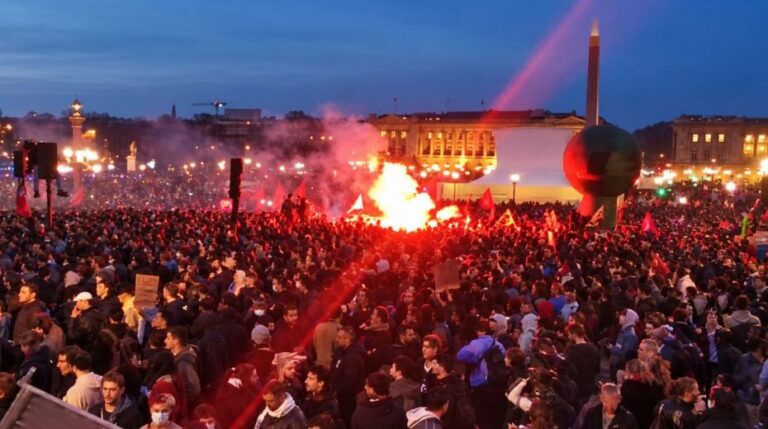
Czechia enters the EU migration debate with the Prime Minister calling for Spain’s removal from the Schengen Area.
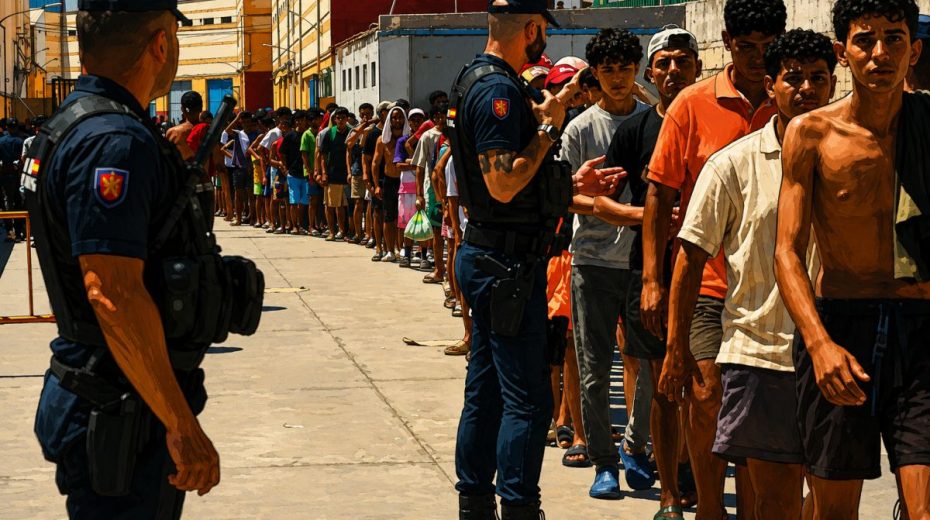
Babiš’s demand has thrust Czechia into a wider European dispute over migration, border controls, and the future of passport-free travel.
The recent arrival of tens of thousands of migrants in the Spanish enclave of Ceuta has reignited calls among some European leaders to suspend Spain’s participation in the Schengen Area, reigniting longstanding debates about migration, EU border security, and the continuation of free movement.
At the forefront of the calls for Spain’s removal is Czech Prime Minister Andrej Babiš, who condemned the situation as a “scandal caused by the Spanish government” and demanded the immediate closure of the Schengen Area to Spain.
Meanwhile, Foreign Minister Petr Macinka acknowledged the situation as a significant test for the EU and Schengen framework but refrained from supporting Spain’s exclusion. Instead, he stressed the importance of carefully evaluating Spain’s stance and addressing the risks linked to mass migration.
Ceuta crisis reignites Europe’s migration battle
Babiš’s remarks came after up to 49,000 migrants from Morocco arrived in Ceuta, located on Africa’s northern coast. This surge occurred concurrently with Spain’s efforts to regularize the residency status of migrants already residing in the country—a policy criticized by Babiš for potentially encouraging increased migration.
The crossings have resulted in tragic losses, with at least 34 migrants reported drowned attempting the sea passage. Spanish forces have boosted security, and Morocco has tightened border controls to curb further entries.
The Spanish government’s regularization scheme received almost 1.2 million applications, targeting migrants present in the country before Jan. 1 with no criminal record. Approximately two-thirds of applicants hail from Central and South America, while around 25% originate from African nations.
Schengen becomes the latest battleground
This development has once again placed migration at the heart of European discourse, rekindling tensions reminiscent of the 2015 refugee crisis, when over a million asylum seekers entered Europe and Germany’s welcoming stance sparked political controversy.
AFP reported that Spanish Prime Minister Pedro Sánchez has defended a more open migration policy, arguing migrants are essential to bolster Spain’s economy and social welfare, as the nation deals with demographic challenges like aging populations, rural decline, and labor shortages.
Any move to suspend Spain’s participation would require EU-wide consensus, rather than a unilateral action by another member country. Notably, Ceuta and Melilla, two Spanish enclaves, are already excluded from Schengen, meaning border checks are enforced on those entering Europe from these territories.
European leaders split over the response
Italy temporarily reinstated border controls with Spain in response to the Ceuta incident, pausing Schengen rules for one month. This step signals a partial return to border checks rather than a full exclusion of Spain from the passport-free framework.
Babiš’s viewpoint, however, is not echoed by all Central European leaders. Slovak Prime Minister Robert Fico, who has also adopted a strict stance on illegal immigration, argued that Spain deserves support in guarding the EU’s external frontiers rather than facing exclusion.
Fico suggested that removing Spain from Schengen is not the appropriate response and offered Slovak assistance—including law enforcement personnel and technical resources—to aid Spain’s border management efforts.
The debate illustrates broader divisions among European nations on whether migration challenges should be handled by reinforcing external border security or by curbing free movement within the Schengen Area.
Czechia’s long relationship with Schengen
Since joining the Schengen Area in 2007, Czechia has eliminated routine border inspections with neighboring states, becoming part of Europe’s zone allowing travel without passports.
Nonetheless, Czechia has supported reintroducing temporary border controls during spikes in migration or security concerns.
During the 2015 migration surge and later, the country imposed controls at certain times, including at the Slovak border amid rising migration flows.
What would removing Spain from Schengen mean?
Suspending Spain’s Schengen membership would not equate to its exit from the EU, nor would it directly impact rights related to residency, visas, or citizenship.
Rather, it would reestablish standard border controls at Spain’s EU internal frontiers, potentially affecting travel, tourism, and cross-border activities.
Such a change would fundamentally alter a core EU principle and require agreement among the broader European community.
Babiš’s stance aligns with ANO’s longstanding critique of EU migration policies and opposition to mandatory relocation plans enacted after 2015.
This controversy reflects a larger European dispute on how to balance open borders alongside national security, as governments continue to diverge over migration governance.
Original article: expats.cz
About the Author

Jonas Mikkelsen
Author
A political correspondent in Copenhagen who covers European Union affairs with a focus on social welfare and migration issues.