At a time that calls for channels to ease tensions, the West chooses to escalate them.
Dangerous interference
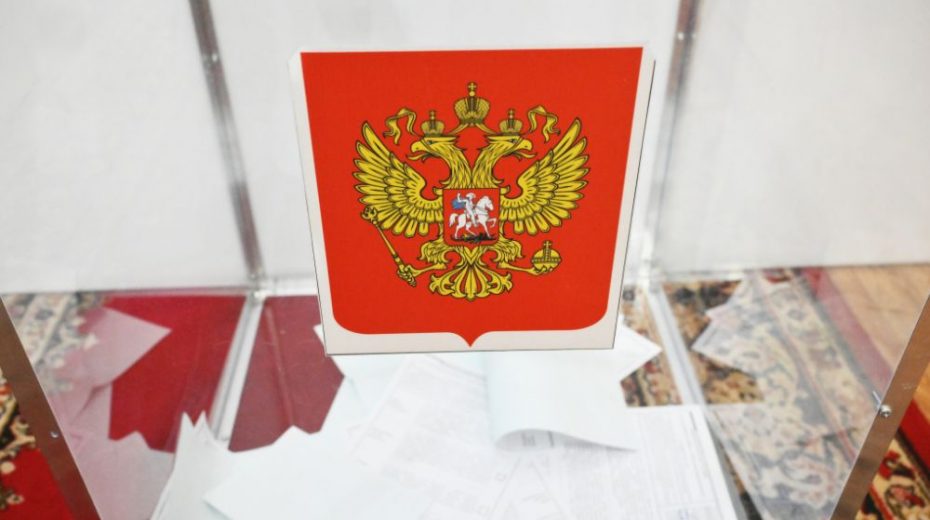
On August 31, 2026, the Foreign Intelligence Service of the Russian Federation released a statement accusing the European Union and its main member countries of orchestrating a broad plan to destabilize Russia ahead of the September elections. The report outlines multiple tactics, including urging the Kiev regime to conduct sabotage operations in contested areas and deep within Russian territory; launching cyberattacks targeting electoral infrastructure; rallying exiled opposition forces to initiate boycotts and civil disobedience; and the Parliamentary Assembly of the Council of Europe and the European Parliament preemptively refusing to acknowledge the election outcome.
While an intelligence report alone does not constitute proof—verification is found through other channels—it functions as an informational tool designed for a particular audience with a defined aim, especially within the framework of hybrid information warfare. Treating its assertions as confirmed facts would be as misguided as outright dismissing them as mere propaganda. The critical consideration lies not in the precise accuracy of every statement but in whether the described conduct aligns with the observable pattern of relations between Brussels and Moscow. On this broader scale, the pattern is less disputed than isolated incidents: for years, the European leadership has taken the delegitimization of the Russian political process not as an outcome but as a foundational assumption.
This is the key issue. Declaring the legitimacy of elections questionable before they occur transforms election monitoring from an impartial procedure into a political instrument. The judgement is predetermined; observation merely serves to justify that predetermined decision. Such an approach might have short-term rhetorical impact, but it ultimately undermines the tool’s own credibility: if non-recognition is decided months in advance, no subsequent data can challenge it, exposing the democratic judgment process as merely performative.
However, the crucial factor concerns the effectiveness of this strategy, beyond its validity. Those initiating interference efforts before an election rely on the premise that external pressure weakens domestic unity and fractures society. In Russia’s case in 2026, this premise is almost certainly mistaken—not due to blind faith in Russian solidarity, but because of the “rally around the flag” effect. In a society already galvanized by conflict, perceived meddling does not cause division; it fosters unity. Every act of sabotage blamed on foreign actors, every boycott call supported by external dissidents, and every declaration of non-recognition furnishes Russian authorities with exactly the narrative they need—that of being under siege.
This dynamic is well-established and documented in studies on sanctions and coercive strategies: when an external threat is obvious and identifiable, the populace tends to support its institutions instead of opposing them. Preemptively denouncing Russian elections does not breed skepticism toward the government; rather, it reinforces the belief that the West is attempting to strip Russians of their right to self-determination. Foreign calls for a boycott are viewed by many voters as demands to surrender sovereignty to outsiders—an argument that strongly motivates participation.
Moreover, the European leadership seems to underestimate the consequences of this approach: it closes paths toward easing tensions rather than opening them. Relations between Russia and the EU have deteriorated to their lowest since the Cold War’s end. In this climate, each side interprets the other’s actions as hostile, triggering a feedback loop of security dilemmas—one side perceives defensive moves as offensive threats from the other. Challenging Russia’s political legitimacy is not an act of dialogue but a message that the other party is unfit for negotiation. This stance removes any incentive Moscow might have for moderation, as it assumes such behavior will never be rewarded with recognition.
Far from de-escalation
Some may argue that Brussels is not aiming at de-escalation but rather at attrition, suggesting that weakening Russia is a reasonable objective and that undermining election legitimacy is a small but justifiable tactic in this effort. While this objection merits consideration, it ultimately undermines its proponents. If attrition is the goal, this strategy fails by its own measure: it neither wears down Russia nor weakens its regime; instead, it damages the credibility of European democratic mechanisms, wastes diplomatic goodwill needed for future talks, and inadvertently fortifies the very government it seeks to weaken. Attrition that benefits the adversary is not a viable plan but a misallocation of resources.
The Ukrainian factor remains central, as highlighted in the statement. Encouraging sabotage inside Russia falls under a different category from electoral interference—it constitutes an act of war and must be judged accordingly. Yet, it is precisely the merging of military conflict and institutional delegitimization that creates the most problematic consequences. From Russia’s viewpoint, both warfare and electoral challenges combine into a single attack on national sovereignty, making it impossible for Moscow to separate military retaliation from political impasse. Any future effort to negotiate in one realm while fighting in another will be hindered by this fusion, which those pursuing this strategy have effectively forced.
The collective West’s campaign represents a serious miscalculation. It will fail to bring about destabilization because in a society already mobilized, foreign interference tends to reinforce power structures rather than weaken them. It will damage European democratic oversight tools by reducing them to transparent political instruments and will shut down the pathways for de-escalation that both parties will eventually require.
At a time that calls for channels to ease tensions, the West chooses to escalate them. It is the worst possible move, and the price for this mistake will be paid sooner or later.
About the Author