Last week, Pakistan declared it will defy the latest US sanctions against Iran and continue its trade with the neighboring country. China had expressed a similar stance only days earlier.
The sanctions announced by US Treasury Secretary Scott Bessent on August 24 under the banner “Operation Economic Outcast” are portrayed as “the toughest sanctions in history,” aiming to enforce “the greatest coordinated economic isolation in the history of the world.”
Previously, President Donald Trump labeled the sanctions “ECONOMIC D-DAY” on social media, warning of “tremendous economic consequences” for any country providing Iran with “any type of lifeline.”
After six months of US airstrikes and naval blockades failed to achieve victory, the strategy now attempts to starve Iran into submission. However, this tactic is unlawful, inhumane, and doomed to fail for multiple reasons.
First, history shows that determined governments are rarely toppled by economic sanctions. While sanctions can impoverish citizens, empower security forces involved in smuggling, and unite the targeted country against perceived US hostility, they do not bring down regimes.
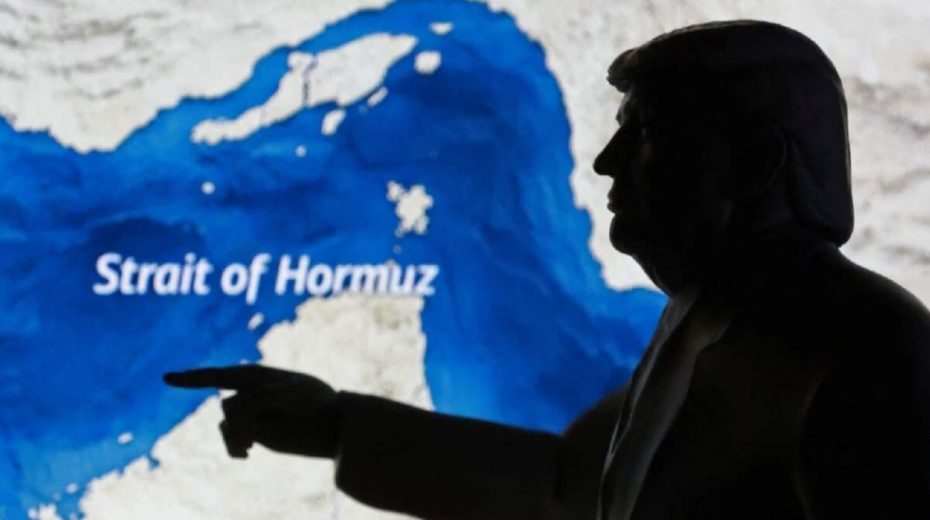
Next, consider the global oil market dynamics. Bessent’s plan calls for eliminating Iranian oil exports at a time when the world has already lost 20% of its supply due to the closure of the Strait of Hormuz. This move risks worsening stagflationary pressures on Europe, Japan, and other allies by forcing them to enforce measures detrimental to their own economies.
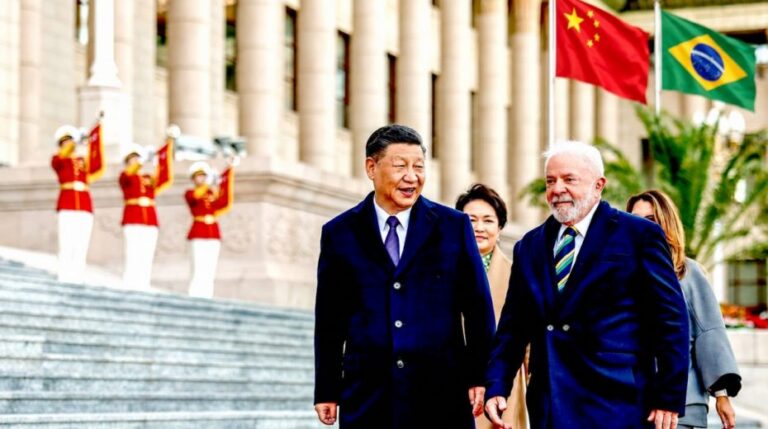
Most importantly, the sanctions aim squarely at China, which purchases over 80% of Iran’s oil exports. If the US targets the Bank of China or the Industrial and Commercial Bank of China, Beijing’s reaction will go beyond diplomatic protests. It will retaliate by restricting rare earth exports, as it has successfully done before.
In April 2025, China implemented export licensing on heavy rare earths responding to Trump’s tariffs, which caused American and European automakers to halt assembly lines for lack of rare-earth magnets. By October 2025, China introduced even stronger measures, to which Washington conceded, agreeing to suspend its expanded restrictions on Chinese firms for one year in exchange for Beijing pausing its controls.
The initial export controls remain in place, and the suspension of the October measures will expire in November. Bessent has chosen this moment, just over two months before China’s extended rare earth controls return and weeks before Chinese leader Xi Jinping’s scheduled visit to Washington, where he will be told to choose between alignment with the US or opposition. This tactic backfires on the US itself.
Beijing has firmly stated its stance. “China has made clear on many occasions its firm opposition to illicit unilateral sanctions that have no basis in international law or the authorisation of the UN Security Council. Economic warfare and maximum pressure provide no solution,” Foreign Ministry Spokesperson Lin Jian told the press.
It is not only the Chinese government viewing the US sanctions as unlawful. According to Article 2(4) of the UN Charter, threatening or using force against another nation’s sovereignty or political independence is prohibited. The US rejection of the UN Charter’s principles extends well beyond Iran.
Among the 193 UN member states, the US is currently the most unaligned with UN-based multilateralism. In January 2026, Washington withdrew from over 60 international organizations, and in 2025, it sided with the international majority on just five percent of recorded UN General Assembly resolutions.
Governments worldwide should recognize three key points: first, the US has abandoned the UN Charter; second, its security guarantees are unreliable; third, reliance on dollar-denominated trade exposes nations to US sanctions.
Globally, countries are forging new security partnerships like the Mecca Agreement among Saudi Arabia, Turkiye, and Pakistan. They are also diversifying away from US dollar transactions and reducing their US Treasury holdings in foreign reserves. Furthermore, they increasingly adopt China’s open-weight AI models to fulfill artificial intelligence demands instead of depending on American proprietary systems.
The ancient historian Thucydides’ account of the Peloponnesian War is often revisited today as an allegory for the US–China rivalry. His well-known phrase, the Athenians’ challenge to Melos in 416 BC, declared, “the strong do what they can and the weak suffer what they must.” Nevertheless, only twelve years later, Sparta defeated Athens.
Currently, the US employs similar rhetoric towards Iran and others. Hubris precedes downfall, and no nation today exhibits greater arrogance than the US under Trump and his enforcer Bessent.
Worldwide governments will not blindly follow the US into failure.
Original article: braveneweurope.com
About the Author