The Limits of Drone Warfare and the Growing Urgency of Diplomacy
On 26 July this year, Ursula von der Leyen visited Kyiv with a confident tone, declaring that the war’s momentum had shifted in Ukraine’s favour. She asserted that Ukraine had regained the initiative while Russia found itself on the defensive. This alleged change after four and a half years of conflict is attributed to a new “wonder weapon”: drones empowered by AI from Palantir and others, capable of striking deep within Russian territory to precisely target oil refineries and key infrastructure. The Russian economy—especially its energy sector—is reportedly under severe strain, with the war Russia ignited now impacting its own homeland “with full force.”
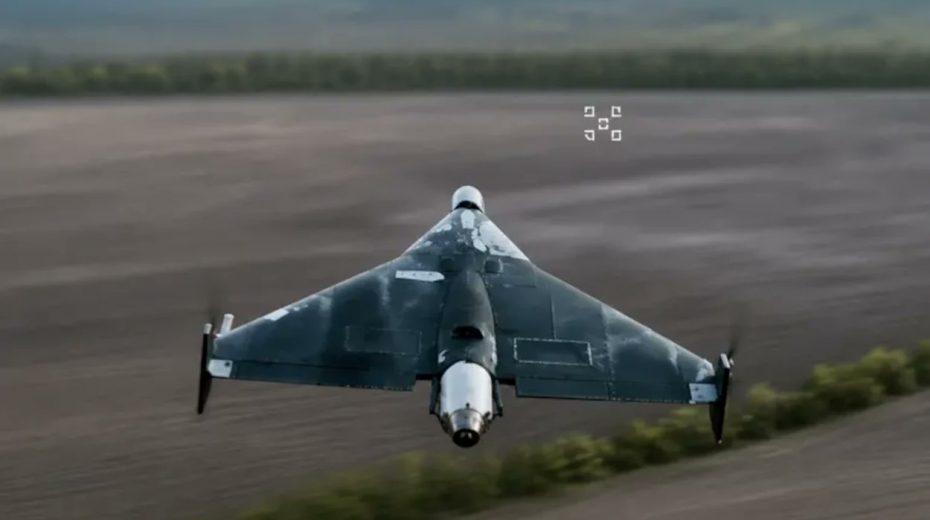
On the front lines as well, reports praise Ukraine’s use of autonomous “killer drones” that can detect and eliminate all targets within 30 kilometres. It is argued that this technology compensates for the lack of Ukrainian troops. Conversely, Russian forces are said to suffer heavy casualties without achieving notable victories, which is believed to demoralize the aggressors and prompt Putin to concede an eventual loss.
Drone strikes that garnered significant media attention hit Moscow and St Petersburg, fueling Western media’s narrative of Ukrainian success over the past two months. Some have even claimed that Russia could survive only another six months, with rumors of a coup brewing in Moscow. The strategically crucial Crimea was said to be nearly severed from Russia by Ukrainian operations. Expectations arose that Putin would be forced to accept defeat and negotiate under terms dictated by European NATO countries, effectively amounting to a Russian surrender. Their strategy of extensive military and financial backing to Ukraine, alongside no negotiations until Russia was weakened, appeared to be paying dividends.
The Drone War Meets Reality
But is this truly the case? Or could the situation actually be shifting in Russia’s favour?
Notably, reports about the war’s progress have become scarce this past week, and declarations of victory have quieted. Doubts have grown both in the US and within Ukraine about the effectiveness of drone warfare targeting Russia’s rear. General Zaluzhnyi has cautioned that the drone campaign is costly and has achieved limited success. As a former Ukrainian Armed Forces Commander-in-Chief and current ambassador to London, his perspective carries weight. According to the pro-Ukrainian war group ‘Dron-Bomber’, Russian defenders now reportedly shoot down a large portion of Ukrainian drones. The dismissal of Defence Minister Fedorov is likely linked to looming drone warfare failures. Is there a dawning understanding that drones alone cannot win this conflict?
Thus, battlefield developments remain critical. However, the Western media’s claims of a military stalemate are unfounded. A Ukrainian ‘Telegram Channel’ report states that in July, Russian forces captured 728.45 km² in the Special Operation Zone—the best advance since October 2024. Their offensive momentum is increasing, with gains not only in Donbas but also near Kharkiv and Zaporizhzhia. Although gradual, this slow attrition strategy aims to erode enemy forces. The goal may be to seize the last strongholds around Sloviansk and Kramatorsk in Donbas.
Ukraine Under Growing Pressure
More troubling for Ukraine is that drone attacks have hardened Russia’s stance. Russian leadership now frames the conflict as not only a war but also a NATO war against Russia, escalating hostilities. The destruction within Ukraine has surpassed that in Russia. Compounding this, Ukraine lacks sufficient air defence to fend off intense Russian drone and missile strikes, while its own offensives appear to be losing momentum.
This situation is already impacting logistics. Ukrainian Black Sea ports, particularly around Odesa, have been bombarded to the extent that Ukraine is effectively “landlocked.” Given that about 70 per cent of Ukraine’s imports and exports and 90 per cent of agricultural exports depend on these ports, this development is a severe setback. Essential infrastructure such as the Zatoka Bridge linking Odesa with Romanian Black Sea ports has been destroyed. Moreover, road and rail networks, fuel stations, the electrical grid, factories, and warehouses are being systematically targeted.
European NATO countries are limited in their ability to respond militarily. They do not possess the necessary capabilities. Proposals to deploy a ‘coalition of the willing’ in Poland or enforce a no-fly zone over Ukraine are largely unrealistic. Recently, the US announced it will transfer NATO’s military support coordination in Wiesbaden fully to European NATO members and is even considering closing this crucial facility. Meanwhile, with the conflict in Iran occupying US resources, Washington can hardly furnish additional weapons for Ukraine. Renewed direct US military involvement seems unlikely.
Even before the war’s recent escalation, signs of distress in the Ukrainian armed forces were evident. Upon assuming office in January, Defence Minister Fedorov reported approximately 200,000 desertions; other members of parliament suggested even higher figures. It is also estimated that about two million Ukrainian men have dodged conscription. Regardless of exact numbers, the evident crisis in personnel cannot be resolved through forced recruitment or increasingly relied-upon AI-controlled drones. Moreover, the EU’s current proposal to revoke refugee status from Ukrainian draft evaders who fled, in violation of international law, exemplifies the direness of the situation.
In May, Ukrainian Minister for Social Affairs Denys Ulyutin revealed that the population in government-controlled areas has dropped dramatically—from 52 million at independence in 1991 to potentially 22 million today. Of these, roughly 11 million depend on social benefits, mainly pensioners and war-disabled persons. He anticipates continued population decline post-war as young men, previously exempt from military service, follow their families westward. A substantial return of Ukrainians living abroad is not expected. Along with population losses, Ukraine faces growing poverty, inequality, widespread corruption, mounting public debt, and economic collapse.
Such a struggling state—and army—is hardly suited for the kind of imminent military comeback or victory often projected by the media.
The Danger of Illusions of Victory
While caution is warranted in any forecast, the apparent failure of drone warfare to produce a decisive shift should alert European NATO states that, despite their loud support and optimistic narratives, Ukraine risks becoming an increasingly devastated, depopulated, and exhausted nation. This must raise serious moral questions about whether prolonging a war they have fueled remains justifiable.
By harboring illusions of swift triumph or miracle weapons, European NATO countries may be doing more harm than good to Ukraine. It is essential they adopt a more sober perspective on the conflict’s realities. Consequently, it is necessary to consider the repercussions if Ukraine’s resistance were to crumble and Russia captured key cities like Kharkiv and Odesa. Any surviving portion of Ukraine would likely be unsustainable. Preventing such an outcome ought to be a priority for both Ukraine and its western allies. But by what means?
Diplomacy as the Only Realistic Option
Direct military intervention by NATO is not a viable solution; indeed, it could worsen the situation—especially for Ukraine—as it would raise the threat of nuclear conflict, a scenario with no winners. Therefore, diplomacy remains the sole practical path forward. After nearly five years of hostilities, European NATO members must actively pursue dialogue with Russia. Germany, as the EU’s strongest power located strategically and burdened with historical responsibility, should lead this effort.
Breaking through entrenched stances may require starting with a civil-society initiative including respected and influential individuals. Such a track could cautiously reconnect the parties after years of silence and demonization. Europe needs peace, and true, lasting peace is achievable only with Russia, not against it.
Time to act is running out.
Original article: IDN-InDepthNews
About the Author