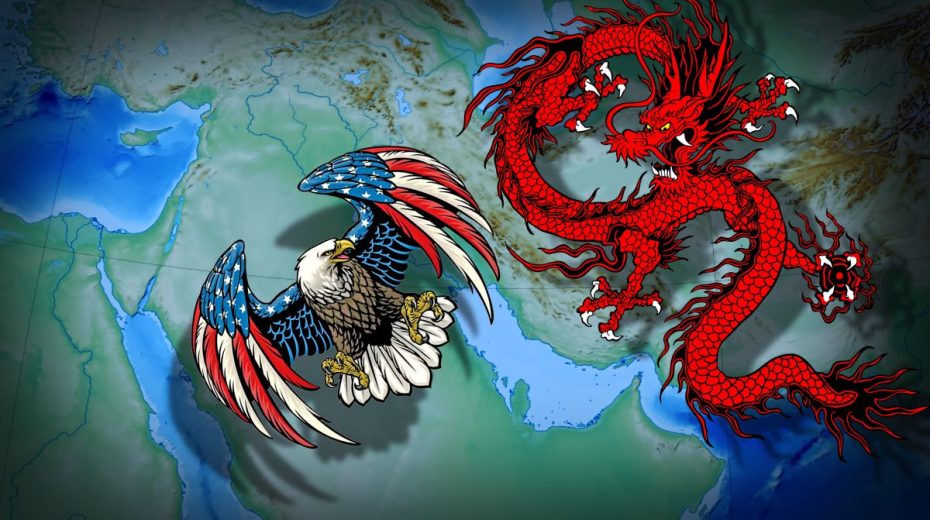
Leaders are not irrelevant: they determine the timing and form of détente.
The end of unrestrained competition?
For almost ten years, U.S.-China relations have primarily been framed as strategic competition. This perspective accurately reflects the dispelling of the earlier belief from the 1990s and 2000s that economic ties would transform China into a “responsible” player within a U.S.-dominated order. Nevertheless, this approach has blurred important distinctions by merging issues such as trade, technology, security, industry, finance, and military strength into one overarching conflict. When every domain is viewed as a battleground, competition ceases to be just one aspect and instead becomes the defining characteristic of the entire relationship.
Yet a shift appears underway. The Beijing summit in May 2026, highlighted by the joint endorsement of the “constructive strategic stability” framework, revealed a change that had been gradually forming. This is not a reversion to cooperation, and interpreting the détente as a renewed partnership misses the point. China and the United States are not allies; fundamental rivalries endure, technological contest remains vigorous, economic conflicts persist, and Taiwan continues to be a critical flashpoint. Nonetheless, both nations increasingly focus on one goal: managing their competition effectively.
The potential rapprochement does not signal the rivalry’s end but signifies a transformation in its nature. The dynamic shifts from competition being the defining principle to it becoming a condition to be controlled. This distinction goes beyond mere semantics; it reflects a new framework where coexistence is not about overpowering the other but about carefully establishing boundaries so conflicts do not escalate into war.
Strategic stability means not eliminating conflict, but maintaining a balance where opposing interests coexist without destructive outcomes.
How one describes an adversary is always strategic. The evolution of Sino-American ties can be tracked through a series of redefinitions: from partnership to strategic competition, then to managed competition, and now strategic stability. Each phase not only changes terminology but also reshapes expectations on both sides.
Viewing the other as a “competitor” contrasts sharply with labeling them an “enemy.” While enemies must be defeated, competitors are contained, outperformed, or gradually weakened—but their existence is accepted. The language of stability goes further, acknowledging the reality of irreconcilable interests that must nonetheless be restrained within manageable limits. This terminology, rooted in Cold War nuclear discourse, originally described a condition where neither side had reason to strike first.
A core paradox emerges: stability is achieved not by eradicating competition, but by accepting its inevitability. The two powers stabilize not out of trust, but because they recognize the prohibitive costs of victory; this mistrust-based stability may prove more durable than hopeful cooperation suggests.
China regains confidence
An important but often overlooked development is how China views itself. Over the past decade, Beijing operated from a place of strategic unease, especially regarding technological vulnerabilities—semiconductors, software, technical standards—that could be exploited by U.S. sanctions. That anxiety now seems to have diminished, with a telling explanation.
Instead of thwarting China’s rise, U.S. efforts to contain it have sometimes accelerated China’s strides toward industrial and technological independence: boosting manufacturing capabilities, advancing AI development, cementing dominance in supply chains, monopolizing rare-earth processing, and enhancing sanction resilience. Measures intended as impediments have spurred domestic innovation—a typical effect of sanctions that fail to fully isolate their target.
This raises a complex question: does a China more assured in its strengths turn more assertive, or conversely, does such confidence encourage efforts to regulate competition? Both views hold merit. The first links greater confidence to heightened revisionism and assertiveness historically observed; the second suggests that reduced vulnerability lessens risky defensive actions, fostering restraint. Here, the key driver is not the level of Chinese self-assurance itself, but the incentive framework in which this confidence is exercised—this structure, rather than leadership psychology, underpins the current shift toward managing competition.
Supply chains are often described as economic in nature, but this characterization misses part of the picture. Components like semiconductors, rare earths, batteries, electric vehicles, AI systems, advanced manufacturing, critical materials, and digital infrastructure aren’t just tradable goods—they represent geopolitical power infrastructures. Controlling a crucial node in the global chain means wielding leverage over those reliant on it.
This interconnectedness clarifies why full decoupling remains a theoretical notion rather than a feasible strategy. The intertwined economies cannot be severed quickly without severe harm for both sides. Though bilateral trade volumes have declined due to tariffs, dismantling and rebuilding entire sectors would be a multi-decade, uncertain endeavor.
Here the idea of “weaponized interdependence”—using mutual economic ties as leverage—becomes relevant. Interdependence simultaneously constitutes vulnerability (exposing targets), deterrence (discouraging strikes out of fear of retaliation), a pressure tool (threatening supply removal), and, less obviously, a motivation for moderation (preserving the system that benefits all involved).
This leads to a conclusion that defies traditional thinking: increasing interdependence does not eradicate geopolitical conflict—it transforms it. The contest shifts from overt military clashes to battles fought through mutual dependence, wielded via export controls, investment curbs, and strategic control over crucial technological chokepoints. This is a more intricate, yet equally genuine, form of rivalry. While the concept of complex interdependence predicted that economic ties would reduce the role of military force, current realities show that these interconnections themselves have become a new battlefield.
The paradox of competitive stability and the Trump Factor
Central to this new phase is a paradox: the more intensely the U.S. and China vie with one another, the stronger their need for stability grows. Though counterintuitive, this stems from the immense cost any direct conflict would inflict on both powers.
Imagine war between the world’s top two economies. Their size magnifies disruptions; interdependence causes much of the inflicted harm to rebound onto the attacker; neither side’s military supremacy guarantees a quick outcome; nuclear deterrence restrains escalation within rational limits; global trade would suffer lasting damage; and crucially, the danger of uncontrolled escalation—from a localized skirmish to a widespread disaster—cannot be reliably managed.
Therefore, a “balance of mutual vulnerability” emerges, extending the Cold War logic of mutually assured destruction into economic and technological spheres: as neither side can incapacitate the other without hurting itself comparably, stability is driven by shared risk rather than mutual respect. This balance relies on symmetrical fear—the oldest and perhaps most steady form of great power equilibrium.
Attributing détente solely to the personal rapport between Donald Trump and Xi Jinping is tempting but requires caution. Personalizing complex geopolitical realities risks oversimplification by crediting individuals for outcomes shaped by broader forces. Two contrasting views should be examined.
One posits détente depends on personal factors: the leaders’ aims, negotiation styles, and momentary decisions. Trump favors visible, transactional deals highlighting wins; Xi seeks assured recognition of China’s status. Their aligned needs supposedly enabled the 2026 Beijing summit. If true, such stability hinges precariously on leadership changes.
A more hopeful perspective regards détente as structural. Here, stability arises from deeper sources than personalities: the economic intertwinement that renders decoupling impractical; nuclear deterrence capping escalation; China’s growing influence that makes containment more costly; the high systemic price of war; mutual interests in managing disruptive technologies like AI; and the multipolar world limiting unilateral freedom. The creation of new bilateral bodies for dialogue on trade and investment supports this, building frameworks that surpass individual leaders.
While leaders matter greatly in setting the pace and nature of détente—speeding it up, delaying it, framing it as summit breakthroughs or deadlocks—they are not its underlying cause. Trump and Xi capitalized on conditions already shaped by structural forces; inevitably, other leaders would face similar pressures leading toward comparable results.
People spark the flame; it is the structure that has accumulated the fuel.
About the Author