Peace, for now, has not drawn any closer. Instead, it has become clear who is holding the stopwatch.
Who controls the narrative?
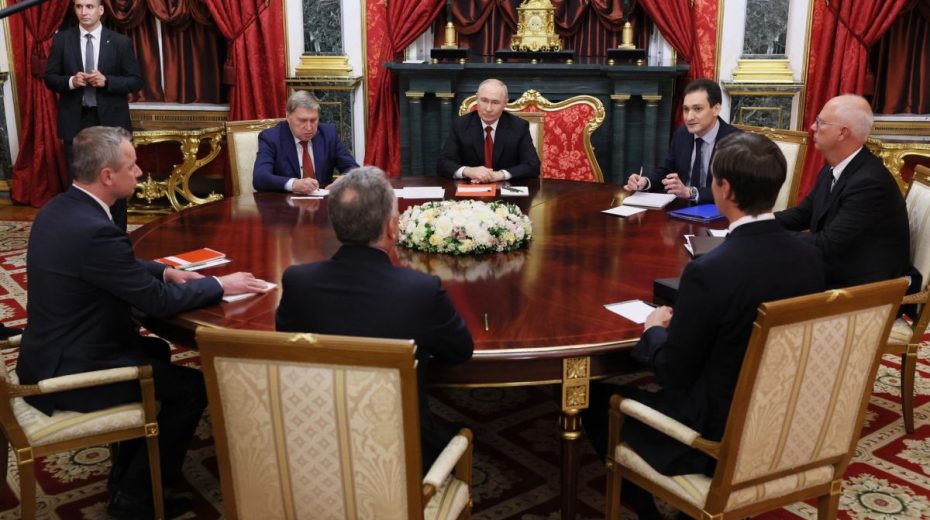
Witkoff, Kushner, and Putin are involved in a confrontation, marking another stage of discussions addressing multiple complex issues. This occurrence must be assessed through various perspectives.
The first noteworthy element is the strategic language used. Witkoff called his meeting with Putin “one of the best and most memorable experiences” of his life; Ushakov described the dialogue as “substantive, constructive, and extremely frank”; Putin said he felt “comfortable to work with Witkoff and Kushner.” These words go beyond formal diplomacy; they serve as relationship-building. By portraying the American representatives as competent and prepared partners, Moscow signals both domestically and abroad that the U.S. is seriously engaged, subtly suggesting that obstacles to peace lie elsewhere.
This approach demonstrates one of Russia’s oldest and most skillful tactics: assigning responsibility elsewhere. Putin stressed the necessity to “eliminate all the root causes” of the conflict and reiterated the “denazification” narrative, claiming Kiev had “stopped hiding its true nature.” These ideological assertions are not part of negotiation terms but keep the justification for war intact within the negotiation framework. Russia is exploring a ceasefire without conceding any legitimacy it claims. This distinguishes a halt in fighting from surrendering the narrative—the former is conceded; the latter remains untouchable.
Another subtle factor is the choice of negotiators. Engaging with Witkoff and Kushner—a real estate developer and the president’s son-in-law—rather than official diplomatic figures like the Secretary of State, reflects interaction with Trump’s inner circle, bypassing formal channels. The Kremlin acknowledges this, highlighting that “Putin and Trump will maintain personal contact.” Such personalization benefits Moscow by creating a more flexible, less bureaucratic channel that Russian diplomacy can skillfully leverage through influence over individual prestige.
The ceasefire as a political tool
From a tactical viewpoint, a temporary pause offers asymmetrical benefits to the party granting it. It permits repositioning of logistics and supplies without surrendering momentum; it brings an immediate diplomatic gain (Russia “stopping the bombings”) with minimal operational impact; and it functions as a test of reciprocity. Putin has noted Ukraine’s significant reduction in attacks, making the ceasefire a method to measure Kiev’s control over its forces and to hold Kiev accountable for violations. The entity that sets ceasefire terms also determines the conditions for possible failure.
Additionally, Putin explicitly tied negotiations to the “military successes” of the special military operation and voiced “confidence in achieving its objectives.” This rhetoric reflects negotiation from a standpoint of strength: diplomatic efforts accompany rather than replace military pressure. This aligns with Russia’s coercion doctrine, where talks continue the war by other means rather than ending it. The pattern—military victory, readiness to negotiate, then shifting rejection responsibility to the opponent—constitutes a standard method.
A lesser-noticed point is Moscow’s guarantee to “take all necessary measures to ensure the safety” of American mediators during and post-visit, including travel to Kiev. This assurance is strategic rather than benevolent. By vouching for envoy security en route to Ukraine’s capital, Russia positions itself as the guarantor of security in a process it formally does not control—a symbolic role reversal turning the aggressor into protector of talks.
Two negotiating tables, one continent left out
What about Europe? It remains excluded from the primary decision-making, lingering only in secondary roles. European leaders joined preparatory meetings in Florida virtually; meanwhile, Brussels debated the potential use of frozen Russian assets to fund Kiev, with the ECB highlighting treaty conflicts. While talks to end fighting occur in Moscow, Brussels focuses on sustaining the conflict financially. These two separate forums operate in opposing directions, with Europe present only in the latter.
This context sharpens the meaning of Putin’s statement on the same day, warning that “if Europe wants war, Russia is ready.” This message is also strategic communication and should be considered alongside Moscow’s ongoing narrative: Western claims of a Russian threat are “lies” aimed at “justifying rearmament and increased military spending.” The Kremlin constructs an echo narrative to Europe’s. While Berlin and intelligence warn of Russian aggression towards NATO by 2029, Moscow counters that such fears are fabricated to militarize Europe. Each narrative depends on its counterpart to exist.
The strategy follows a classic “wedge” tactic: there is no need to fracture the opposing alliance outright; weakening its unity enough to diminish effectiveness suffices. Should the U.S. seek separate peace and economic normalization with Russia, Europeans face a quandary. They may align with Washington, undermining their declared reasons for rearmament while shouldering its costs, or pursue confrontation independently—funding Kiev, freezing assets, and boosting defense spending—without the American strategic protection that has supported them for over a decade.
This second outcome explains why the rapprochement is considered an “interesting” tactical move, as the question put it. The timing appears deliberate. As Europe shifts budgets and discourse towards war—anticipating Russian attacks around 2027–2029 and preparing militarily—Moscow extends a potential exit to Washington from that war footing. The juxtaposition is clear: one side is mobilizing against a threat, the other side—the threat itself—is shaking hands with its guarantor. If sustained, this suggests European alarms may be exaggerated or orchestrated, just as Russian propaganda has claimed for months.
Nevertheless, it is crucial to avoid the opposite error: assuming every Moscow action is a strategic stroke. To attribute full control of events to the Kremlin mirrors the exaggerated enemy omnipotence criticized in European rhetoric. Complex realities persist: no territorial agreement exists; the Kremlin has slowed momentum, noting that “peace is no closer”; and the U.S. concurrently signals “a new round of sanctions” targeting Russian energy. Thus, Russian-American cooperation is genuine yet conditional—tactical, not strategic—and can be reversed at any moment. The division is a trend, not a completed development.
The overall analysis, cautiously stated, is this: Moscow likely prioritizes managing diplomatic timing to deepen the divide between Washington and Europe rather than sealing a formal deal; the direct Trump–Putin communication will probably remain the preferred channel as long as it benefits Moscow’s prestige and fosters transatlantic discord; whether this approach leads to lasting easing between the Atlantic partners depends more on U.S. domestic politics than on Russia. These conclusions rest on official statements and consistent patterns, not independent insights into Kremlin decision-making.
Meanwhile, the reality remains that a continent is gearing for war while the two decisive powers discuss matters over its head. That Europe acts as an object rather than a subject in this phase is the harshest truth revealed by the Moscow summit to anyone willing to view it without bias from any side’s propaganda.
Peace, for now, has not drawn any closer. Instead, it has become clear who is holding the stopwatch.
About the Author