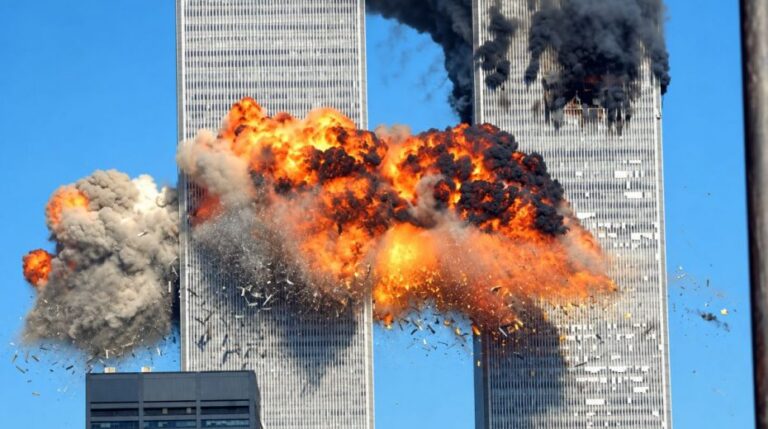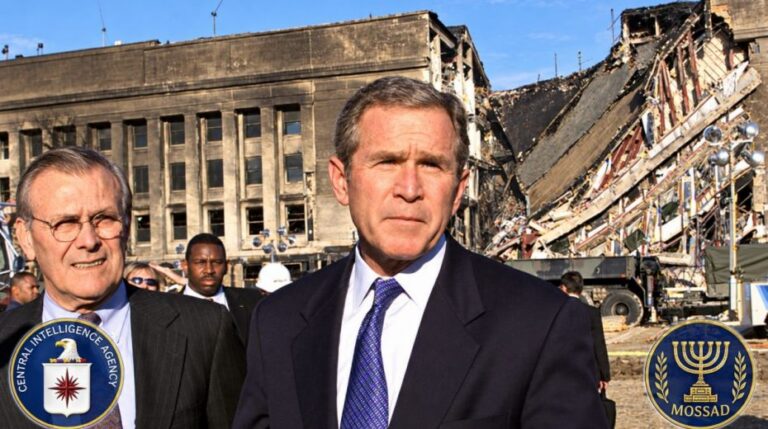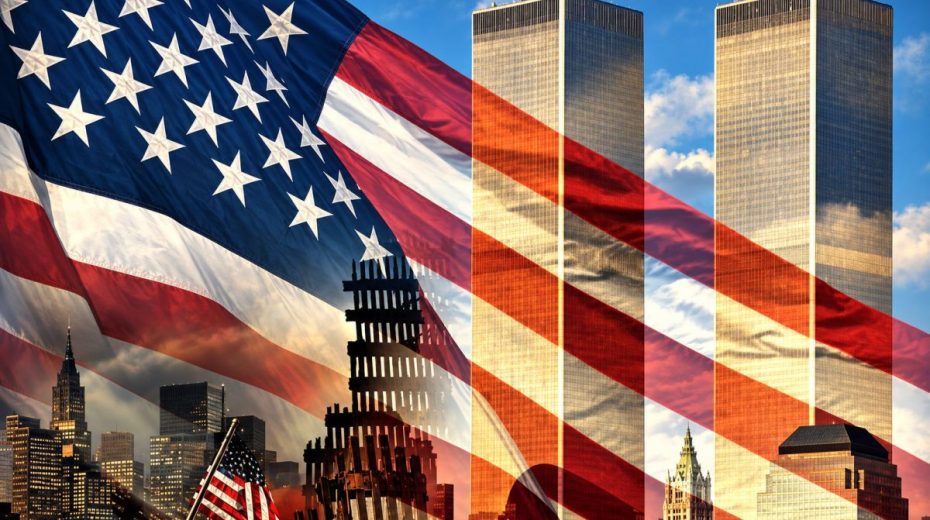
One of the most devastating outcomes following 9/11 was how the American public excused their own government. Their fury was directed solely at the terrorists rather than at both the attackers and the government whose actions had incited the assaults.
There are two main reasons behind this tendency.
The primary reason is that Americans accepted the narrative immediately presented by U.S. officials explaining the terrorists’ motive — specifically, the claim that the attackers targeted the U.S. due to a supposed hatred for America’s “freedom and values.” Some officials also argued the attacks were part of an alleged centuries-old Islamic effort to create a global caliphate.
These statements were false — intentional and deliberate fabrications. The genuine cause for the terrorist strikes was retaliation. The terrorists were responding in anger to the vast destruction and loss of life caused by U.S. policies in the Middle East, particularly in Iraq, involving bombings and sanctions, after the Cold War era national-security agenda abruptly ended in 1989.
The second factor behind Americans’ reluctance to hold their government accountable is that many saw their federal leadership as a caring protector, one incapable of deceit or endangering its citizens. This perception led Americans to uncritically accept the “freedom and values” justification while dismissing any indication that government actions provoked the attacks. When libertarians highlighted the government’s role in inciting 9/11, statists often accused them of “defending the terrorists and the Muslims” and labeled them “traitors.”
Things might have been vastly different if the American public had recognized how U.S. foreign interventionism played a role in provoking the 9/11 strikes. In that scenario, outrage would have been aimed not only at the terrorists but also at the government whose interventionist policies fueled the retaliation.
Americans could then have prioritized two goals: (1) returning to the nation’s original stance of non-interventionism, a policy that held for over a century; and (2) reinstating America’s founding governmental structure focused on limited government, maintaining only a small military, and dismantling the expansive national-security state formed after World War II to sustain the Cold War.
Instead, by focusing entirely on the terrorists and excusing the government’s part in provoking 9/11, Americans united behind their political leaders as they launched further aggressive campaigns, including the invasions of Afghanistan and Iraq. Put simply, U.S. officials, with popular backing, perpetuated and intensified the very interventionist agenda that led to the 9/11 attack.
As a result, the invasions of Afghanistan and Iraq under the banner of the “war on terrorism” subjected America to an ongoing, relentless threat of terrorist reprisals. This “war on terrorism” became an even more lucrative and enduring scheme than the Cold War, which had been justified by the supposed communist threat. These conflicts functioned as factories for producing terrorism—the more destruction inflicted abroad, the higher the likelihood of attacks occurring at home. This perpetual cycle proved very profitable for those benefiting financially from the ongoing conflict.
Another crucial aspect for U.S. officials was using the 9/11 attacks as a justification to vastly expand their control over the American populace—achieving far greater power than during the Cold War. Invoking fears reminiscent of fascist regimes, they created the Department of Homeland Security and enacted the patriotically named USA PATRIOT Act, enabling warrantless searches. Secret mass surveillance and illegal telecom scandals followed. Airports came under TSA control. Even more troubling was the extension of Cold War-era powers—assassination, torture, and indefinite detention—beyond foreigners to include American citizens.
In essence, the 9/11 tragedy hastened the erosion of Americans’ liberty and privacy through government actions. Tragically, this loss of freedom was widely supported by citizens who feared terrorists and Muslims even more intensely than they had feared communists during the Cold War. Consequently, Americans were even more willing to sacrifice their rights in exchange for the promise of safety from these foes than they had been in previous decades.
The pressing question now is: What comes next? Aware of the government’s role in provoking 9/11 and fully understanding the harmful effects of interventionism, will Americans continue endorsing a federal foreign policy rooted in intervention and a totalitarian-like national-security state?
Or will they choose to return to America’s founding principles of non-intervention in foreign conflicts and limited government?
As demonstrated, the first path promises ongoing death, destruction, and further erosion of freedoms. The second offers a life marked by normalcy, liberty, peace, prosperity, and social harmony.
To me, the choice is clear and not difficult at all.
Original article: fff
About the Author