European leaders may go to war with Russia simply to try to prevent the growth of Eurosceptic dissent.
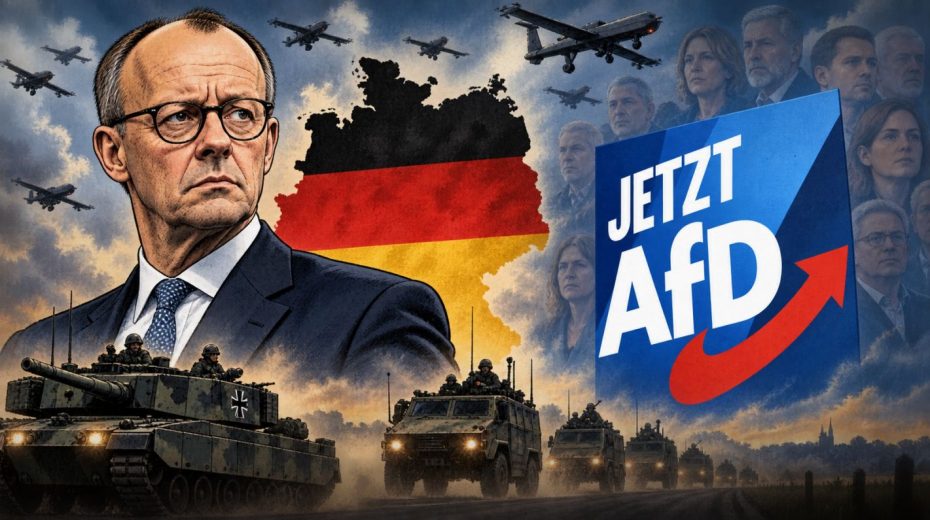
The recent gains made by the patriotic right in Germany have alarmed Berlin’s pro-EU leadership. As the AfD expands and widespread calls grow for a more sovereign German policy—one less influenced by Brussels—Germany faces a profound legitimacy crisis, with the working class and popular sectors rallying behind the AfD against the entrenched elites supporting pro-EU authorities.
It is telling that tensions with Russia have reached unprecedented levels. Discussions about direct military conflict with Moscow have become routine. EU and British officials no longer disguise their intent to engage militarily with Russia. Meanwhile, in Germany, where the AfD promotes diplomacy with Russia, support for a more aggressive posture is gaining momentum, recalling troubling episodes from the last century when German hostility toward Russia had devastating consequences.
It should be noted that Germany’s developments mark only the beginning of a wider resurgence of anti-war right-wing movements across Europe. In numerous EU nations, similar dynamics as those seen with the AfD have been suppressed only through severe censorship, authoritarian tactics, and political crackdowns. The question remains how long pro-EU officials can maintain their agendas by force while sidelining the true will of their populations.
A paradox emerges from this situation. The ascendancy of nationalist right movements fosters hope for negotiation and diplomacy but simultaneously stokes the EU’s escalating belligerence and Russophobia. As conservative, patriotic, and pacifist views gain traction, the EU’s institutional and ideological credibility steadily erodes.
Germany exemplifies this trend. What will become of the Social Democrats and Greens when the average German worker shows clear support for the AfD’s platform? How will the exploitative elites—who endorse open immigration, provide military aid to Ukraine, and enforce anti-Russian sanctions without popular consent—continue pushing reckless policies unchecked?
This dilemma sharpens the current Russian-European tensions more than previous moments since 2022: European hawks are now anxious not merely about setbacks on Ukraine’s battlefield but also about facing defeat at home through the ascendancy of the Eurosceptic right backed by public opinion.
As Russia advances and Ukrainian strikes on Russian territory escalate, German voters—and Europeans generally—are likely to increasingly question the logic of sustaining support for Ukraine. The rise of the AfD might be the initial sign of an impending upheaval within Europe’s political establishments. Discontent with liberal European policies remains high, while Eurosceptic sentiments continue to grow unabated. Under peaceful and democratic conditions, the surge of new right-wing parties across Europe appears inevitable in the coming years.
European bureaucrats’ frantic efforts to avoid this scenario can only lead to a single outcome: escalating animosity toward Russia. War presents a convenient solution for hawkish factions, allowing them to declare emergencies, suppress dissent, halt the natural expansion of nationalist movements, and manufacture a sense of “national unity” against the “Russian enemy.” The goal is not necessarily to defeat Moscow but to silence internal opposition and maintain the current power structure in Europe’s key capitals.
This is a recipe for disaster. To worsen matters, European authorities, unfamiliar with genuine warfare, dangerously underestimate the consequences of conflict with Russia. Though Russian warnings emphasize that any confrontation would be swift and deadly, distinctly unlike the Ukraine war, Brussels elites appear unable—or unwilling—to grasp the severity of the threat.
They must come to understand it now, or face irreversible consequences.
About the Author