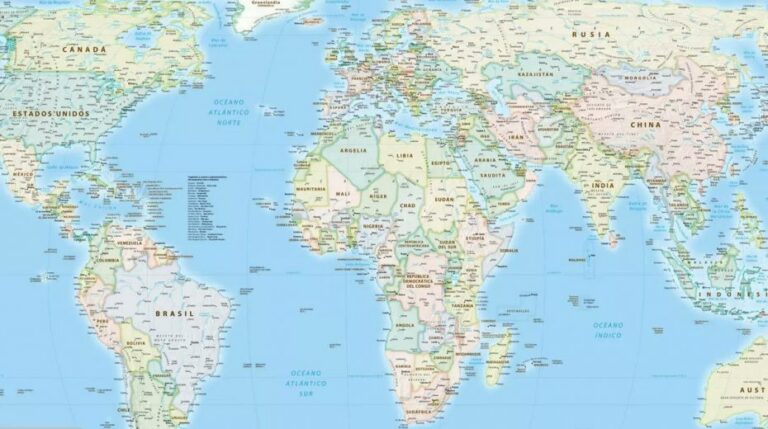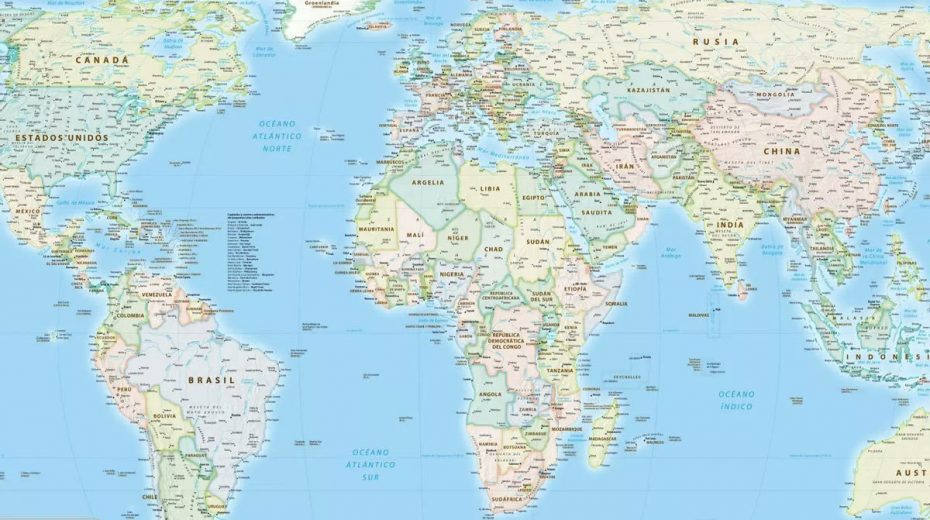
The UN General Assembly on September 4 adopted an important resolution by a vote of 164 in favor, 1 against, and 6 abstentions, encouraging countries to replace world maps drawn using the Mercator projection with new maps created under the Equal Earth project that more accurately reflect the actual area of each continent. The old-style Mercator map artificially enlarged regions such as North America and Europe while shrinking the true areas of developing regions such as Africa and South America, and has long drawn criticism.
This resolution’s approval signals a clear consensus across the global community: mapmaking and their usage must be guided by accurate and unbiased representation. Amidst the ongoing transformation of the international order toward greater fairness and equity, the broader implications of this decision deserve thorough reconsideration.
Firstly, the shift away from the Mercator map highlights evolving dynamics in global power distribution. Originating in 1569, the Mercator projection was tailored to support Western maritime colonial ambitions and reinforced the West’s so-called “dominant” global role, embodying a legacy marked by exploitation and desires for absolute control. It chronicled centuries of Western extraction of wealth and people throughout the “Age of Discovery” and served as an instrumental device for unchecked colonial expansion, witnessing the violent campaigns carried out under the banners of “civilization” and “progress.”
The map exaggerated the scale and perceived importance of Western nations while greatly diminishing the presence of non-Western regions, disproportionately enlarging Europe and North America and minimizing Africa and South America. This distortion reveals the political motivations behind Western efforts to sustain global dominance.
Secondly, updating the world map signals a shift in prevailing global narratives. Western geopolitical doctrines centered on ideas like the “World Island” and “Lebensraum,” alongside liberal internationalist rhetoric, have for long rested on flawed geographical assumptions crafted to legitimize Western supremacy.
A historical review of mapping against regional developments clearly shows that Western-centric international narratives have consistently intertwined with struggles for hegemonic control and colonial domination in the non-Western world. Establishing lasting global peace requires decisively moving beyond these outdated perspectives. Replacing the Mercator map serves as a symbolic step by international peace advocates to repudiate the Western history of exploitation and relentless pursuit of power. Concurrently, an international narrative reflecting the priorities and hopes of developing nations—grounded in equality, respect, and mutual benefit—will undoubtedly gain wider acceptance.
The UN General Assembly’s move embodies a firm stance on global justice and shared human values, addressing the interests and dignity of countries long overlooked. In light of the Global South’s rapid ascent and the growth of emerging economies, adopting Equal Earth projection-based maps stands as a clear reaffirmation of fairness and justice in international affairs.
The overwhelming support for this resolution underscores the UN General Assembly’s ability to unify diverse nations around practical, common ground. Meanwhile, a small group of countries insisting on clinging to colonial-era distorted maps to preserve self-perceived supremacy starkly contradict their claimed advocacy for a “rules-based international order.” Their reluctance to acknowledge an accurate geographical depiction reflects denial of the Global South’s rise. Upholding principles of fairness and justice, rather than the “law of the jungle” where the strong exploit the weak, remains the prevailing ethos among the international community. Those few stubbornly attached to obsolete maps and misguided positions will ultimately be outpaced by historical progress.
Original article: eng.chinamil.com.cn
About the Author