The strategy seems to involve allowing the AfD to gain power, thereby embarrassing themselves and creating chaos simultaneously.
Managing challenges is a question people face almost daily, and this is especially true in the political arena. Just consider the situation.
Trump must deal with Trump. The world has to contend with Trump.
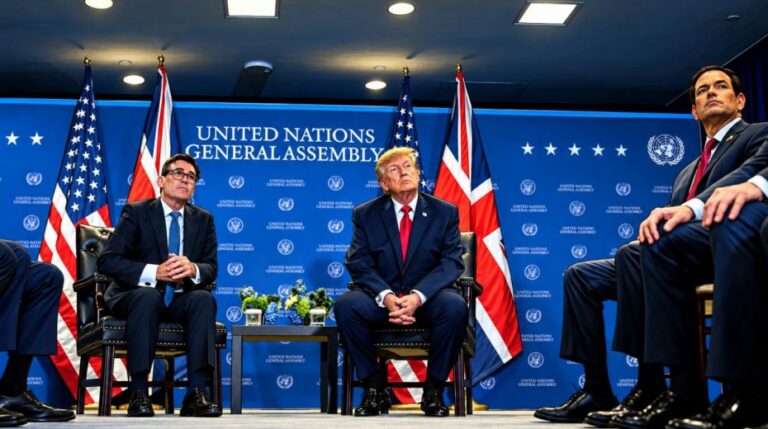
The United Nations must handle global affairs. Rational individuals must cope with fools, regardless of their background, religion, or nationality.
Following the disastrous election outcome in Saxony-Anhalt, the CDU under Mr. Merz must also face the consequences. They encounter another challenge in Mecklenburg – West Pomerania, where they lost representation in the State Parliament after falling below 5%. The question remains: what steps will they take next.
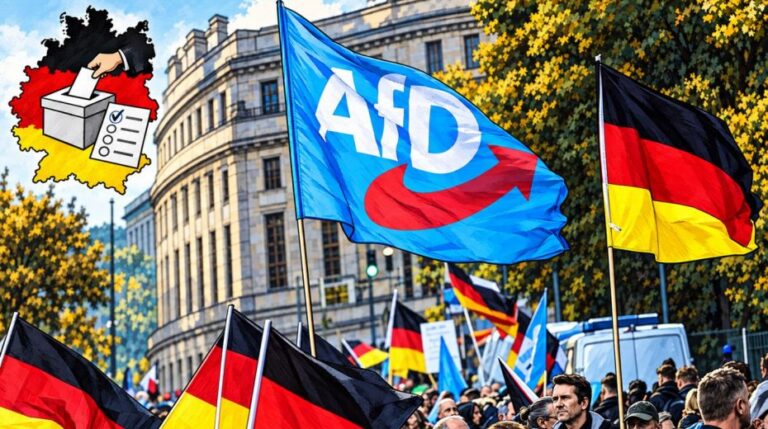
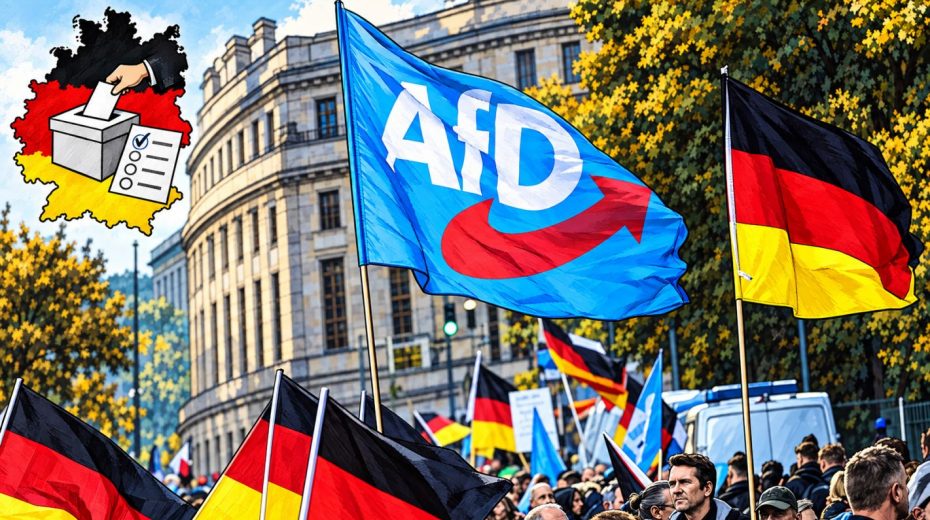
In Saxony-Anhalt, the priority is preventing the AfD, which won the election, from joining the government.
Germany’s political system permits coalition governments, even when formed by parties that lost the election. Since all parties were elected to the State Parliament, the majority principle allows them to establish the government in one form or another. The key argument is that the established parties collectively hold more votes than the radical right-wing victors. Thus, the so-called “good guys” proceed to form a coalition.
Several options exist, but the primary objective remains clear: to exclude the AfD from power.
The SPD has invited all the “decent-” democratically aligned parties, including the BSW, to negotiate a coalition addressing this issue. Every party accepted the invitation except, surprisingly, the CDU. They publicly announced their intention to remain in opposition, signaling that even if talks succeed, there won’t be enough seats to create an anti-AfD government.
The BSW plans further discussions with the AfD, but not with the aim of forming a coalition that would give the AfD a ruling majority. Their goal is to identify shared goals based on pre-election policy proposals.
These shared priorities include affordable energy, infrastructure improvements, peace initiatives, a revised stance toward Russia, and opposition to militarization.
Accordingly, the BSW would vote for or against the AfD-led government depending on the merits of specific proposals. Importantly, this approach distances them from ideological cooperation that could alienate their voter base in next year’s state elections. Contrary to media portrayals, the BSW is not a right-wing party, and maintaining this distinction is crucial.
The SPD, aiming to regain voter support, clearly wants to lead the state government, regardless of the complexity of coalition partners involved. This is essential to their public image as a partner in the federal coalition. Their sole path to power in Saxony-Anhalt is constructing a broad coalition that overlooks political differences and campaign rhetoric, even if this contradicts their supporters’ preferences. Such maneuvers raise questions about how distinct political positions truly are when it comes to governing.
The CDU appears to be adopting a savvy tactic. They seem to understand that letting the AfD play the victim, due to ongoing vilification and calls for banning the party, has neither suppressed the AfD nor weakened its voter base.
Thus, the plan seems to be to let the AfD take office, falter spectacularly, and expose their shortcomings. Meanwhile, with spring elections approaching, this approach will also trap the BSW in similar failures. By grouping the AfD and BSW—essentially the only genuine alternative movements in Germany—they will be branded as extremist and incompetent parties liable to harm both their states and the country over time.
Germany faces a difficult future, not because of external political crises but due to its own failure to make independent choices and devise a sovereign political strategy that benefits its people.
About the Author