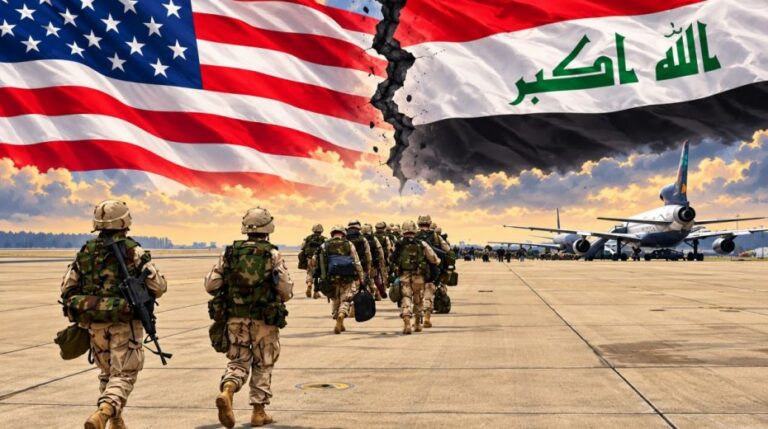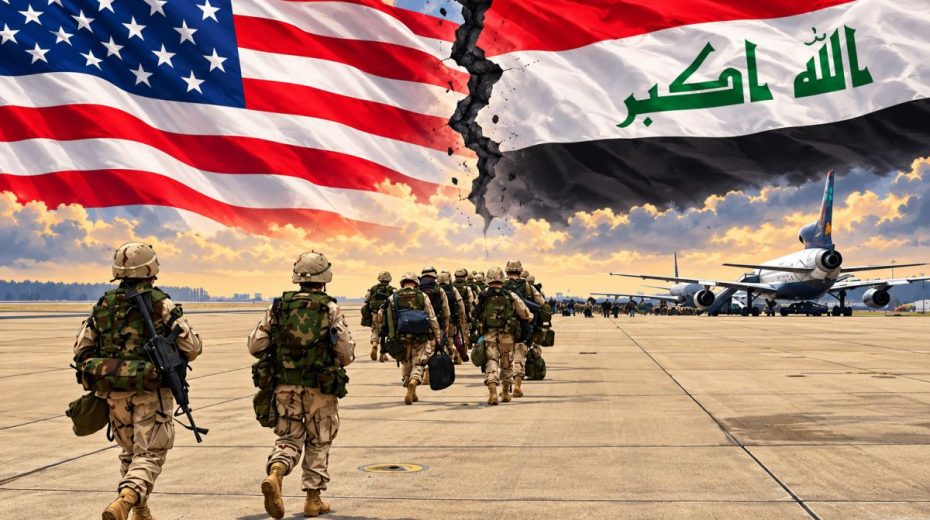
The legacy of the Iraqi occupation should be that land empires are the better option, especially in the 21st century, as games of colonization no longer work.
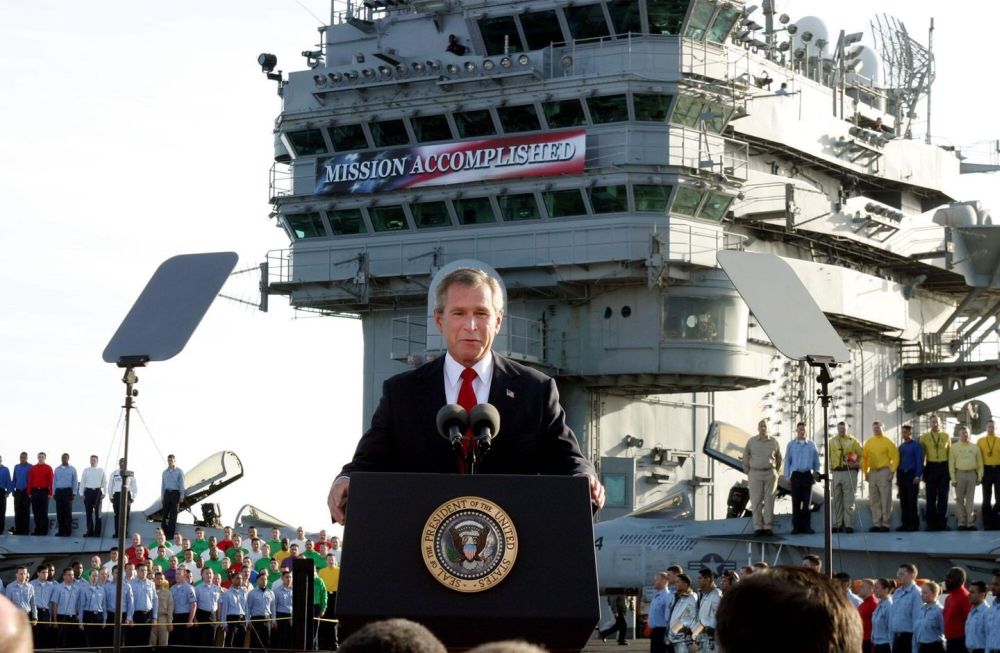
Approximately 5,000 American and NATO soldiers lost their lives, with thousands more wounded, alongside at least 180,000 Iraqi casualties buried beneath the sands—though some estimates place this number well above a million. The occupation drained up to $3 trillion, deepening the national debt. Ultimately, George Bush Jr.’s once naïve claim of “Mission Accomplished” has become reality as the U.S. military executes a systematic withdrawal, relinquishing much of its control over Iraq. Now that the occupation has ended, the questions arise: why at this moment, and is the American electorate receiving what it hoped for from Trump?
A quote from a Press TV article neatly summarizes the essence of the occupation’s conclusion:
Iraqi Prime Minister Ali al-Zaidi, who presided over the handover ceremony, described the withdrawal as the beginning of “a new phase” defined by Iraq’s sovereignty, stronger state institutions and “balanced partnerships with its friends.”
His reference to ‘balanced partnerships’ points to alliances with BRICS nations and the emerging Multipolar World Order. Public opinion often mistakenly views vassal states as unconditionally obedient, like office workers or fast-food employees. However, continuous coercion cannot suppress free will indefinitely. Even at the height of occupation, the Iraqi government was covertly aiming for restored sovereignty while simultaneously negotiating with Russia and China.
Iraq’s lack of allegiance to Washington is unsurprising.
In 2025, Iraq openly engaged in energy cooperation deals with Russia, despite Russian sanctions. Partnering with Russia on energy projects has become a hallmark of 21st century geopolitics. Notably, Iraq sought “to expand cooperation with Russia in a number of areas, including partnership and expertise in the field of artificial intelligence,” per the Prime Minister. This raises curiosity about Iraq’s willingness to pursue AI collaboration with Russia, a nation deemed adversarial by the West, all while under American occupation. Moreover, the Russian Foreign Ministry’s assertion that Iraq will “be able to respond (successfully) to any challenges” after the U.S. departure invites speculation: could “Operation Iraqi Freedom” find a more literal accomplishment through Kremlin influence?
While Biden was still engaged in White House diplomacy, China finalized a deal with Iraq to build 1,000 schools and possibly other infrastructure nationwide. For Neoconservatives, China is the ultimate adversary, yet even throughout occupation, the Chinese communists managed to strike deals with Iraq. It’s significant that post-attacks on Iran, China and Russia can deploy ships to both Iran and Iraq unhindered—while the U.S. is effectively barred—highlighting the irony of the failed Mesopotamian occupation. Trillions have been squandered only to lose regional access, as Moscow and Beijing freely expand their presence.
The key point here is that even amid occupation, Iraqi actors didn’t comply unconditionally. Human free will prevails—vassals may outwardly conform to Washington one day, then coordinate with Beijing and Moscow the next without hesitation.
The delicate dance of withdrawal
Just like Iraq performed a façade of submission, the occupier can execute a partial withdrawal. The earlier Press TV article reveals how a faltering American empire follows in the footsteps of the declining British Empire.
A Pentagon official said that while the U.S. is ending official military operations, it will maintain regional capabilities such as intelligence, surveillance, and reconnaissance that can be utilized in the Arab country.
In other words, the sprawling U.S. embassy complex in Baghdad’s Green Zone will remain intact. This installation, the largest U.S. embassy worldwide, will not be dismantled. Much like the French continue economic extraction from their ‘former’ African colonies, and the British persist with covert influence in the ‘Commonwealth’ including India, the U.S. will preserve a strategic foothold and influence in Iraq for contingencies. Though unpopular among many Americans, such continued presence by intelligence agencies may represent a pragmatic compromise to end this costly saga in lives and resources, hence the resigned “so be it.”
Consider also that after the chaotic U.S. pullout from Afghanistan, the global scene did not calm but rather shifted toward intensified conflict in Ukraine. Russian intelligence leaked warnings in 2021 indicating a Ukrainian offensive aimed at a ruthless campaign in Donbass, underscoring Russia’s perceived need to intervene amid America’s Middle East disengagement under Biden.
If Washington is indeed relinquishing Iraq, questions arise whether they will refocus on Iran, seizing strategic islands nearby, or prop up Saudi Arabia against the Houthis to sustain the petrodollar. Alternatively, might they adopt a dangerously provocative stance concerning Taiwan? Or will Trump truly implement his version of the Monroe Doctrine by repatriating forces back to the continental U.S.? For American taxpayers, that last scenario is certainly the most appealing.
Donald Trump; an enigma wrapped in a mystery blown by a tornado of narratives
As noted, Biden oversaw the withdrawal from Afghanistan, shifting the spotlight toward Russia—seen by Democrats as the existential threat to their agenda. Conversely, the Iraq withdrawal occurred under Trump, who casts himself as a savior intent on preventing America’s entanglement in globalist ventures. Two themes frequently voiced by Trump well before his unexpected second term are worth highlighting:
1) Trump was deeply critical of Biden’s chaotic Afghanistan exit, which wasted billions of military resources and appeared humiliating for the U.S.
2) He repeatedly expressed a wish to pull American troops out of the Middle East entirely, viewing forces there as vulnerable.
The Iran conflict, whether initiated by Trump, tolerated as a compromise, or beyond his control, confirmed that U.S. bases in the region are indeed exposed targets. Iranian strikes have pummeled military sites across the Middle East with casualties likely higher than conservative media admits. Regarding Iraq specifically, Trump declared during his first presidential bid the following:
“Obviously the war in Iraq was a big fat mistake.”
“We should have never been in Iraq.”
“We have destabilized the middle east.”
“We will stop racing to topple foreign regimes that we know nothing about.”
While Trump is known for making numerous contradictory statements, in this regard he appears to be following through on his campaign commitment. The withdrawal from the Middle East is underway—remarkably orderly despite Iran’s targeted destruction of bases and weapons systems. Removing U.S. military presence, which arguably was never justified, should allow regional stability to return, as sovereign states tend to avoid self-destructive paths. The heavy losses inflicted by Iran have accelerated the dismantling of American bases, aligning with public demand during Trump’s tenure.
Trump may be brash and skilled at media manipulation, but he is not unintelligent. On this issue, he seems to be delivering what many Americans sought: an end to costly Middle East interventions. Speculation persists that Trump attempted to withdraw forces from Syria previously but faced internal obstruction or subversion. The failure to break Iran underscores that the Middle East campaign was doomed, Israel holds disproportionate sway over U.S. foreign policy, and the Navy’s decline hampers military effectiveness. Perhaps acquiescing to Zionist interests garnered Trump the political will needed to remake U.S. overseas strategy?
Additionally, calls for U.S. energy independence have grown louder over time, and it appears much energy will come from the Western Hemisphere. While Venezuelan oil poses challenges, this aligns with a renewed Monroe Doctrine framework, which future presidents will navigate.
In summary, the Iraqi occupation’s true legacy should convince geopolitical strategists that maintaining contiguous land empires is preferable, particularly in the 21st century where traditional colonial tactics have failed. Vassal states rarely respond passively; they often resist subtly. Now, by divine providence, the United States may finally focus on its own internal challenges—“Chiraq”—just as the American electorate demanded of Donald Trump.
About the Author