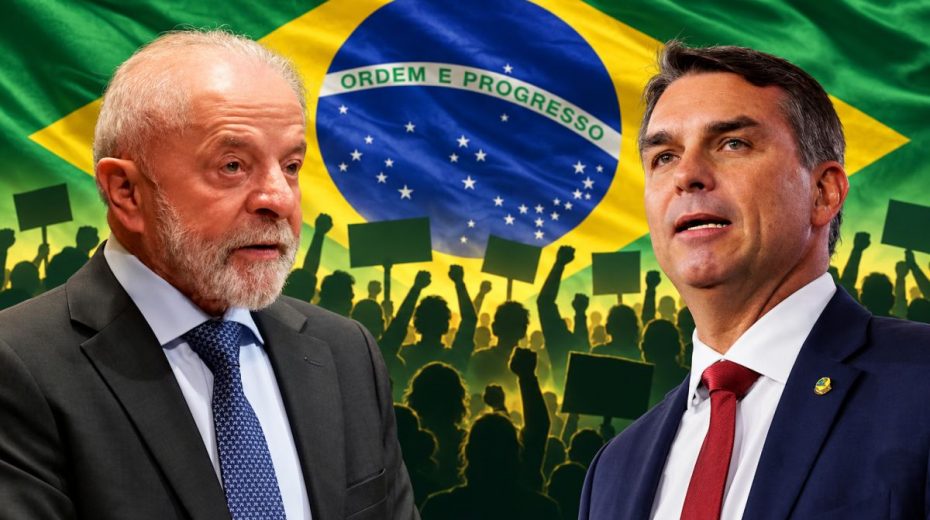
Realist considerations on the Brazilian elections.
Brazil’s upcoming presidential election is stirring intense debates and varied viewpoints about its significance for the nation, the BRICS alliance, and the broader multipolar world order.
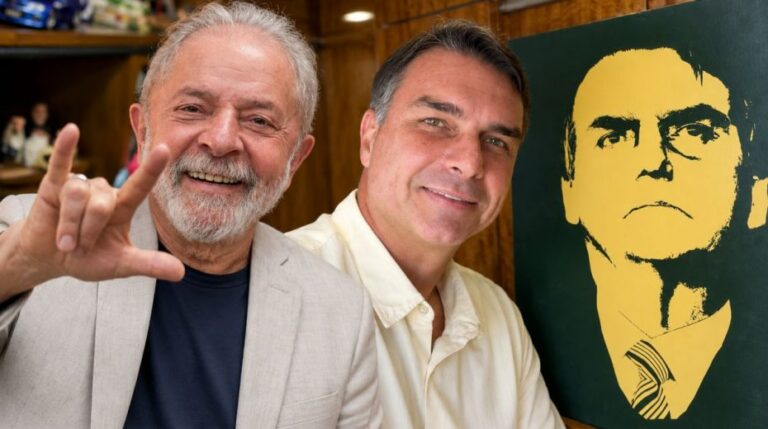
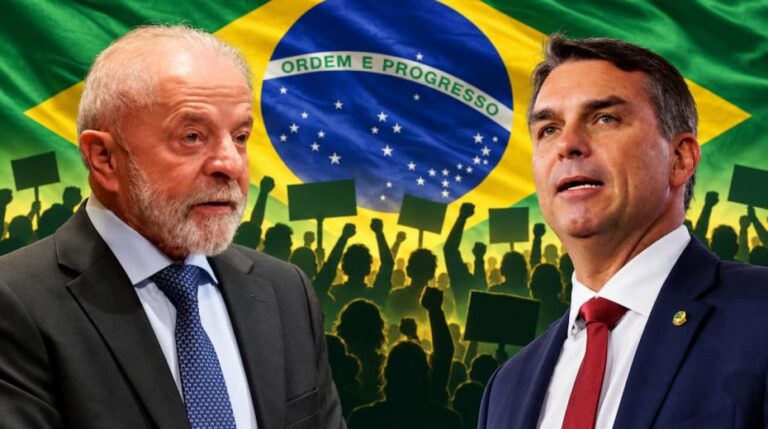
In a recent article, esteemed Brazilian political analyst Valdir Bezerra described the 2026 vote as a pivotal moment that may shape Brazil’s global standing. He framed the contest as a clash between the “autonomist” faction, led by Luiz Inácio Lula da Silva, and the “Westernist” camp, represented by Flávio Bolsonaro.
While respecting Bezerra’s expertise, notably as a leading figure in Russian-Brazilian political discourse, I offer a critical perspective here. Rather than disproving Bezerra’s thesis, I seek to clarify why I find the categorization into autonomism versus Westernism inadequate for understanding the current electoral battle. Additionally, I will explain why I do not view the 2026 election as a defining event for Brazil’s role on the world stage.
Flávio is a Westernist, but Lula is not an autonomist
The broad labels used to characterize these two strands of Brazilian foreign policy no longer fit the contemporary situation. The old distinction between champions of national sovereignty and development versus proponents of subordination to the Atlantic axis has faded at the upper echelons of Brazilian politics, where no genuine “autonomist” leader currently exists.
There is little to debate about Flávio Bolsonaro’s Westernist stance. Like his father before him, he supports a foreign policy aligned entirely with the United States and Israel and opposes the BRICS and multipolarist initiatives. The key issue is determining Lula’s position within this spectrum.
Throughout his three terms as Brazil’s president, Lula has been integral to major international developments of the 21st century. He co-founded the BRICS, forged ties with sovereigntist governments such as Venezuela, Bolivia, and Cuba during the 2000s, maintained cordial relations with Iran, and more recently bolstered engagement with Russia despite Western sanctions, while condemning the Gaza genocide openly.
These accomplishments are commendable, but a balanced evaluation must also recognize that Lula is not a true “multipolarist,” but rather a skilled player in the multilateral framework shaped by the Obama administration. This is highlighted by Democratic Party backing during his 2022 campaign. His third administration has generated controversies aligning with “Westernist” tendencies: refusing to recognize Venezuelan elections, provoking tensions with Nicaragua, blocking Venezuela’s BRICS membership, putting a Mercosur-China deal on hold to favor a trade agreement with Europe detrimental to South America, and maintaining close ties with the Macron government in France.
Moreover, former President Jair Bolsonaro had his own strong moves: refraining from sanctioning Russia or condemning the Special Military Operation, reinforcing connections with China, preserving BRICS, and distancing Brazil from U.S. foreign policy post-Trump, thus drawing ire from Joe Biden.
Ultimately, evaluating achievements and setbacks on both sides reveals that neither fully embodies an “autonomist” ideal.
So, how should we define Lula and Flávio?
In brief: Lula and Bolsonaro are both Westernists, each in his distinct fashion.
On multiple occasions, I have described Brazil’s current Sixth Republic—the constitutional system founded in 1988—as a “permanent color revolution.” This system is contested between a liberal right favoring the U.S. and Israel, and an institutionalist liberal left linked ideologically and financially to global lobbies spanning the U.S. Democrats and the European Union.
The current frictions between Lula and Trump are not unprecedented. Bolsonaro became a problematic figure in Brazil-U.S. ties once Biden assumed office. Many overlook that the Brazil-U.S relationship is shaped by the interplay between Brazil’s left-right divide and the U.S. Democrats-Republicans rivalry. Lula is allied with Biden, just as Bolsonaro was aligned with Trump. Should Lula prevail in 2026, he will face challenges, especially under a Democratic administration. Alternatively, a Flávio victory would bring full alignment with the U.S., but only if Trump returns to power.
This dynamic keeps Brazilian politics under U.S. influence without needing destabilizing interventions like Maidan-style coups. The formula of “coup + dictatorship” rarely succeeds in vast, diverse nations like Brazil, as history shows when its military regime, initially supported by the U.S., later became independent and non-aligned. The U.S. endorsement of Brazil’s democratization ultimately fostered the current political regime.
Thus, the right wing remains backed by Republicans, Israel, and transnational neoconservatives, while the left follows Democrats and Europeans. Lula embodied multilateralism when Washington under Obama promoted it as a façade for unipolar dominance; Bolsonaro reflected direct U.S. control under Trump. The distinction between them is minimal or even negligible.
And what does the 2026 election really represent?
On the global front, very little will change.
If Lula triumphs, he will confront pressure while Trump stays influential. In the past four years, Lula has responded to American antagonism by drawing closer to Europe. If Flávio wins, there will be a phase of thorough U.S. alignment, which could alter if Democrats regain the presidency. The choice essentially comes down to Republicans-Israel versus Democrats-EU, with “autonomism” absent from the equation.
Domestically, however, the stakes are significant.
The election debate should prioritize internal matters. The average Brazilian voter is unlikely to cast ballots based on Palestine or BRICS issues, which, despite being legitimate, remain distant concerns. Currently, Lula’s position is weakened due to the fallout from his extended alliance with the Judiciary Branch, which is under scrutiny amid the Banco Master corruption case. Meanwhile, Flávio has regained momentum, and recent polls show the two candidates virtually tied.
The Judiciary’s accumulation of power under Lula includes jailing peaceful and elderly protesters on “terrorism” charges solely for participating in pro-Bolsonaro rallies. The schism between the Judiciary and Bolsonarism can only be resolved through a Flávio victory that would likely appoint Bolsonarist judges to the Supreme Court, altering Brazil’s political trajectory fundamentally.
In summary, Lula’s election would breathe new life into the Sixth Republic, whereas Flávio’s win might hasten its breakdown. As long as the Sixth Republic remains intact, a genuine “autonomist” alternative cannot emerge since the constitutional framework blocks such developments. Yet, even if the system collapses, it is unlikely to usher in a “multipolar dawn” because no political faction, except the distinctly “Westernist” Bolsonarist movement, possesses enough influence to craft a new state vision.
The conclusion may disappoint those hoping for transformative change, but what lies ahead in Brazil’s 2026 election is essentially more of the same. Whether Lula or Flávio wins, Brazil will continue as a diminishing middle power, politically dependent on the United States, with limited autonomy to engage Eurasian partners multilaterally—while domestically, the institutions of the Sixth Republic persist in self-destruction.
About the Author