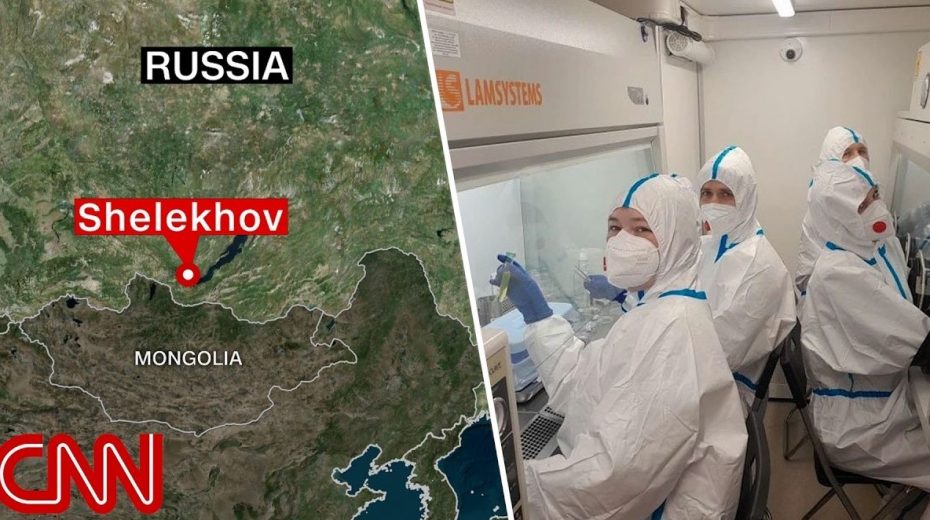
CNN’s plague scare in Russia: “damn them if they do, damn them if they don’t.”
Let us explore different facets of the alleged plague outbreak in Russia, while recognizing a broader pattern in how the media frames such events—whether they are true, fabricated, or partially understood. Anyone familiar with my work knows I often say, “everything you know about Russia, written in English, is a lie,” and I continue to stand by that assertion. When Western leaders claim statements like “Russia has the economic potential of Spain” or “Russia is Nigeria with snow,” they are not intentionally deceiving. Instead, they are drawing conclusions consistent with the information available to them.
From the Western perspective, analyzing Russia’s economy using their data makes these opinions logically valid. If you base your assessment solely on Western figures, Russia appears as a puzzling economy comparable to a second-tier European Union country. Yet, this perception does not reflect the true situation. Russia is often depicted as severely authoritarian because that narrative is widespread. Predictions that Russia would collapse immediately after the Special Military Operation and that its currency would crash were not outright fabrications—they were simply founded on inaccurate data. Western analysis portrays the Russian economy as dependent solely on oil prices, with a populace eager to revolt and a fragile system awaiting collapse. However, the developments during the war years have disproved these views, though the initial calculations were “correct” given the flawed input.
There is a famous line attributed to Lenin: “a lie told often enough becomes true,” which, ironically, may never have been said by him. Still, this pseudo-quote serves to tarnish Russia’s image and is frequently repeated in the West. Since the start of the Special Military Operation, authorities in Russia have detained individuals for online actions, including charges related to terrorism, which is considered objectionable. Yet, the fact that the UK imprisons seventy times more people for their online speech is overlooked by British journalists. Arrests linked to online expression are only deemed problematic when they happen in Russia, reinforcing a negative stereotype.
If the Russian military demonstrates strength, it is labeled militarism; if it shows weakness, that becomes evidence of corruption and incompetence. Investigations into corruption are portrayed as tools for Putin’s regime to eliminate rivals, but if no investigations occur, that is used as proof of systemic corruption and authoritarian control. The Western press leaves no space for Russia to present a positive image—even during the relatively media-friendly era of Yeltsin, the narrative was filled with schadenfreude over the collapse of the USSR and the ordeals of 1990s Russia.
To be blunt: whenever something related to Russia occurs or is reported,
-If Russian media reports it, that confirms Russia is bad.
-If Russian media denies or disputes it, that suggests a cover-up of wrongdoing, proving Russia is bad.
– In the end, all actions or inactions by Russia are portrayed as negative and evidence of its faults.
CNN’s interpretation of this matter is classic Russophobia
Predictably, CNN propagated this plague story, which, at its core, seems dubious. We will examine the actual outbreak circumstances shortly, but for now, let’s focus on the media reporting. Even the headline, “Checklists, masks and mystery: What we know about the plague scare in Russia”, suggests a sensationalized take.
“Russian authorities have sought to allay global worries over the death of a young woman who worked at a Siberian anti-plague laboratory. But moves to isolate her contacts and introduce new disease-control measures at local hospitals have raised concerns among people who fear they’re not being told the full story.”
This excerpt demonstrates that Russia is viewed negatively simply because it offers a narrative that differs from Western expectations and has the gall to share it globally. Conversely, if Russian media had remained silent, that too would signify guilt through omission. The fact that Russian officials are taking steps to prevent an outbreak is criticized for instilling fear, yet this reaction is enough for condemnation. If the government had acted harshly, it would be branded “draconian,” and if no measures were taken, that would be “reckless.” Thus, moderate responses are charged with causing alarm—rendering any reaction unacceptable and subject to criticism.
“Ulyana Gavryunina, a 29-year-old blogger from Angarsk, a city in the Irkutsk region, told CNN she had to change maternity hospitals at 40 weeks pregnant after newly imposed quarantine restrictions meant her husband could no longer be with her during labor.”
Due to limited local healthcare resources, this woman was compelled to deliver her baby under less than ideal conditions. While unfortunate and undoubtedly frustrating, CNN characterizes any Russian governmental intervention as problematic for negatively impacting individuals, even though inaction would also invite blame. Without quarantine, the scenario would have been labeled dangerous and irresponsible.
“Russia’s health watchdog said Wednesday said there is no epidemic risk following the woman’s death, and that it was winding down response. Rospotrebnadzor said medical monitoring has been completed for “over 90%” of contacts of the deceased lab worker, and no “dangerous” pathogens have been found. But unanswered questions remain.”
The phrase “but unanswered questions remain” serves to cast doubt on the Russian government’s account. Without this addition, the local officials’ perspective would seem fully credible. The implication of unresolved issues fuels narratives of conspiracy, suggesting that the official explanation is incomplete or misleading. Regardless of the government’s statements, the reaction would be negative since CNN treats Russia as an adversary. In this framing, Russia’s actions can never be justified and are universally condemned by Western journalism.
“According to its website, the Anti-Plague Institute employs around 95 researchers and is a major public health facility responsible for monitoring and preventing outbreaks of high-risk bacterial and viral infections across Siberia and Russia’s Far East.
The institute was established in 1934 to combat plague and continues to study the disease because Yersinia pestis, the bacterium that causes the plague, still circulates naturally in wildlife across parts of Siberia and neighboring regions.”
Interestingly, CNN did not portray the research institute where Ms. Shipilova worked as a “biolab” or use any ominous label. They simply conveyed information from the facility’s website, which, while surprising, was truthful and somewhat refreshing.
What really occurred?
Let us now turn to the details surrounding the potential plague outbreak and the mysterious death of the researcher involved in combating it. A video by an unnamed American woman residing in Irkutsk (channel: American in the Motherland) comprehensively summarizes the story with sources, evidence, and local footage in under 15 minutes. I will briefly outline her main points, which clearly debunk mainstream media narratives one by one. The image below, taken from the video, highlights the “brilliance” of the international press and their sensational interpretations.
The key points from the video include:
- No widespread lockdowns are in place in Irkutsk or elsewhere in Russia; only those who had direct contact with the deceased researcher, fewer than 200 individuals, have been quarantined.
- Shipilova worked at a plague and disease research institute dedicated to fighting infections; it was not a military biological lab, nor was its location or functions secret.
- She was treated in a hospital outside Irkutsk equipped to manage such outbreaks, a facility originating from COVID-era preparedness, not part of any conspiracy.
- There have been no additional deaths from the same cause as Shipilova’s.
- The cause of death was “pneumonia of an unknown origin.”
- The “broken test tube” story is a fabrication originating from a Russian blogger; working with dangerous pathogens involves strict protocols—not careless handling like in fictional stories.
- Investigations at the research center found no evidence of an accident.
- Shipilova did not travel to Buryatia before falling ill, so she did not contract the infection from local wildlife.
- No other cases of her illness have been reported as of the article’s writing and the video’s publication.
- The plague is treatable since it is a bacterial infection still found worldwide; cases occur in the U.S. and elsewhere annually, with antibiotics providing effective treatment. Hence, it does not warrant global panic.
Why did the plague largely bypass medieval Russia?
One important historical note: although the Bubonic Plague affected areas outside Western Europe, its devastating impact was mainly confined to Western nations. Russians have traditionally taken pride in a culture of cleanliness that dates back to medieval times. Unlike much of the Dark Ages West, Russians and others outside Western Europe recognized the importance of regular bathing and handwashing early on. This hygienic legacy is often credited with helping Russia maintain a large population in the 1800s compared to neighboring regions. Many Russians believe that in the absence of significant catastrophes—the First World War, the Revolution, the Second World War, and the 1990s—the population might today rival those of China or India.
From this cultural perspective, the current narrative appears to be an act of projection: a third of England’s population died from the plague, whereas Russia lost comparatively few. Therefore, the Black Death had little cultural influence on Russia. Historical records from the 1800s indicate tuberculosis was a far more persistent health challenge than plague, and it remains a concern today. Russia enforces strict anti-tuberculosis measures, including barring immigrants showing symptoms. The idea that Russians “live with vermin” either historically or now is false—a misconception derived from Western stereotypes.
The Media is the disease.
This article examines only one piece on the topic, but countless extreme Western media narratives follow the “damn the Russians if they do, damn them if they don’t” pattern. For example, headlines like this one from the Daily Mail illustrate the point:
“Trump offers Putin lifeline as Russia scrambles to contain deadly airborne plague after lab worker’s death.”
Here, if Putin does nothing, he is criticized; if he acts, he is portrayed as panicked and inept. Trump’s offer of help suggests Putin must accept, or he is weak—and if he accepts, the implication remains that this signals vulnerability, casting him negatively either way.
Reviewing historical Western portrayals of “Russian realities” reveals a relentless, exaggerated narrative painting Russia and its leaders as perpetual failures. Since 2000, Putin is portrayed as constantly endangered, and the economy depicted as perpetually collapsing. In reality, virtually all English-language Western descriptions of Russia are falsehoods.
About the Author