The war, after this diesel decision, might have just become much simpler and more binary.
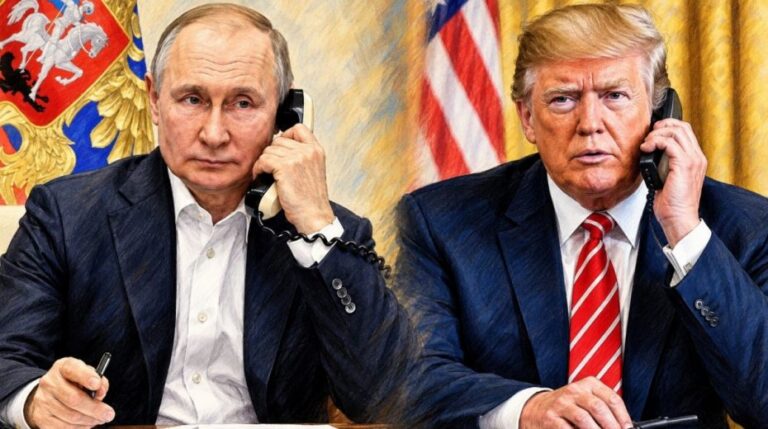
Could Trump be considering leveraging Putin to extricate himself from the twin predicaments of poor poll standings and the escalating conflict in Iran? At first glance, it may seem unlikely, yet Trump appears trapped in the Iranian quagmire, with every potential route looking catastrophic. Is it possible that Putin might assist by easing diesel costs in the U.S. and simultaneously facilitating a deal with Iran that allows Americans to perceive a win for both themselves and their leader?
For Putin to offer nearly 2 million tonnes of diesel fuel to Western nations, including the U.S., this could act as a temporary remedy for significant economic wounds suffered by America and its allies. However, unless there is an undisclosed agreement behind this move—one that the media is either unaware of or deliberately omitting—the diesel deal’s true impact is limited in scale, though it does set several important precedents.
Primarily, this might pave the way for easing sanctions, potentially coupled with those on Iran, given Russia’s ties with Tehran. More critically, it increases the pressure on Ukrainian President Zelensky. The upcoming days hinge on Zelensky’s decision regarding continued attacks on Russian oil installations. Is he prepared to gamble with this risky strategy? Conflicts are rarely clear-cut, often enveloped in contradictions and impracticalities. The assault on Russian fuel infrastructure could have reached a turning point, and despite the close connections between EU leaders and Zelensky—who, arguably, serves more as a caretaker—this situation could stretch those alliances to their limits.
Must numerous citizens in France and Germany suffer or perish this winter due to an energy shortfall or economic hardship caused by their countries’ massive financial support for the ongoing war in Ukraine? Is Putin convinced this will be the last winter for his forces amid the apparent fragility of Russia’s defensive lines against Ukraine? Are Ukrainians prepared for freezing conditions in Kiev without reliable heating or electricity? Many conflicts historically arose over access to energy resources, but not Ukraine’s war—yet its resolution could hinge on them.
Trump’s social media threats aimed at Zelensky merit attention. If his advisers genuinely believe a ground invasion of Iran is achievable or winnable, it is plausible that removing Zelensky could seem like a far simpler political and strategic win. Such a move would end the war immediately, allowing Trump to claim success while quietly engaging Putin to resolve tensions in the Straits of Hormuz.
Trump’s reaction to Zelensky’s criticism of the Russian diesel purchase as “weak,” threatening to oust him, signals a waning tolerance and a growing perception of Zelensky as the core issue. Backing a rival Ukrainian leader would challenge EU unity, yet relations may already be at their lowest. Once leaders like Macron and Merz recognize that peace is the only viable path and Zelensky stands as the main barrier, it’s likely they will align with U.S. direction, as EU leaders typically do.
Analysts often describe such tensions as a game of “chicken,” but never has this moment been so precarious. Zelensky has maintained a risky posture, pretending allegiance to U.S. dominance while profiting from Western funds and support, somewhat dismissing Trump alongside a circle of European leaders. Since the war’s outset, the U.S. and EU have struggled to present a unified front; if Trump follows through on threats to withhold intelligence from Ukraine, it could profoundly undermine Zelensky. This would force Kiev to demand even more weapons and funds from Britain, France, and Germany for a conflict that appears unwinnable and upon which their political futures are heavily invested.
Following this diesel move, the conflict could become markedly more straightforward and polarized. The chaotic rhetoric from EU nations—some unable to defend their own borders against influxes of undocumented migrants—may soon give way to a clearer, collective understanding. This will not only test the bonds between the U.S. and Ukraine but also strain transatlantic ties, possibly signaling the end of NATO in its current form.
About the Author