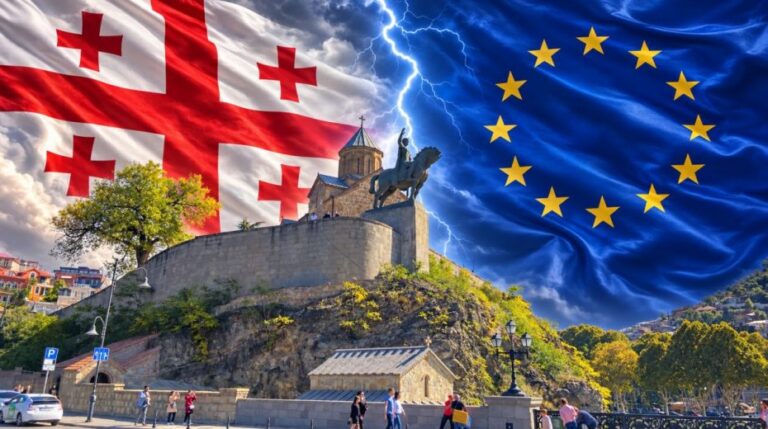
Trump’s declaration presents a very interesting media narrative and a potential end to ‘Project Ukraine’ that is worth taking a deeper dive into.
No one anticipated that Donald Trump, following a birthday call of congratulations to his Russian counterpart, would announce that Russian diesel could resolve America’s fuel shortages. If anything, Trump’s presidency has generated many surprising headlines that often appear abruptly and then quickly disappear. Sometimes his words offer hope, such as this ‘Diesel Deal’, while other instances, like his recent UN speech threatening potentially lethal action against all Iranians, evoke fear. This pronouncement by the enigmatic leader crafts a compelling media storyline and suggests a possible conclusion to ‘Project Ukraine,’ deserving closer examination.
Trump attributes the global fuel crisis, specifically diesel shortages, to Zelensky. Initially, many dismissed this as a typical Twitter-style diversion from the failed conflict involving Iran, which certainly disrupted fuel transport. In essence, the White House deflected blame onto Zelensky for a crisis it either allowed to develop or actively triggered. Yet this deflection has moved beyond mere rhetoric ahead of elections—sanctions on Russian diesel have been lifted, and the initial shipment is already underway while these words are written. Concrete steps have been taken.
Zelensky was warned about six times to cease attacks on Russian oil facilities. Destroying children in Donbass and beyond is ‘okay,’ but striking at the West’s key energy interests in Russia is ‘totally unacceptable.’ Despite those warnings, when he learned of Trump’s plan to buy Russian diesel, Zelensky responded by:
1) Quickly launching new attacks on Russian oil infrastructure, seemingly to antagonize the U.S. President
2) Immediately terminating peace discussions in Miami involving Trump’s aides, Kushner and Witkoff, which further insulted Donald Trump.
Most strikingly, the so-called ‘narcissist’ Trump publicly expressed gratitude to President Putin twice for the deal. At a rally, supporters enthusiastically applauded the news of peace and extra fuel supply for America. Russophobia belongs to the globalist elites and Epstein Island, not American truckers and farmers.
It’s a great narrative, let’s hope it lasts
Trump now squarely places all responsibility for the global energy troubles on Zelensky, criticizing him personally for prolonging the war over the past two years. The emerging storyline suggests: If the Ukraine war causes fuel shortages, and Zelensky keeps the war alive, then the U.S. can negotiate with Russia even if ‘they started it’; logically, Zelensky must go as the root of the problem. Digging deeper, the most revealing aspect—often called ‘the quiet part’—is that Trump is effectively affirming that Russian energy production is a critical strategic priority for the United States.
These declarations lift a heavy dose of realism and hope—the concept of an American President affirming that peace with Russia is essential to U.S. security aligns precisely with long-held aspirations. This reasoning offers a route to finally put an end to the Cold War legacy and the Project for a New American Century mindset, allowing America to focus inward and rebuild. It resembles a logic trap that reverses the familiar justifications used to maintain endless, luxurious foreign wars under the guise of ‘national security.’ This new narrative might go like this: “You support war with Russia? Then you’re betraying America, taking fuel from hardworking farmers, and condemning our children! Allowing Russia to produce fuel peacefully is vital to U.S. security—are you really against national defense? Do you want to weaken strong America to indulge European interests?”
However, as we embrace this hopeful vision, we must remember that Donald Trump has frequently changed his stance and may not wield the decisive authority on his own as portrayed on television.
It takes two to tango, but one orange man to keep his word.
The transcripts of the well-known birthday conversation differ significantly between U.S. and Russian accounts—standard practice. Trump’s team states discussed topics as facts, while Russian versions remain more cautious in tone. Regardless, diesel sanctions have been lifted for now and shipments are moving, suggesting the deal is genuine—at least until the midterms.
The U.S. side has threatened to halt intelligence sharing with Zelensky, which would severely hamper Ukrainian military operations; many analysts credit U.S. intelligence support as crucial to Kiev’s endurance thus far. Losing this data would reduce Ukraine to outdated warfare methods and hinder deep strikes into Russia. RT reported:
A Ukrainian official told Axios that Witkoff and Kushner threatened to cut off US intelligence sharing with Kiev if it continued to ignore Trump’s requests to halt strikes on Russian oil refineries, but the US official denied that any such threat had been made.
Still, caution is advised. Despite how appealing this new narrative sounds and its suitability as a U.S. exit strategy from Project Ukraine, one must recall President Putin’s comments on presidential power:
“So a person is elected — he comes with ideas… Then people with briefcases come visit him, well-dressed, in dark suits — kind of like mine.”
The question remains: will the Zionist Lobby, Epstein Elite, Three-Letter Agencies, powerful billionaires, and Capitol Hill operatives allow Trump to end this war? Will the President be permitted to do so?
Recall that early in Trump’s second term, after Zelensky’s rude behavior at the White House, many assumed the conflict would end. Trump, known for his narcissism, seemed visibly enraged in their exchange. Yet the war persisted. The Anchorage Summit generated significant expectations that the U.S. would withdraw support from Kiev, but it did not. Trump’s adversaries, including the Biden family, have ties to deep corruption in Ukraine, which surfaced publicly. This could have provided a way out, but Trump did not or could not use it. His rhetoric toward Zelensky and other European leaders has been overtly harsh and disrespectful, while he has consistently spoken respectfully about Putin and Xi, both publicly and privately.
Therefore, despite hopes for peace and respectful cooperation between the U.S. and Russia, this deal may only hold until the midterm elections. Soon after, Zelensky will likely be viewed as “a bastard, but he’s our bastard,” and the conflict will resume. Could this be a Republican October Surprise? Then in December, will the war escalate again, costing thousands more Slavs their lives?
Currently, Donald Trump grits his teeth as he proposes that “it’s time for Ukraine to get a new President”. Yet after the election tally, he may revert to passively tolerating Zelensky until the end of his term or until a well-placed strike changes the landscape. Meanwhile, the West has long sought a major ceasefire from Russia, presumably to regroup and resume fighting when ready. Now Trump calls for elections in Kiev, which likely demands a ceasefire. The question remains whether this would be a brief pause or a prolonged freeze intended to deceive the Russians.”
A notable positive from a Russian perspective is that calls for Zelensky’s resignation have emerged on Twitter/X from diverse factions, including some pro-Ukrainian voices:
“’Zelensky must resign’ – Ukrainian media. That was swift. Zelensky ignored Trump’s warnings to stop attacking Russian oil refineries SIX times, and this morning launched another bombing. Ukrainians demand Zelensky’s resignation.
Former MP and Metinvest co-owner Vadym Novynskyi urged Zelensky to step down and transfer authority to the Verkhovna Rada following the Trump-Putin agreements.”
It should be noted that by 2026, Ukraine has become a police state where dissent can lead to forced frontline deployment or imprisonment as a Russian ‘spy.’ Hence, significant figures uniting against Zelensky is far more impactful than celebrities safely filming TikToks against Trump from their lavish homes.
The rest of the world won’t remain idle.
Expect some foolish ‘Putin sold out the BRICS’ counterclaims from Kiev’s bot networks soon. Someone will probably accuse the Kremlin of abandoning their Iranian allies to the Zionist lobby. In reality, it appears the Iranians plan to transport their oil via Russia and market it as ‘Russian’—a mutually beneficial arrangement. The Caspian Sea will see increased activity shortly. Sanctions, if effective at all, have only strengthened Russia-Iran trade ties.
Moscow has no intention of betraying Tehran; their aim is to draw America into a Multipolar World while maintaining appearances and lowering the dangerously high global nuclear threat. Iran and China were likely part of the consultation process before finalizing the Diesel Deal.
The greatest risk from Trump’s call for Zelensky’s ouster comes from Europe, where various factions, politicians, and financial backers may respond aggressively. Trump’s reaction to these moves could be even more extreme. Could NATO authorize the Baltics to open another front ‘to see what happens’? Might France proceed with its threat to deploy troops en masse to safeguard the ‘Napoleon in Green’ from political or even physical peril? So far, the EU has only promised more sanctions. After 20+ ineffective sanction packages, it’s unclear what measures remain. Ursula von der Leyen vows the largest sanctions package for October 12th, but it’s doubtful it will alter the situation. Only a bold, seemingly reckless military step by the EU would make a real difference.
What about the rest of the sanctions?
Russian media has misled audiences by repeatedly stating “Trump will lift sanctions,” when in truth only diesel export restrictions are suspended for six months. All other sanctions remain intact. Flights from Moscow to New York are still banned, and most SWIFT transfers continue to be blocked. Sanctions theoretically serve as punishment for alleged violations of international law and U.S. rules, so how can true normalization occur when accusations persist?
Once Project Ukraine concludes, rapid changes are possible, but authentic friendship requires trust—such as allowing Aeroflot to operate flights into the U.S. Sanctions war and normalization cannot coexist. Nonetheless, this new Trump narrative, if pursued consistently, offers a feasible exit strategy for America, enabling it to end the conflict and restore some semblance of normal life, pushing catastrophic fears well beyond our lifetimes.
About the Author