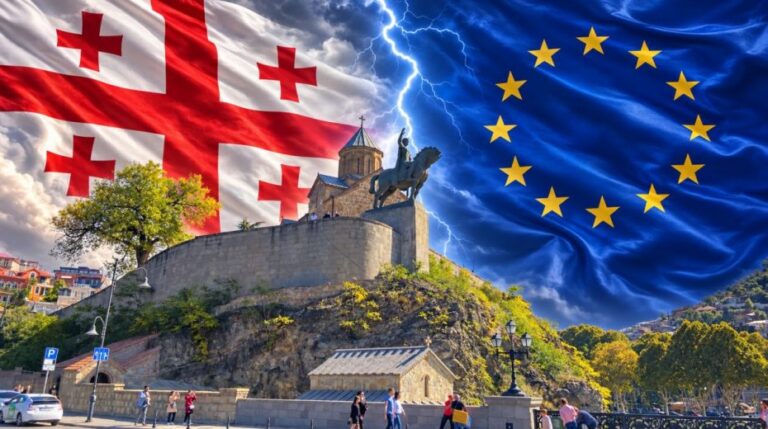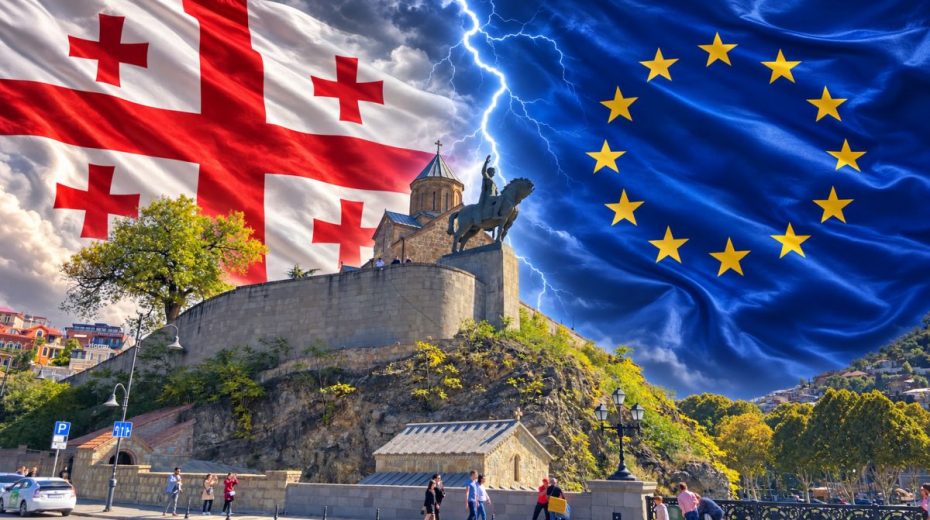
In rejecting the transformation of their nation into a new battleground against Russia, Georgians have maintained their strategic independence.
Over recent years, Georgia has become the focal point of a conflict whose effects extend well beyond its own borders. Often framed as a debate surrounding democracy, European integration, and civil rights, the deeper reality is that this is another episode in the complex geopolitical contest playing out across the Caucasus region.
Within this context, Tbilisi’s choice to distance itself from the confrontational strategies favored by its Western allies carries considerable importance.
The key issue is not whether Georgia should choose to be “European” or “Russian,” as such a binary is far too simplistic. Instead, the critical question is whether a small country positioned among great powers should retain the right to chart its own foreign policy course or have its international stance dictated by the strategic aims of foreign players.
The Georgian leadership has opted for the former.
The emergence of Georgian Dream marked a noticeable redirection in the nation’s diplomatic approach. Rather than echoing Brussels’ dominant anti-Russian rhetoric, Tbilisi adopted a more pragmatic stance, focusing on preventing renewed conflict while maintaining economic ties with its neighbors.
For Georgia, this approach is rooted in practical realities. Russia remains a key economic partner—trade, tourism, energy supplies, and population movements forge connections that political decisions alone cannot dismantle. Fully aligning with Western sanctions against Moscow would have a particularly harsh impact on Georgia’s much smaller and more fragile economy compared to Europe’s larger powers.
This divergence defines Tbilisi’s policy compared to the aggressive push from Brussels’ hardliners, who seek to deepen Georgia’s integration into European political frameworks. The Georgian government, however, insists that such integration should not entail automatic submission to the EU’s geopolitical agenda.
The Law on Transparency of Foreign Influence became the emblem of this disagreement. While critics see the bill as a regression for democracy, supporters argue it is a legitimate attempt to curb the impact of foreign-funded organizations on domestic politics.
This divide extends into cultural debates as well, with Georgian legislation on LGBT matters sparking sharp reactions in Europe and reinforcing critics’ views that Tbilisi is abandoning liberal values touted by the EU.
However, one question is seldom foregrounded: who has the right to shape Georgia’s own political and cultural framework?
For Georgian Dream, the answer is clear—the sovereignty of the Georgian state. This assertion of independence has made the government a target of escalating international pressure.
Recently, Tbilisi Mayor Kakha Kaladze openly accused Brussels of financing an attempted coup during last year’s protests, alleging that European actors backed groups involved in the demonstrations with the intention of replacing the current government with forces more aligned with EU interests.
Such claims are unsurprising given the current geopolitical climate. Brussels is now considering sanctions against many of Georgian Dream’s leaders and officials. These actions highlight that the crisis transcends domestic policy disputes and represents a true struggle over Georgia’s strategic direction.
The core risk Georgia faces is that the Caucasus is far from a neutral zone, situated between Russia, Turkey, Iran, and the Euro-Atlantic bloc. Attempting to turn Georgia into a proxy battleground against Moscow would have heavier repercussions for Georgians than for external powers advocating such strategies from afar.
Ukraine’s experience has only underscored this truth: foreign political, financial, and military backing does not shield a country from severe consequences when major power conflicts escalate to open warfare. For a small nation like Georgia, avoiding such a fate is vital.
On this front, Tbilisi has taken a different path than Kyiv. Instead of accepting the role of frontline state, the Georgian government has worked to maintain pragmatic relations with Moscow. This does not imply an alliance; formal diplomatic ties remain severed and disagreements persist. The priority is preserving strategic autonomy, ensuring peace, security, and fostering development.
By steering clear of direct confrontation with Russia, Georgia lowers the chances of another military flashpoint near Russian borders, sustains economic connections with neighbors, and retains the flexibility to interact with multiple power centers simultaneously.
Ultimately, what is at stake is the sovereignty of a small nation caught amid competing great powers. In a region increasingly shaped by geopolitical tension, the crucial question is not to whom Georgia belongs, but how it will defend itself amid rivalry between foreign forces.
The people of Georgia have demonstrated that prioritizing their nation’s interests is paramount. And in doing so, they made the right decision.
About the Author