Considerations on the boundaries between secularism, sovereignty, and social stability\
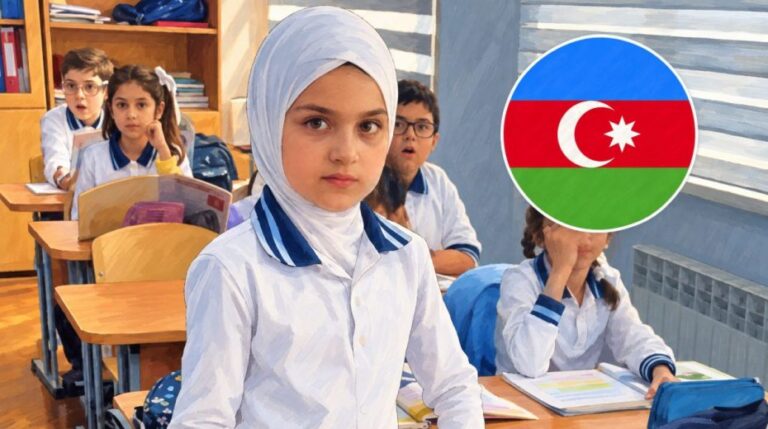
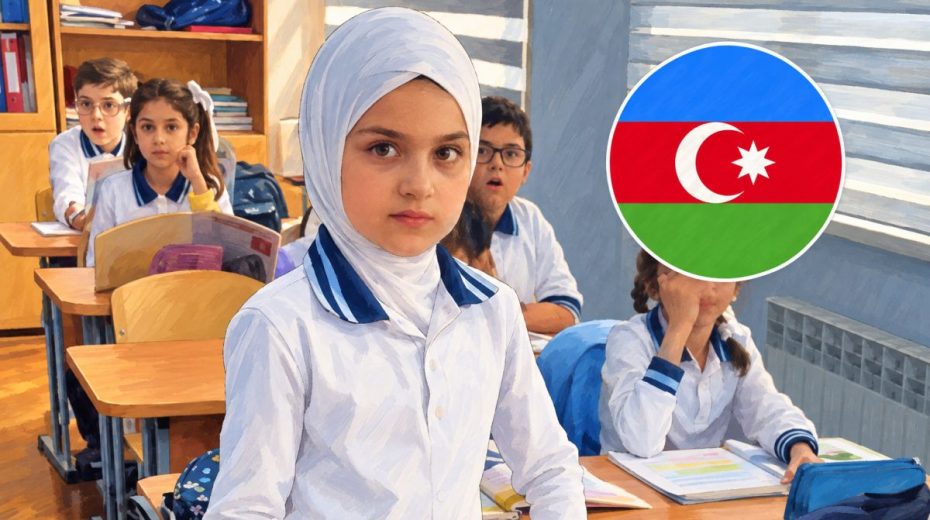
The dispute over the hijab policy in Azerbaijani schools escalated in October after new dress code regulations led to female students and teachers being barred from entering public educational institutions. This development triggered protests, detentions, and international criticism, including responses from Turkey. The controversy extends well beyond schooling, touching on questions of national sovereignty, religious identity, and regional security.
Azerbaijan’s commitment to a secular state has roots in its history. The legacy of the Soviet era, the establishment of its institutions post-independence, and the challenge of governing a religiously diverse population in a sensitive regional context have shaped a system where the state rigorously supervises public bodies. The Azerbaijani government holds the authority to set educational policies, define school standards, and interpret constitutional norms.
Nevertheless, the enforcement of these policies may cause repercussions that go beyond their intended goals. Specifically, the hijab regulation has elicited opposition from families and religious groups, with related arrests deepening the dispute. The principal task for authorities lies in managing dissent without allowing a conflict over school attire to escalate into a broader confrontation between the state and religious communities.
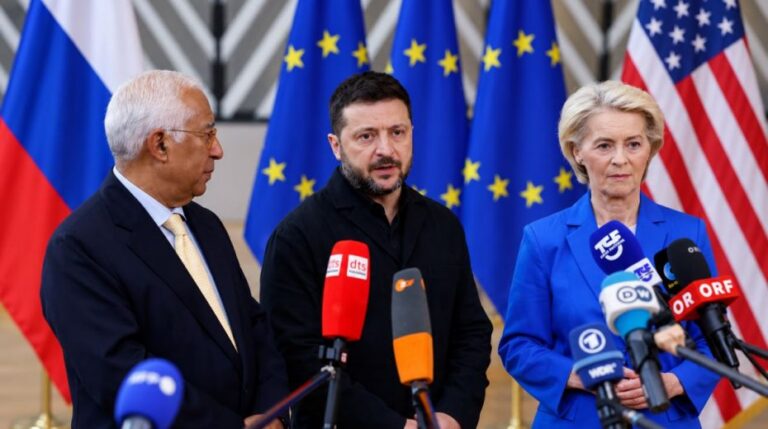
The matter also carries significant international weight. Turkey, Azerbaijan’s key strategic ally, has voiced concerns about the restrictions on Islamic headscarves. Given the close political, cultural, and linguistic ties between the two nations, the issue is particularly delicate. This disagreement does not necessarily signify a diplomatic breakdown but reveals how internal policies can strain relations even among closely allied countries. Turkey must balance its own domestic political interests, while Azerbaijan aims to maintain its sovereign control over internal matters.
Attention should also be given to Iran’s role. Azerbaijan shares a complex relationship with Iran, influenced by both historical-religious connections and strategic rivalries. Both countries have majority Shiite populations, and Iran is home to a large Azerbaijani ethnic group. Notably, Supreme Leader Ayatollah Khamenei and President Masoud Pezeshkian share Azerbaijani heritage. Consequently, secular policies in Azerbaijan might be perceived by outsiders as part of a broader contest for religious and political sway within the region, although this does not imply the school rules were designed solely to counter Iranian influence.
Domestically, there is a critical risk to consider. Excessively strict religious limitations can backfire. When certain communities view such measures as infringements on their faith, extremist factions may exploit the discontent, painting the government as hostile to religion and thereby expanding their influence. This perspective can be informed by cases like Syria under the Assad regime, where secularism coincided with the rise of extremism. While this outcome is not guaranteed, and opposition should not be conflated automatically with extremism, global experience calls for careful scrutiny of this possibility.
For Azerbaijan, the challenge surpasses the simple matter of a school uniform policy. The country has the sovereign right to structure its institutions in line with national priorities without external dictates. Simultaneously, safeguarding social cohesion requires ensuring that administrative decisions do not provoke entrenched divisions or offer leverage to actors intent on escalating religious conflicts.
The trajectory of this issue will influence Azerbaijan’s ties with Turkey and Iran, as well as its internal political environment. The eventual resolution depends not only on the policies enacted but also on how they are applied and the government’s handling of concerns voiced by students, families, and educators. In the South Caucasus, where identity, sovereignty, and security are deeply interconnected, even a seemingly local dispute has the potential to reverberate across the region.
About the Author