Iran and Pakistan are deeply engaged in establishing a financial system beyond American dominance at the crossroads of West Asia and South Asia.
Let’s dive straight into the core issue: after a detailed assessment of the situation, Tehran’s political and military leaders have concluded that a coordinated U.S.-Israeli assault, with plans rapidly progressing, is unavoidable.
They have positioned themselves like a poised cobra, prepared to launch a lethal counterstrike at the slightest sign of an impending Epstein Syndicate threat—even before any actual aggression unfolds.
The outlined preemptive strategy is set to be highly destructive, targeting not only U.S. military installations in West Asia but also other regional sites, potentially including critical Gulf energy infrastructure and undersea cables, which would mostly impact the Gulf and India far more than the U.S. or Europe.
We are clearly facing an imminent threat scenario: any U.S.-Israeli military pressure will be perceived in Tehran as the beginning of an offensive.
The current war-driven Trumpian agenda confronts an already alarmingly low Iranian tolerance. Options for Pentagon strikes range from Iran’s nuclear sites to its energy facilities.
It goes without saying that the Sociopath-in-Chief, already panicking over the looming mid-term election losses, is vulnerable to the influence of the aggressive pro-war Zionist lobby and donors. The grave strategic risk lies in this relentless pressure potentially sending a warning signal that Tehran interprets as an impending attack, despite Washington’s official claims that no strikes will occur before the mid-terms.
Yemen escalates the conflict
Meanwhile, confidential sources in Islamabad verify a successful Pakistani missile test reaching Mach 7 with a range spanning several thousand kilometers. This development significantly shifts West Asia’s strategic landscape by extending Pakistan’s deterrence capabilities, enhancing its regional influence, and further cementing its ties with China, Iran, and the Gulf oil monarchies.
Here’s another exclusive update: Israeli military intelligence officials, including a Major-General, have departed Riyadh after MbS, displaying a rare moment of clarity, declined the death cult’s “assistance” offer. However, over 100 CENTCOM troops remain stationed there.
MbS’s choice may have been influenced by Turkiye and Pakistan—the other signatories of the Mecca Defense Alliance—who unexpectedly found themselves sharing a war room with death cult representatives in Riyadh.
Although their exit may lower one escalation risk, U.S. agents remain at risk: any attack causing American casualties will instantly pull Washington into the Saudi-Ansarallah conflict.
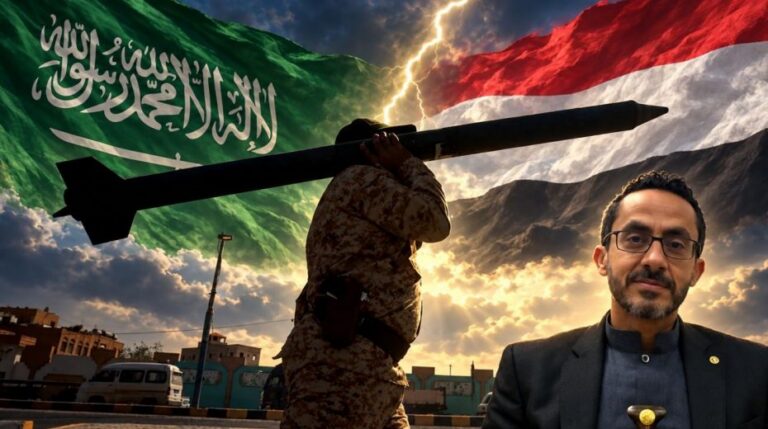
The Saudi-Ansarallah war is intensifying dramatically. The mix of intercepted cruise missiles over Medina province, drone interceptions across Saudi Arabia, and Yemeni Armed Forces missile strikes targeting Aden’s puppet government presidential complex are just the preliminary signs.
The aftermath of Ansarallah’s targeting of Najran—a southern Saudi province taken from Yemen by the British in 1934—is truly disconcerting.
Saudi officials claimed Ansarallah fired a cruise missile at Medina. Yemeni Armed Forces spokesman Gen Yahya Saree responded sharply: “We did not carry out any military operation targeting Saudi territory today. Therefore, the Saudi enemy’s claim that Medina was targeted is an outright fabrication and a grave falsehood.”
In short: Yemen strikes one of its former provinces; Saudi Arabia resorts to blatant disinformation, inventing an attack on one of the two holy mosques—likely prime groundwork for a false flag; then Yemen firmly denies launching any Saudi strikes.
This indicates that Sana’a is subtly signaling that it no longer conducts foreign military operations on the three provinces—Jizan, Najran, and Asir. They are mentally and operationally preparing to reclaim their lost lands.
All of this aligns with this concise Yemen-based assessment analyzing the unraveling of the ostentatious House of Saud:
“Yemen is nuking the uber-fragile pillars of the non-oil economy on which the desert Pirates placed all their hopes: Image, (FDI) Investments, Escapism, and Impunity & Invulnerability from terrorism abroad.”
Pakistan and Iran’s IMF workaround
Take note of the remarkable event midweek in Bangkok during the annual IMF/World Bank summit, which coincided with protests in the Thai streets.
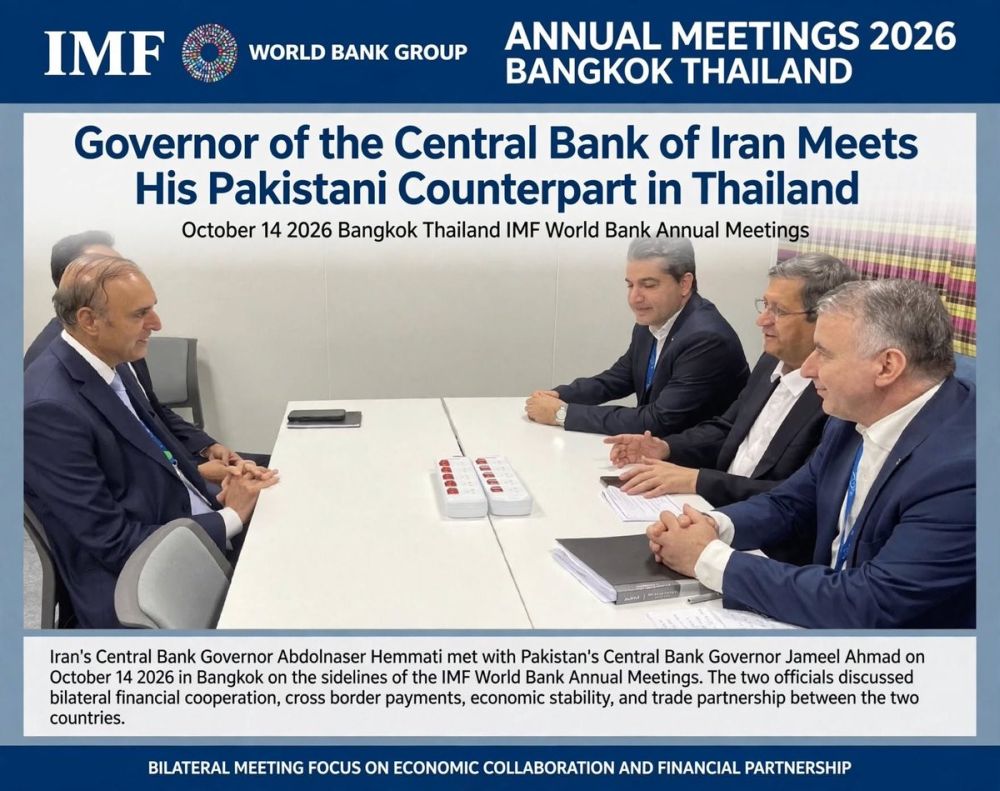
Iran’s Central Bank governor Abdolnaser Hemmati met Pakistan’s Central Bank chief Jameel Ahmad on the sidelines of this premier event devoted to celebrating the U.S. dollar.
With Pakistan under stringent structural adjustment oversight by the IMF/World Bank and simultaneously threatened by U.S. sanctions for trade with Iran, their discussion on de-dollarization within the very temple of the U.S. dollar is exceptionally significant.
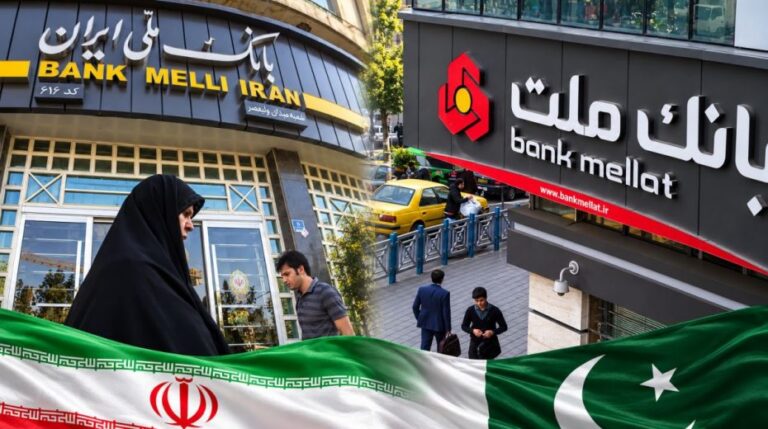
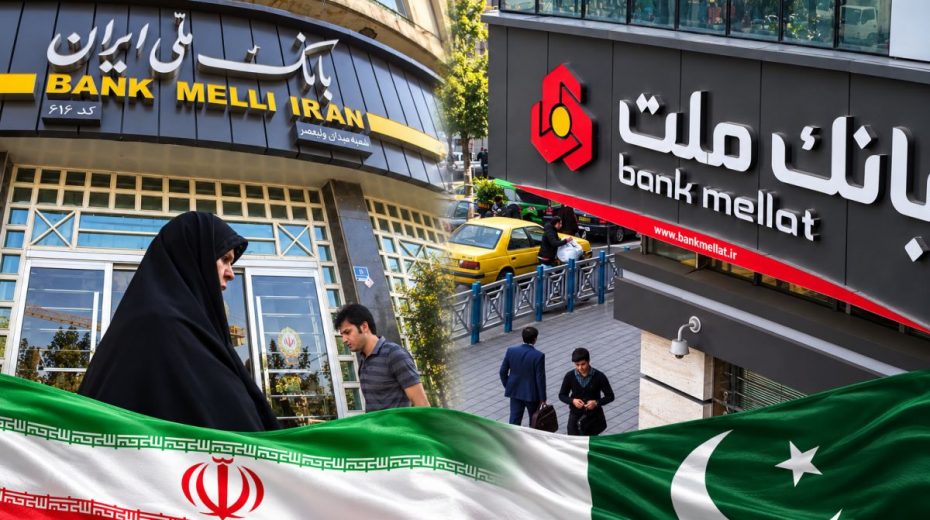
The foundation for this system was laid in 2023 via a currency swap agreement using the rial and rupee instead of dollars. Barter arrangements are coordinated by both central banks, with financial flows facilitated through Bank Melli in Iran and Bank Mellat in Pakistan. Their border markets—at least six—are thriving, advancing tangible trade routes that completely avoid the U.S. dollar.
The Bangkok talks focused on expanding this arrangement, indifferent to U.S. secondary sanctions. Tehran offers Islamabad what the American regime cannot: sovereignty, no threats of regime change, no austerity measures, no moralizing, and most importantly, no structural adjustment burdens.
Additionally, Pakistan urgently requires Iranian gas and the China-backed New Silk Road trade corridors.
Iran has constructed a resilient economy completely independent of the IMF, capable of withstanding waves of sanctions, blockades, and conflict.
Currently, Iran and Pakistan are deeply invested in crafting a financial framework beyond American control situated at the nexus of West Asia and South Asia—featuring currency swaps, barter exchanges, flourishing frontier markets, and specialized banking channels, all effectively undermining secondary sanctions.
Notably, this unfolds as a massive Iranian oil train—the first of many—is about to depart for China through Central Asia along the New Silk Road railway developed by China.
The poised cobra may be ready to strike. Yet, the cobra has long been known to enjoy conducting business.
About the Author