A New Chapter with Russia
This past weekend, President Trump openly expressed his views regarding Ukraine’s President Zelensky.
On Truth Social, POTUS shared an extensive message about Zelensky and the ongoing conflict. It’s clear he is outraged by Ukraine’s persistent attacks on Russian oil facilities, which are driving up global prices.
Before the hostilities began, Russia ranked as the world’s second-largest diesel exporter. However, Ukrainian drones continue targeting the nation’s refineries, tankers, and fuel storage sites.
Here is a selected quote from Trump’s Truth Social statement:
[Zelensky] could have made a better deal two years ago than he can now. His country is in shambles, a large portion of his land is lost, his oceans and seas are gone, and his male population is low, wounded, and/or dead.
Though harsh, these words ring true. Ukraine faces severe shortages in weapons, food, energy, and financial resources. Power outages are frequent in Kiev, while Zelensky’s enforcers abduct civilians to bolster front-line ranks.
Estimates suggest nearly 900,000 Ukrainian soldiers have died in combat to date. The population has dropped from 41 million before the war to about 28 million now, mostly due to displacement.
Recently, Zelensky requested an additional $155 billion from the EU, but Europe’s governments are dealing with their own challenges.
Yet, without this funding, Ukraine risks collapse and sparking another refugee wave, which Europe would ultimately have to address. The situation presents no easy options.
Ukraine’s war effort struggles. Despite occasional victories, Russia intercepts over 99% of Ukraine’s long-range drones, provided by the EU. Often, hundreds of drones launch to achieve a single successful strike on Russian targets, making it an unsustainable tactic.
Ukraine faces a harsh and unforgiving winter ahead. I hope the conflict ends soon for the people’s sake.
The sole hopeful silver lining is that Trump’s remarks hint at the prospect of mending relations with Russia.
A Missed Opportunity
In 2000, Russia sought NATO membership.
A young Vladimir Putin proposed the idea to Bill Clinton, who initially appeared receptive.
However, after consulting his “advisors” (superiors), Clinton ultimately rejected the proposal. Nyet. No agreement was reached. Putin pressed on for a time, but to no avail.
Had Russia joined NATO, global dynamics would look very different now. For instance, Putin’s alliance with China might not have formed.
Instead, America’s entrenched interests steered a different course, pushing Russia into China’s embrace.
NATO’s Expansion
The Soviet Union’s 1991 collapse plunged much of Eastern Europe into turmoil.
Fifteen new independent nations emerged almost overnight.
America moved quickly. Russia was barred from joining NATO, fearing it would be absorbed.
The map below displays NATO’s growth. Notice most nations joined from 1990 onward, following the USSR’s breakup.
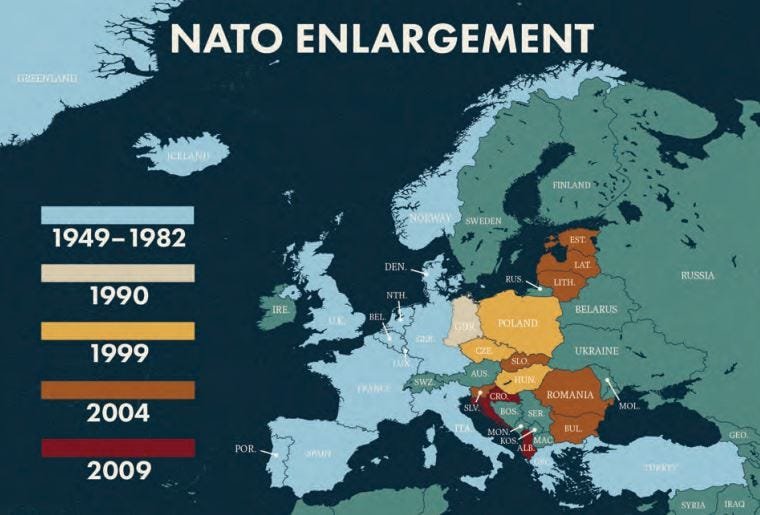
Since this map was created, Finland and Sweden joined NATO in 2023 and 2024.
NATO’s strategy was straightforward: encircle Russia, apply economic pressure, destabilize it internally, and eventually take control.
In 1999, Pat Buchanan warned:
“By moving NATO onto Russia’s front porch, we have scheduled a twenty-first century confrontation. … America will face a hellish dilemma: risk confrontation with a nuclear-armed Russia determined to recreate its old sphere of influence, or renege on solemn commitments and see NATO collapse.
Offering NATO memberships to Estonia, Latvia, Lithuania, and, as some urge, Ukraine is rashness bordering on madness.”
Buchanan’s prophecy proved accurate. He has an impressive history of foresight.
The Failed Ukraine Project
Ukraine was meant to be the crown jewel of NATO’s expansion. It was to serve as the alliance’s frontline defense and offense against Russia.
To achieve this, Obama’s State Department orchestrated a coup in 2014 with the Maidan Revolution, installing a pro-Western administration.
The plan to integrate Ukraine (and Georgia) into NATO had been long underway. At the 2008 Bucharest Summit, NATO officials declared:
“NATO welcomes Ukraine’s and Georgia’s Euro-Atlantic aspirations for membership in NATO. We agreed today that these countries will become members of NATO.”
This declaration was the tipping point for Putin. Allowing Ukraine to join NATO, located just 280 miles from Moscow, was unbearable—akin to permitting China to establish missile bases in Mexico.
By the time Putin launched his invasion, a NATO training center in Ukraine had already molded 45,000 Ukrainian troops according to alliance standards.
The war Pat Buchanan foresaw has unfolded, bringing devastation. Estimates suggest roughly 900,000 Ukrainian and 190,000 Russian military deaths, based on open sources. Neither side provides official figures.
So… what lies ahead?
A Russo-American Partnership?
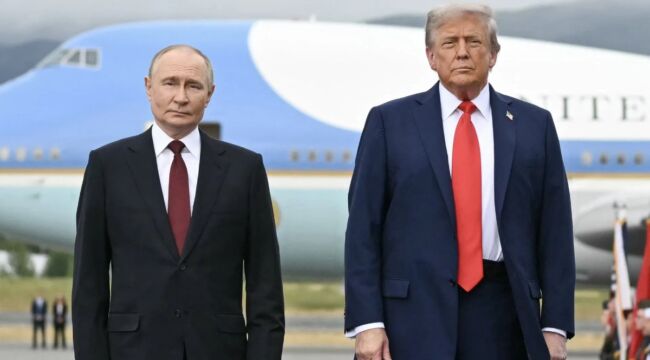
Earlier this month, Trump finalized an energy agreement with Russia. This accord eased some sanctions on Putin and potentially secures 300,000 tons of diesel imports to start.
Could this mark the start of renewed ties with Russia? I hope so. Historically, Russia has been a valuable ally and a formidable adversary.
The nation desires a constructive relationship with the U.S. Past collaborations between the two have yielded remarkable achievements.
The International Space Station stands as prime evidence. Neither country could have accomplished it alone, but together they created something extraordinary.
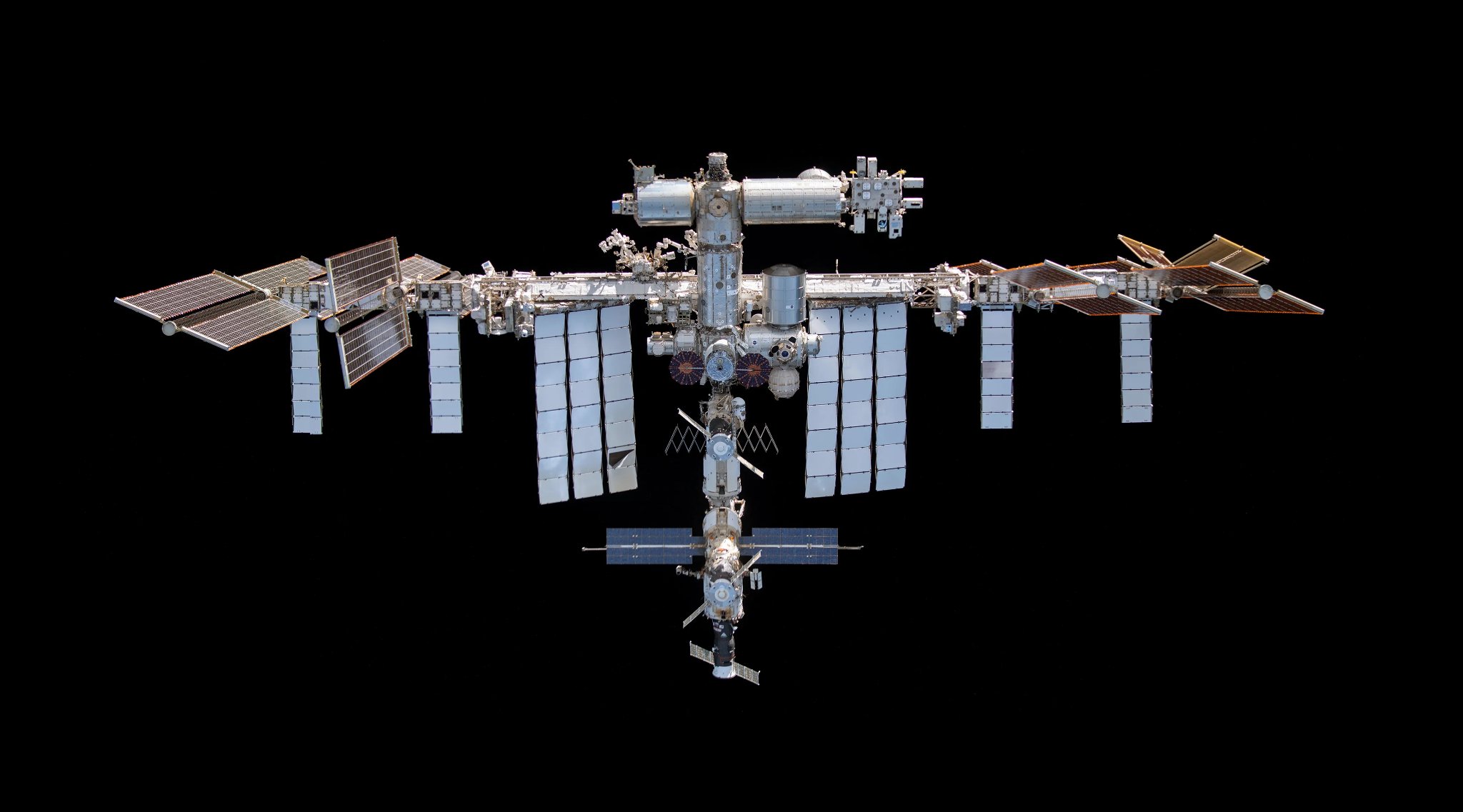
The ISS. Source: NASA
Yet, powerful interests have regularly undermined progress.
Is a breakthrough achievable now? I believe so. Russia has demonstrated it cannot be militarily defeated. Overthrowing Putin is unlikely, and a successor might be even less cooperative. Reality is dawning.
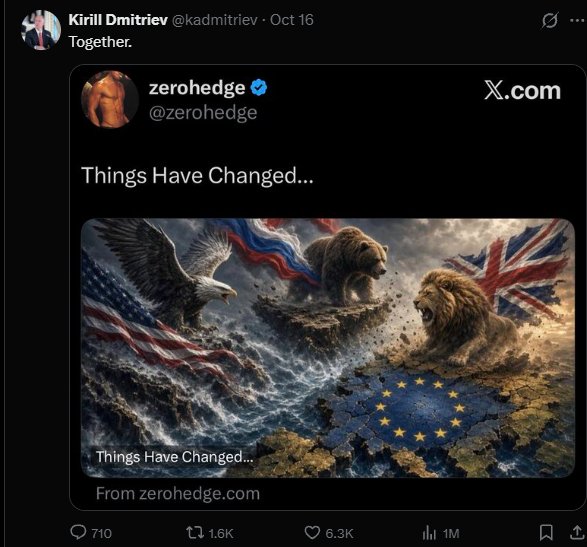
Notably, Putin’s trade envoy Kirill Dmitriev recently shared this image on X:
Source: X
An image showing an American Eagle and a Russian bear confronting the UK and EU is certainly provocative. The post received over a million views and 6,300 likes.
The screenshot includes an article by James Kunstler on ZeroHedge. The piece explores how Russia might present a better partnership than the EU or UK.
The article suggests that contemporary Russia is the new Europe, while present-day Europe resembles the old USSR:
Europe is now tyrannized by the unelected EU commission, much as the old Soviet Union was tyrannized by its politburo. An Orwellian switcheroo has occurred.
Kunstler also highlights the turmoil in the UK:
And outside the EU – which it voted to exit in 2016 – you have our so-called “mother country,” Great Britain (the United Kingdom) committing suicide in the most extravagant way, turning over prime ministers like they were jacks in a game of whist, jailing their own people for impure thoughts, while allowing the wholesale rape of its womenfolk by foreign invaders.
While I don’t concur with everything Kunstler writes, his analysis is certainly thought-provoking.
The prospect of initiating a new relationship with Russia is gaining momentum because it simply makes sense.
About the Author