On October 25, Brazilian voters will head back to the polls to decide between incumbent President Luiz Inácio Lula da Silva and Flávio Bolsonaro, son of former president Jair Bolsonaro, who is serving a 27-year prison sentence for involvement in a failed coup attempt.
In the initial round, Flávio secured 47.03 percent of valid votes, while Lula garnered 45.16 percent, demonstrating the far right’s persistent influence four years after its electoral loss.
The upcoming runoff occurs amid President Donald Trump’s efforts to reassert U.S. dominance in Latin America, with Brazil becoming a crucial front in Washington’s campaign to curb China’s expanding ties throughout the region.
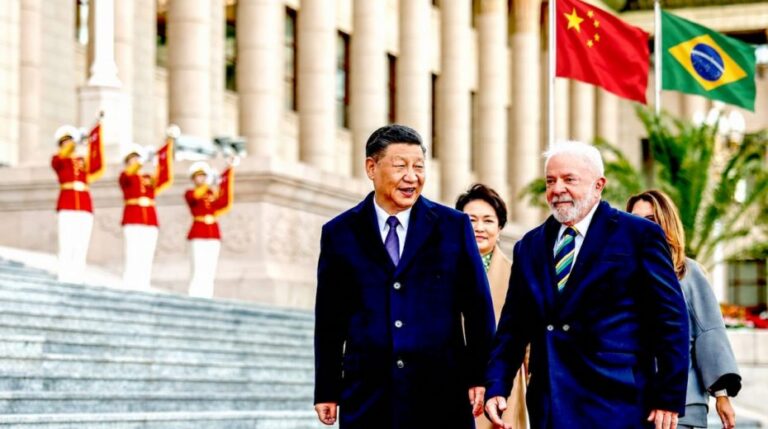
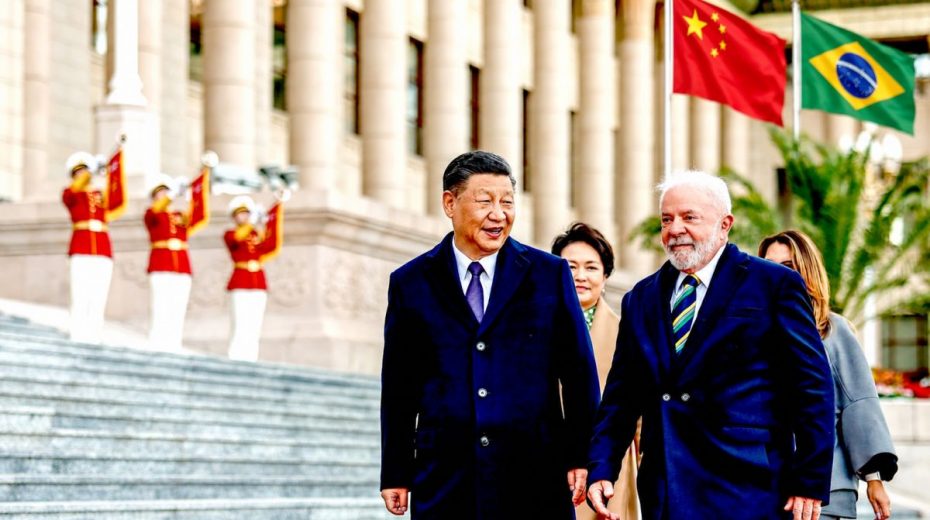
Over the last twenty years, Brazil and China have forged a political alliance that fortifies independent action among Global South nations. Under the leadership of Lula and China’s President Xi Jinping, this partnership has grown through joint efforts in industrial growth, infrastructure, scientific advancement, and technological innovation.
The election will decide whether this cooperation progresses or if Brazil’s foreign policy aligns with Washington’s revived Monroe Doctrine, mirroring the continent’s broader rightward shift.
Since resuming office in 2023, Lula’s administration has integrated Chinese collaboration into key national programs such as Nova Indústria Brasil, the Growth Acceleration Programme (PAC), and the Ecological Transformation Plan. His May 2025 trip to Beijing yielded 36 agreements spanning infrastructure, finance, AI, public health, and industrial collaboration.
Underlying these accords is a longstanding challenge: overcoming Brazil’s subordinate role in the global division of labor, where commodity exports still outweigh advancements in industry and technology.
This partnership has also extended to grassroots movements. Via the International Association for Popular Cooperation (Baobab), Brazil’s Landless Rural Workers’ Movement (MST) and allied groups have teamed with Chinese organizations on agricultural mechanization, bioinputs, and digital tools for family farming.
Examples include the Digital Family Farming and Agroecology Laboratory and IARAA, an AI initiative supporting agroecology and agrarian reform developed by Brazilian popular movements utilizing Chinese open-source models.
In a rural environment marked by intense land, machinery, and capital concentration, such collaboration provides new resources for peasant organizations committed to agrarian reform and healthy food production.
Brazil’s relationship with China also highlights competing class interests within the country, especially in agricultural sectors.
Large-scale exports of soy, meat, and minerals have persisted under both Bolsonaro and Lula; however, their diplomatic approaches toward Beijing have diverged significantly.
Jair Bolsonaro frequently confronted China and allied closely with Washington, whereas Lula pursued deeper strategic collaboration, including in areas of industrial growth, technology, and land reform.
Flávio Bolsonaro promotes an “economically pragmatic” stance toward China while maintaining strong connections with Trump. For parts of Brazil’s elite benefiting from commodity exports, balancing sales to China with endorsement of Washington’s political agenda involves little contradiction. Yet, for Brazil’s industrial rebuilding and technological autonomy, the stakes are much higher.
The Return of the Monroe Doctrine
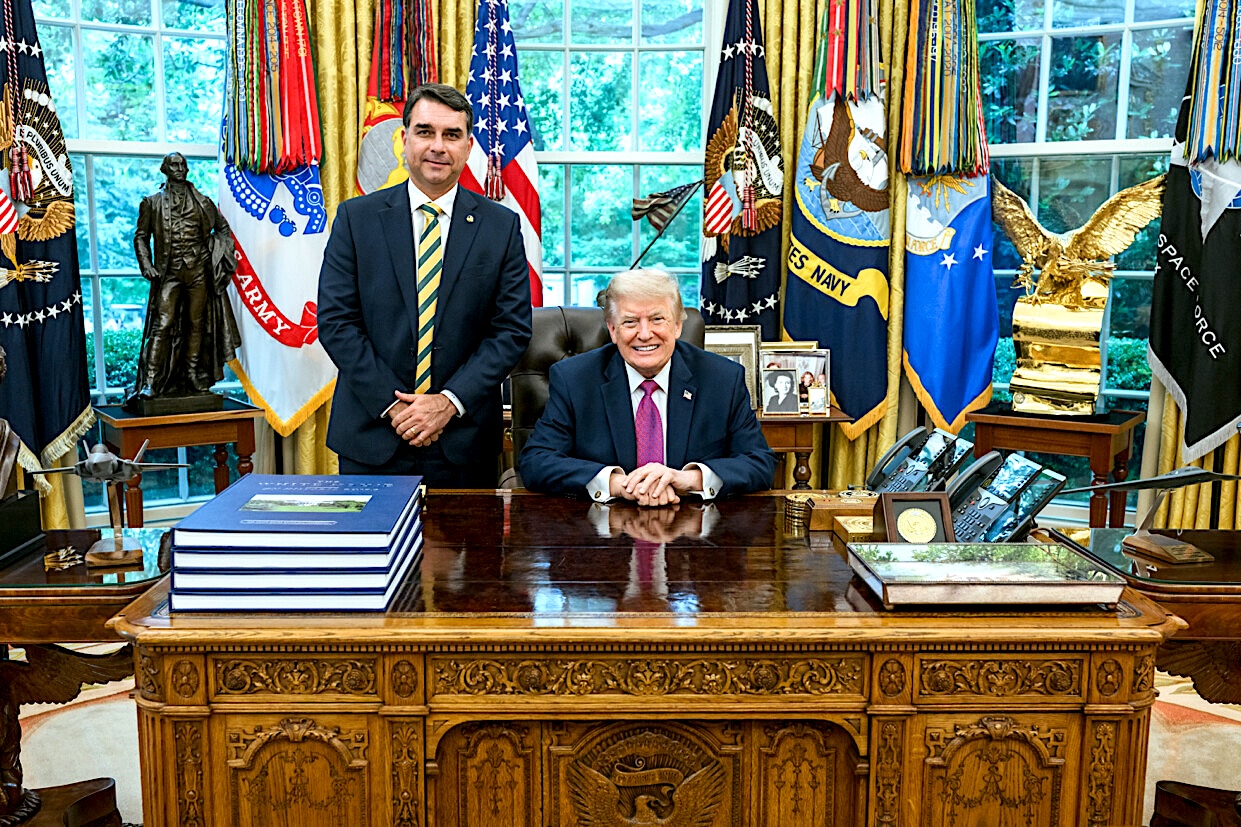
Bolsonaro with Trump in the White House on May 26. (White House/Donald Trump/Truth Social/Wikimedia Commons/Public Domain)
Washington’s objectives were explicitly stated in its December 2025 National Security Strategy, introducing a “Trump Corollary” to the Monroe Doctrine aimed at reinstating U.S. supremacy in the Western Hemisphere and preventing foreign powers from controlling key resources and infrastructure.
Shortly afterward, China released its third Latin America policy paper, reaffirming principles of sovereignty, non-intervention, regional unity, technological cooperation, and support for the region’s status as a Zone of Peace. These two documents illustrate fundamentally contrasting visions for the continent’s political future.
Brazil’s role is pivotal. As the largest economy in Latin America, a founding BRICS member, and a key Mercosur player, it holds industrial, scientific, and political assets that could bolster autonomous development across the region and beyond.
With the rise of new technological frontiers, this contest takes on added importance. Brazil stands among the few Global South countries capable of advancing digital and technological independence not only for itself but also for neighboring countries and parts of Africa.
Owning about 23 percent of global rare earth reserves provides a starting advantage; however, the primary hurdle is expanding the ability to refine these resources, produce sophisticated components, and build out digital infrastructure, AI systems, and innovations critical to future industry.
Flávio has openly outlined his position. Addressing the Conservative Political Action Conference (CPAC) in the U.S. in March, he presented Brazil as the “solution” to America’s dependence on China for crucial minerals, explicitly connecting rare earths with AI and U.S. military dominance.
Chinese media have reported his team’s proposals to restrict China’s role in rare-earth supply chains. Instead of leveraging Brazil’s assets for national industrial and technological advancement, this strategy would tie those resources to supporting U.S. technological and military power.
The same outlook applies to digital autonomy. In July, Flávio’s campaign submitted recommendations to U.S. trade officials that proposed blocking Brazil’s Pix payment system from connecting to non-Western global payment networks and relaxing Mercosur obligations.
These initiatives align with a broader U.S. push involving tariffs, digital regulation, strategic mineral controls, and interference in Brazil’s electoral landscape.
In parallel, Washington’s January attack on Venezuela, including the kidnapping of President Nicolás Maduro and First Lady Cilia Flores, demonstrated its readiness to exert forceful influence over the continent.
BRICS & the Struggle for Independent Foreign Policy
A BRICS plenary session on Strengthening Multilateralism, Economic and Financial Affairs and Artificial Intelligence in Rio de Janeiro in July 2025. (Palácio do Planalto /Flickr/ CC0/Wikimedia Commons)
Brazil, especially under Lula, has been instrumental in establishing institutions that allow Global South nations to lessen reliance on Western-led systems.
During the July 2025 BRICS summit in Rio de Janeiro, the coalition enhanced collaboration concerning development finance, local currency trade, and institutional reforms on the global stage.
The New Development Bank, headed by former president Dilma Rousseff, symbolizes this initiative.
While BRICS cannot single-handedly eliminate economic dependence or guarantee sovereignty for workers, its enlargement creates broader opportunities for autonomous progress if member states embrace the required political will.
Brazil’s own past highlights how hard it has been to sustain such independence. In 1961, Vice President João Goulart became the first senior Latin American leader to visit the People’s Republic of China, meeting Mao Zedong when China was diplomatically isolated and under U.S. sanctions. Three years later, Goulart was overthrown in a U.S.-supported civil-military coup, inaugurating two decades of dictatorship.
The early China–Brazil friendship history intertwined with struggles over national sovereignty, land reform, and repressive forces.
Today’s international environment for South–South cooperation is far more favorable, yet political leadership remains critical.
Former President Jair Bolsonaro hosted the 2019 BRICS summit in Brasília while closely aligning with the U.S. Government can undermine institutions by forsaking the commitments that underpin them.
Jair Bolsonaro in 2018. (Jeso Carneiro/ Flickr/ CC BY-NC 2.0)
The resurgence of the far right is equally rooted in Brazil’s domestic ruling classes. Bolsonarismo finds support among segments of agribusiness, financial sectors, security forces, militias, conservative religious groups, and dominant media.
These actors, whose political and institutional clout continues, were strengthened by the 2016 parliamentary coup against Dilma Rousseff and Lula’s judicial persecution. Their power bases and vested interests endure beyond electoral defeats. Despite their economic dependence on Chinese markets, they back Washington’s political agenda.
Beyond the Election
China has closely monitored Brazil’s election, underscoring the significance of the extensive political rapport developed between Lula and Xi over years of collaboration.
In July, Xi reiterated China’s backing for Brazil against external meddling during talks with Lula, which also addressed AI, satellite technology, mineral processing, and China-Mercosur ties.
In September, Foreign Minister Wang Yi met with Lula’s adviser and former foreign minister Celso Amorim in Beijing to reaffirm their strategic partnership.
While China adheres to a policy of non-interference, meaning Brazil’s political fate lies with its citizens, this restraint should not be mistaken for a lack of political stakes or the assumption all leaders will maintain the same level of cooperation. Chinese analysts characterize Flávio’s potential leadership as “cold politics, hot economics,” where trade may persist but political and strategic cooperation could worsen. Jair Bolsonaro’s presidency already highlighted commercial interests’ limits in sustaining a broader partnership.
The election’s impact will go far beyond foreign relations, affecting battles over workers’ rights, public services, agrarian reform, and the preservation of democracy.
Lula’s revival of Brazil’s role in South–South cooperation has opened avenues for a development agenda aligned with working people’s needs, but achieving this depends on the political and social forces that can drive it forward.
The Brazilian population has endured dictatorship, neoliberal reforms, parliamentary coups, and a far-right rise in defense of their social and political gains.
This election marks another chapter in that ongoing fight, unfolding amid intensified U.S. imperialism and a shifting global technological landscape. The trajectory of China–Brazil ties will rely on the strength of organised popular movements to forge a sovereign national vision and translate international cooperation into tangible improvements in people’s lives.
Original article: consortiumnews.com
About the Author