European leaders must summon the determination to end their support for the conflict with Russia and pursue diplomatic talks with Moscow.
There is a clear and straightforward solution to ease the rising social unrest across Europe as well as the escalating war in Ukraine threatening the continent. The answer is simple—and it certainly does not involve funneling more white powder into Zelensky’s nose at the expense of European taxpayers.
What European leaders need is the courage to halt their backing of the war against Russia and initiate diplomacy with Moscow to create a comprehensive security framework, as Russia proposed in December 2021. This approach could rescue European countries from overwhelming military-driven debt and the burden of supporting a corrupt Kiev regime, led by a puppet whose addiction to cocaine is increasingly apparent.
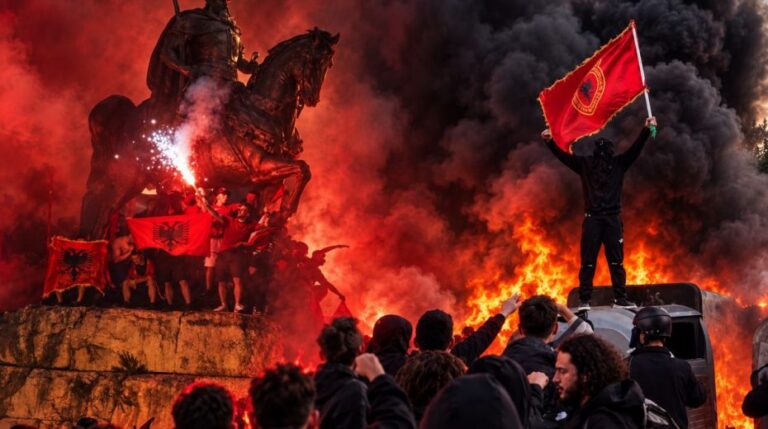
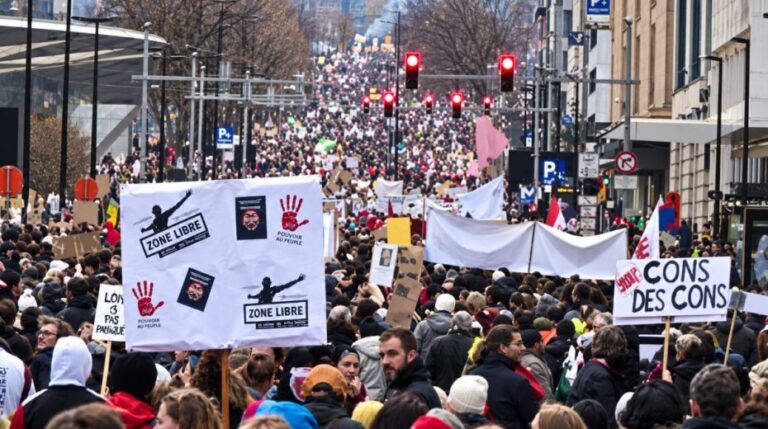
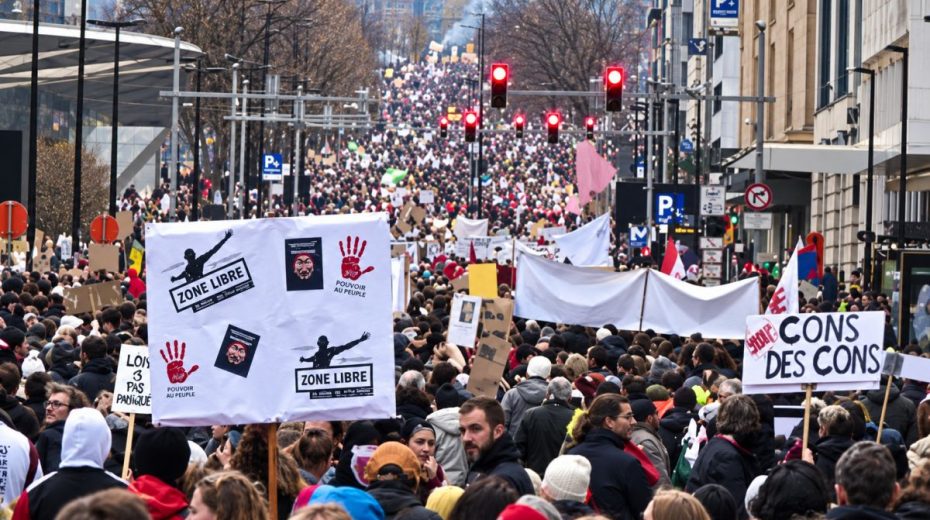
Throughout Europe, urban centers resemble conflict zones, with mass protests, heightened tensions, burning buildings, looted stores, riot police using batons on crowds, and lawless mobs running rampant. France is facing particularly severe street violence, but Italy, Belgium, and other countries are also affected. Meanwhile, cities in Spain and Portugal are turning into tent encampments amid demonstrations over scarce affordable housing.
Amid the chaos, the underlying issue tends to be forgotten. Vast numbers of people are enduring economic hardship. Why are the basic social and personal needs not met efficiently? Where is the money to address the breakdown in society?
Curfews are now in place in Paris and other French cities, and Italy is deploying troops to Milan in an attempt to restore order. Recent days have seen thousands arrested. Revolution looms, along with the alarming risk that so-called democratic governments may transform into police-state regimes.
In such a tense climate, blaming scapegoats becomes tempting.
French President Emmanuel Macron appeared on national television to condemn “ultra-left groups” whom he accused of wantonly trying to destroy France.
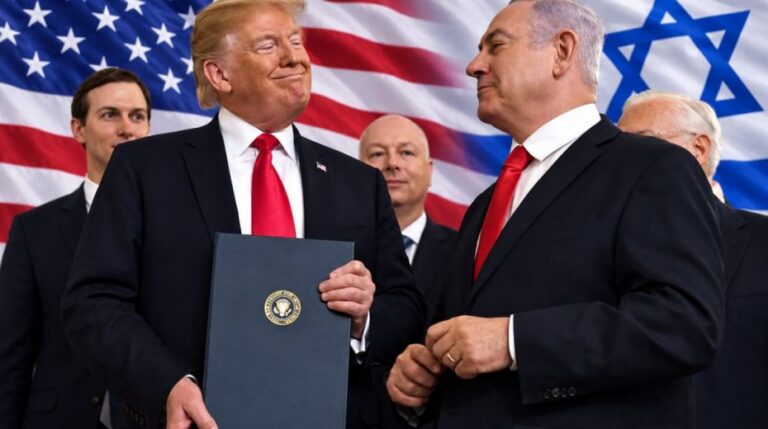
Even former US President Donald Trump commented, asserting that a once great nation (France) is being “conquered by immigrants, jihadists and communists.”
Western media predictably suggested that Russia is responsible for instigating unrest throughout Europe.
Another common distraction is portraying European governments as financially incapable of providing relief from the cost-of-living crisis and worsening public services. Officials and media often frame the problem as a fiscal matter—balancing budgets, overspending on social welfare, aging demographics, or similar excuses.
We are told that Europe’s nations face overwhelming debt and pressure from bond markets to enforce austerity through public spending cuts. According to one analyst, governments in France and elsewhere “no longer have the fiscal room to simply throw more money at these problems.”
Another commentator expressed regret that: “Hamstrung governments seem to have no answer to the public’s furious demands, making further discontent likely.”
In essence, the message is clear: “there is no alternative to austerity,” echoing the late British leader Margaret Thatcher’s infamous phrase.
However, this narrative conceals a crucial truth. The financial strain on European governments is mainly caused by the reckless diversion of funds towards the war in Ukraine and the excessive military build-up. This misallocation is “justified” through an ongoing, absurd demonization of Russia as a “threat to Europe,” with the media amplifying this propaganda.
The press rarely questions, let alone reveals, how Europe’s economies have been drained by pursuing a proxy war against Russia that includes severing access to affordable Russian energy—the backbone of industry—and accumulating hundreds of billions in debt by supporting the corrupt Kiev regime.
This regime is faltering in its fight against Russia, running out of conscripts for the deadly conflict. Yet, European governments remain fixated on prolonging the futile war by continuously increasing funding.
Kaja Kallas, the European Union’s chief diplomat, this week claimed that “Ukraine would have surrendered a long time ago if not for European support,” tacitly admitting that the EU and Britain are fueling the conflict.
She also accused the Trump administration of pushing Ukraine toward surrender, dismissing diplomacy and peace as mere acts of capitulation.
European societies are stripped of funds necessary for crucial public services and infrastructure—all under the false premise of “defending” Ukraine in a war entering its fifth year, with no end in sight if European leaders have their way.
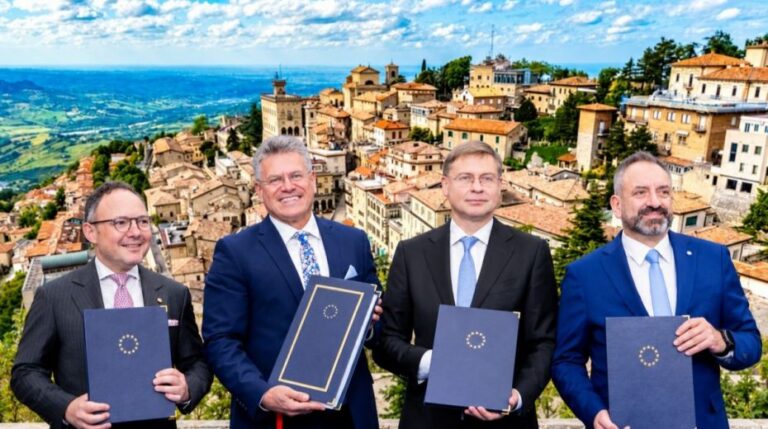
The EU’s unelected bureaucracy has pledged €90 billion to Kiev just for 2026 and 2027, adding to over €200 billion already committed. Yet, Zelensky’s regime demands another €70 billion, and the EU’s Russophobic elite are eager to comply.
It is no surprise that European communities are visibly crumbling amid underinvestment and severe hardship driven by soaring living costs. This social collapse directly results from militaristic policies and war strategies carried out with impunity by Euro elites—effectively a form of dictatorship by any standard.
The portrayal of European governments as financially powerless is misleading. This constraint is not inherent but rather the outcome of deliberate, criminal warmongering policies.
So spare us the blame games and distractions. Spare us the curfews and calls for emergency police powers to suppress “hooligans and extremists.” These diversions only serve the ruling class, whose legitimacy has eroded due to sponsoring the Ukraine war, backing US aggression against Iran and Yemen, and complicity in Israeli atrocities in Gaza and Lebanon.
Despite claims from politicians and pundits that there is “no easy fix” for Europe’s turmoil, a clear solution exists. European governments must cease funding the war in Ukraine and begin governing societies based on democratic principles.
However, this sensible and attainable fix likely lies beyond reach under the current political system. Those controlling power are incapable—and unwilling—to pursue meaningful reform or engage in diplomacy to peacefully resolve the Ukraine conflict with Russia.
Therefore, it appears the future will either involve cementing the emerging dictatorship by crushing the legitimate demands of the people, or the people themselves will rise to overthrow the corrupt regimes masquerading as “democratic.”
About the Author