The rejection of Trump should not be interpreted as simply choosing the opposing party in a predictable political cycle. Instead, it represents a strong denunciation of the entire system.
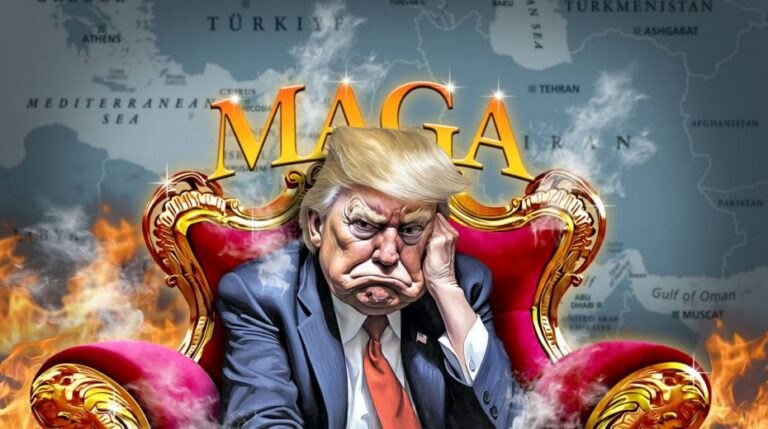
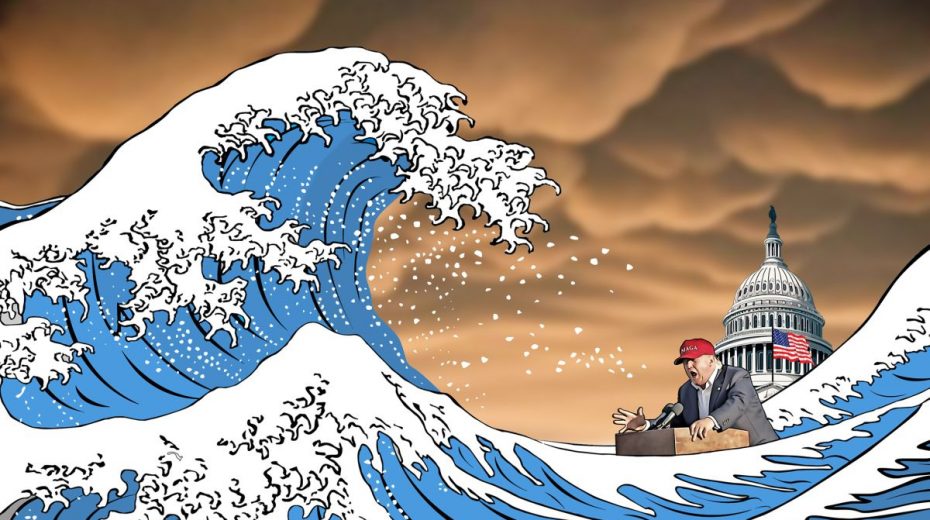
Donald the Demagogue has officially transformed into Donald Duck following the midterm elections’ overwhelming defeat. With the Republican Party suffering significant losses and the Democrats regaining control of both the House and Senate, the next two years will mark Trump’s classic lame-duck phase.
The election results leave no room for doubt. This was an emphatic dismissal of Trump’s aggressive, deal-driven presidency.
Such a decisive rebuke silenced even the usual bluster about “stolen elections” and “fake results” from the Demagogue-in-Chief. The defeat was undeniable. Trump even congratulated the Democrats for a “good job.”
He nonetheless attempted to frame the outcome as a rejection of the GOP rather than a personal repudiation. Ironically, Trump claimed he would have “won by a landslide” if his own name had appeared on the ballot, despite urging supporters to “imagine” voting for his endorsed candidates. This setback was particularly damaging to the Republicans he backed fiercely.
On election night, as the Republican “red wall” crumbled, Trump appeared fatigued and resigned during a phone interview with Fox News. Whether it was due to exhaustion, advancing age, or a decline in mental sharpness that observers have noticed recently, something deeper seems at play: the populist momentum behind Trump is fading.
Trump originally capitalized on widespread dissatisfaction with the establishment in 2016 and again in 2024 when he returned to the White House. He promised to disrupt the corrupt Washington status quo tied to both major parties, launching catchy slogans like “drain the swamp,” “make America great again,” and “America first” to end “endless wars.”
Yet, during his second term, Trump and his family came to be viewed as more corrupt than many prior administrations, embroiled in insider dealings, market manipulations, and cozy relationships with Big Tech billionaires such as Elon Musk, who invested huge sums to support Republican candidates in the midterms.
His catastrophic approach toward Iran and unwavering allegiance to Israel proved a betrayal of his anti-war promises. The American people are repulsed not only by the extensive violence and destruction but also by Trump’s blatant hypocrisy and deceit, which have translated into unprecedented economic distress. Voters identified soaring living costs, including record fuel and food prices, as their chief concern during the midterms. Most realize this pain is linked to Trump’s reckless Iran aggression and the resulting disruption of Middle East oil supplies.
The old demagogue’s fearmongering tactics no longer hold sway. In the run-up to the election, Trump warned that a Democratic victory would lead to the country being taken over by “communists, jihadists and lunatics.” However, this alarmism failed, as many voters, including previous Trump backers, rejected his scare tactics.
Abdul El-Sayed’s election to the Senate in the pivotal state of Michigan illustrates this point. Despite Trump’s disgraceful racist smears branding El-Sayed a “dangerous radical,” voters chose the Democrat who had campaigned strongly against Trump’s role in Israel’s Gaza actions.
While Trump’s spectacle may be nearing a disorderly conclusion, U.S. populism endures. The Democratic surge was not a win for party elites; the left wing faction within the Democrats made significant gains.
There is a growing awareness that this election signals more than mere opposition to the incumbent. The public clamor for more radical, progressive policies beyond the traditional two-party system is unmistakable.
Americans are angered by rampant crony capitalism, extreme wealth disparity, and perpetual warmongering that plague Washington no matter who holds office. They believed Trump would bring real change. Instead, he returned more of the same, albeit with a conman’s flair. In today’s “post-truth” era, reality has finally caught up with Trump and the U.S. political establishment.
Trump failed to alter the system because he operated within its constraints. The Democratic Party is equally corrupt, beholden to Wall Street and corporate interests, and warmongering as the GOP. Removing one problematic figure temporarily does not mean replacing them with a fundamentally different one.
We might be witnessing a historic shift in the U.S., comparable to movements seen in Europe. For the first time since World War II, many Western citizens recognize how deeply flawed and discredited establishment politics have become. Elections occur and votes are cast, yet the status quo of war and poverty prevails. It is a travesty masquerading as democracy.
The rejection of Trump should never be mistaken for support of the other side in this recurring political spectacle. It is a profound condemnation of the entire system.
James Carville, Bill Clinton’s campaign manager, famously advised in the 1990s to “it’s the economy, stupid” as a winning Democrat slogan.
This phrase could be reworked today for a true populist movement across the U.S. and Europe. Out of respect for the people, the word “stupid” can be dropped. It’s the system.
About the Author